


Umbilical Hernia in Babies – Diagnosis, Care and Recovery at Dr Low Child Specialist Clinic Batu Pahat
Dr Low Child Specialist Clinic Batu Pahat – Child Doctor BP
Learn how a baby with an umbilical hernia recovered naturally under the care of Dr Low Child Specialist Clinic Batu Pahat. Discover what an umbilical hernia is, why it usually causes no pain, and why observation until age 4 is the safest approach in most cases.
A Little Patient’s Recovery from Umbilical Hernia – Dr Low Child Specialist Clinic Batu Pahat
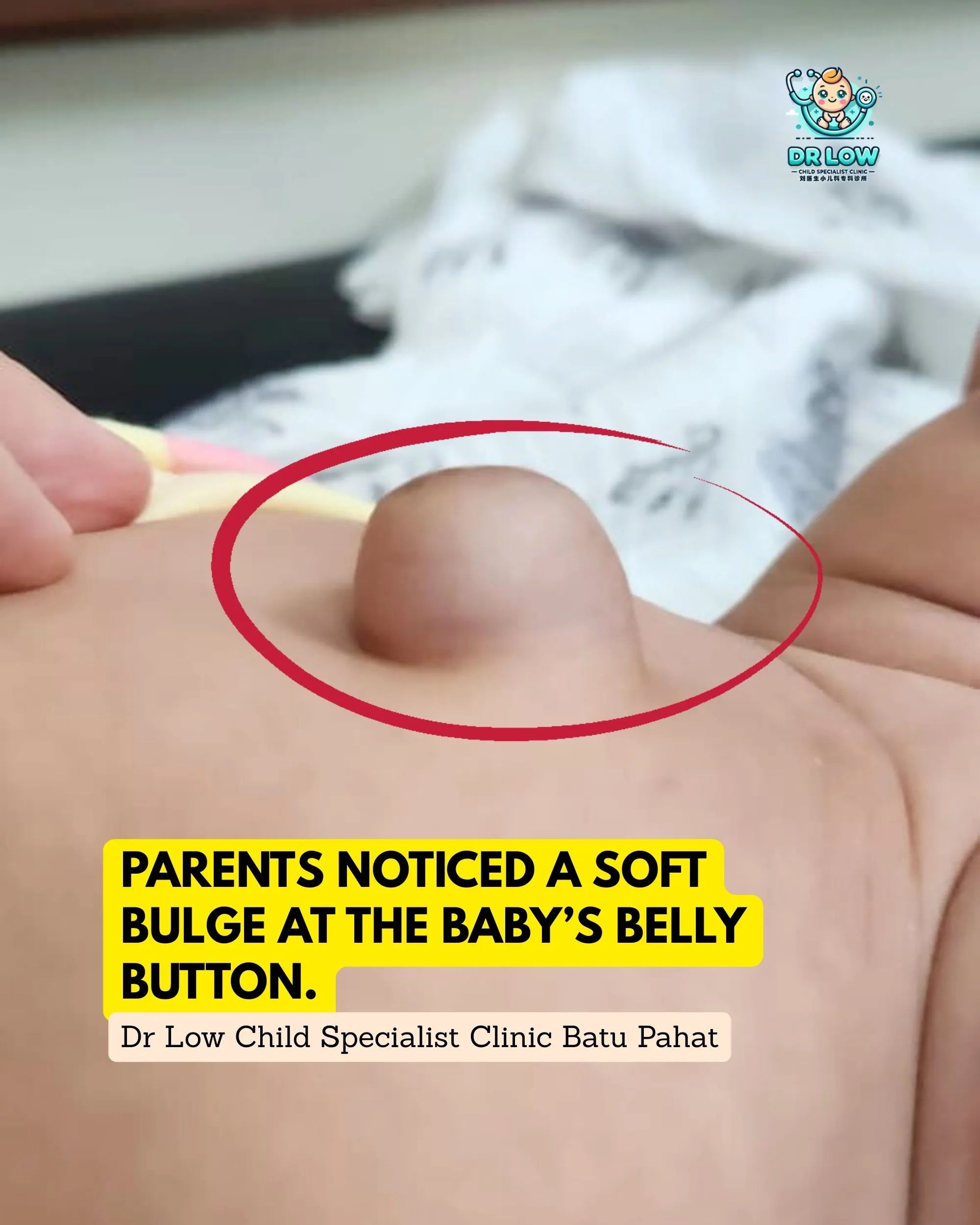
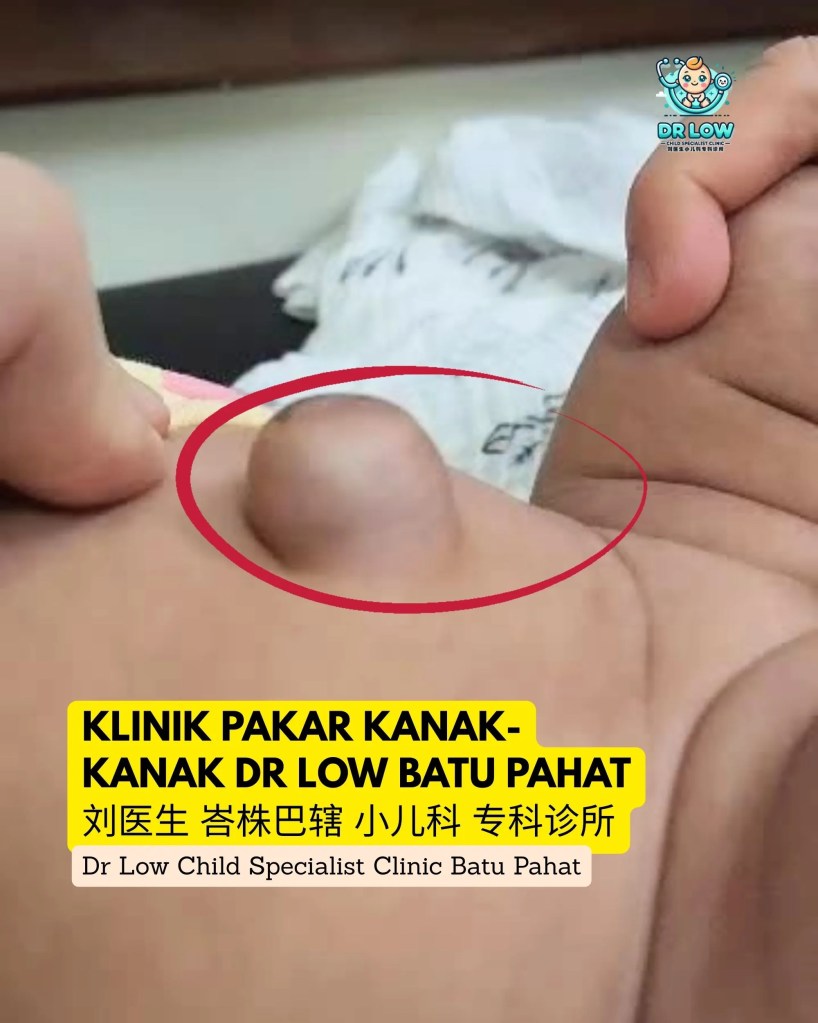
At Dr Low Child Specialist Clinic Batu Pahat, we often meet parents who are worried about their baby’s belly button shape. Recently, a young couple brought in their newborn, concerned about a soft, round bulge at the belly button that became more noticeable when the baby cried or strained.
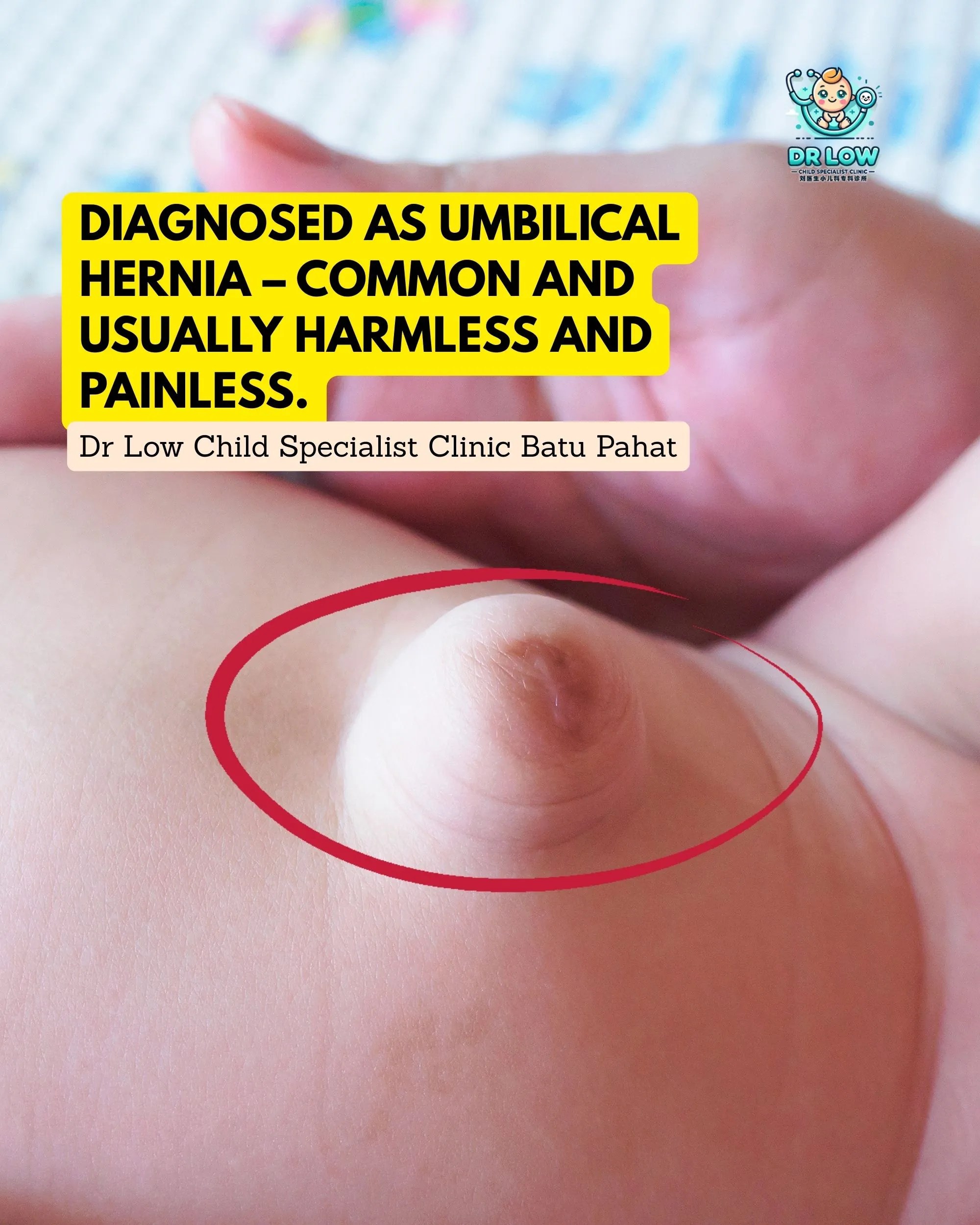
Upon examination, Dr Low Han Nee diagnosed the condition as an umbilical hernia – a common condition in infants. An umbilical hernia happens when a small opening in the abdominal muscles, where the umbilical cord passed through during pregnancy, has not fully closed. This allows a small portion of intestine or abdominal tissue to push through, creating a bulge.

Clinical Diagnosis
In most babies, an umbilical hernia can be confirmed by a physical examination during a clinic visit. Blood tests or imaging, such as ultrasound, are rarely needed unless the bulge appears unusual or there are concerns about complications.
No Pain in Children
An umbilical hernia usually does not cause pain in children. Most babies are active, feeding well, and showing no discomfort, even if a bulge is visible. Parents may feel anxious, but the condition is generally harmless and resolves naturally over time.

Dr Low’s Advice for Parents
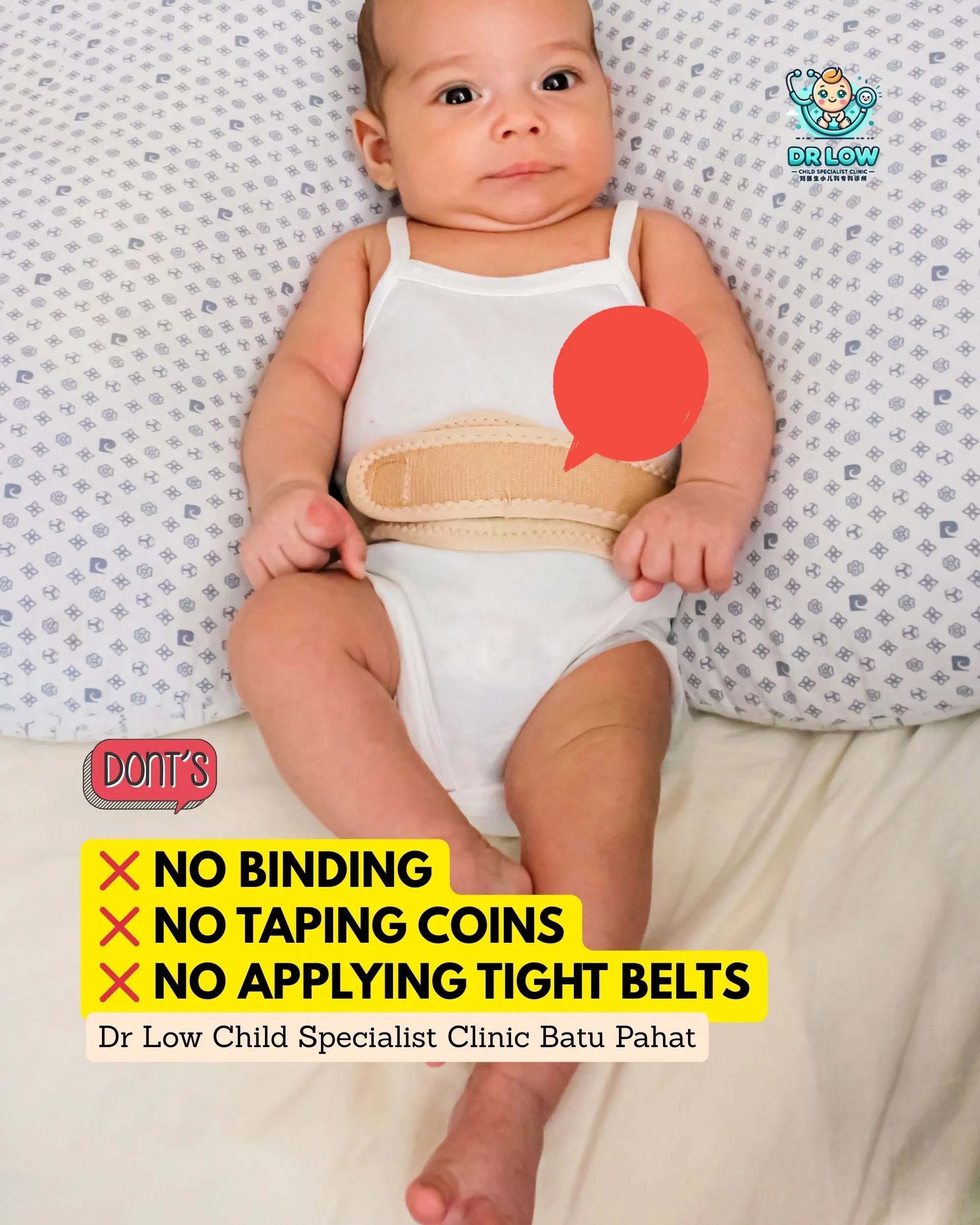
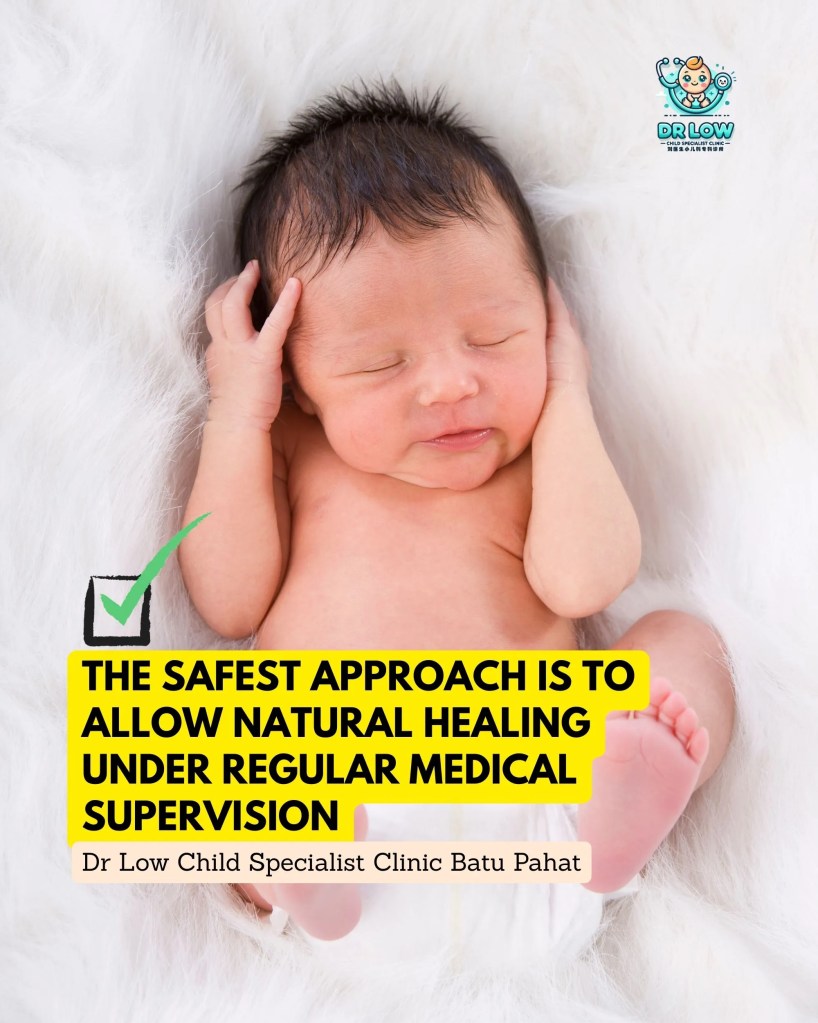
Dr Low advises against traditional practices such as binding the tummy, taping coins to the belly button, or applying tight belts. These methods do not help the hernia close faster and may instead cause skin irritation, discomfort, or infection. The safest approach is careful observation under medical supervision.

Management and Care
At our clinic, we reassured the parents that there was no immediate danger since the bulge was soft, painless, and could be gently pushed back. We also explained warning signs that require urgent medical attention, such as a hard bulge, redness, vomiting, or abdominal swelling.
Over the following months, the family returned regularly for check-ups. The bulge gradually reduced, and by the baby’s first birthday, the umbilical hernia had resolved naturally without surgery. The parents felt relieved and grateful for the guidance and gentle follow-up care provided throughout the journey.
Understanding Umbilical Hernia in Babies
- Causes: Delayed closure of the abdominal wall opening after birth.
- Risk Factors: Premature birth, low birth weight, or family history.
- Symptoms: A bulge at the belly button, more visible when the baby cries, coughs, or strains.
- Pain: An umbilical hernia in children is painless.
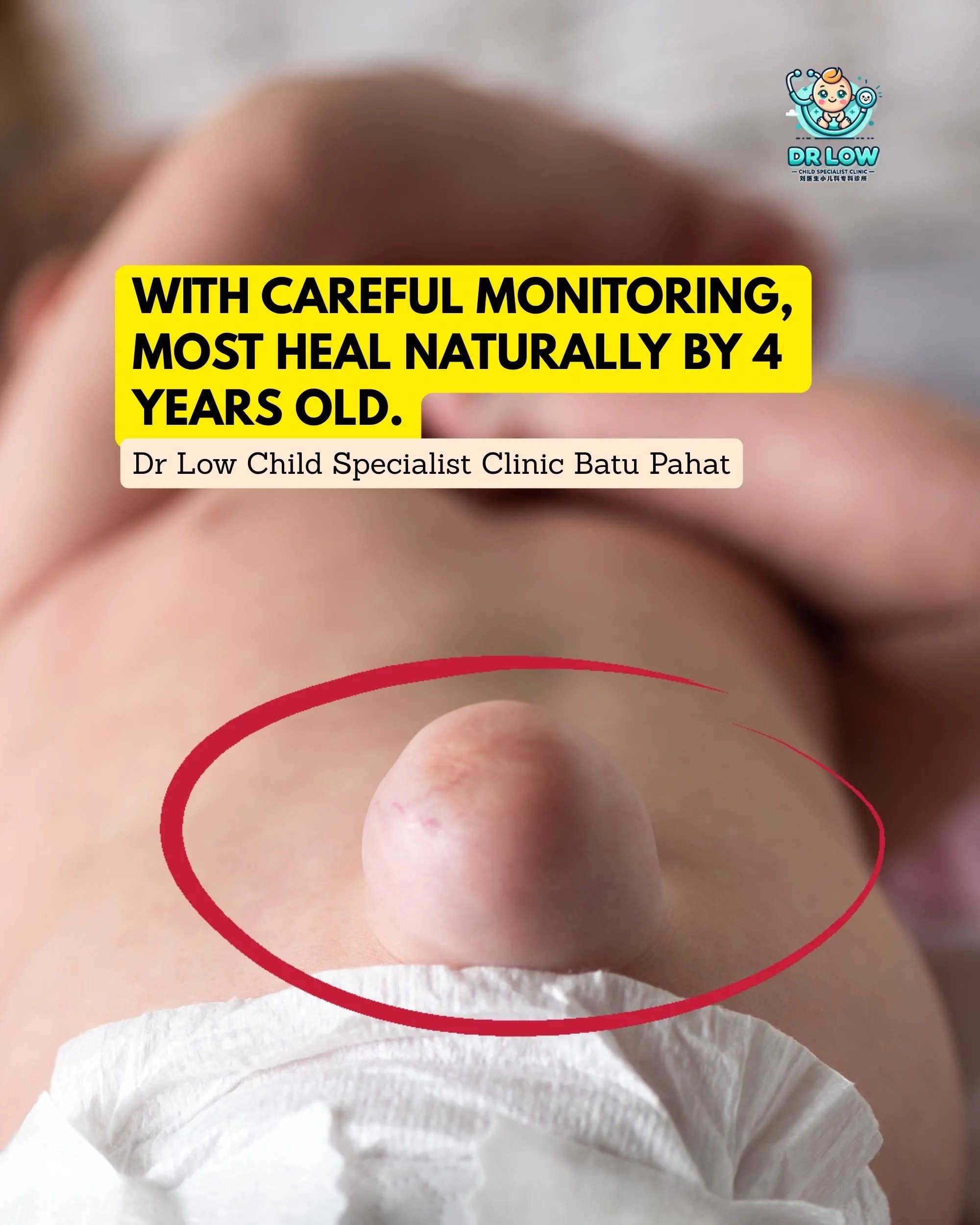
- Treatment: Observation until 4 years old in most cases. Surgery is only considered if the hernia persists beyond 4 years or causes complications.
- When to Seek Medical Help Immediately: If the bulge becomes hard, discoloured, painful, or if the child is vomiting.
Dr Low Child Specialist Clinic Batu Pahat
Our clinic provides personalised care for babies and children, ensuring parents feel informed and confident about their child’s health. From diagnosis to recovery, we walk alongside families with both medical expertise and heartfelt support.
If you notice a bulge at your baby’s belly button, don’t panic – but do seek a medical evaluation to ensure safe and proper management.

#UmbilicalHernia #BabyHealth #ChildSpecialistBatuPahat #DrLowChildSpecialistClinic #BatuPahatChildDoctor #BabyBellyButton #PainlessUmbilicalHernia #PediatricCare #ChildHealth #BabyCare


