


Hydrocele in Newborn Boys – Diagnosis, Monitoring & Recovery | Dr Low Child Specialist Clinic Batu Pahat
Dr Low Child Specialist Clinic Batu Pahat – Child Doctor BP
Hydrocele is a common cause of scrotal swelling in newborn boys. Learn how Dr Low Child Specialist Clinic Batu Pahat diagnoses hydrocele, monitors recovery, and guides parents with clear, step-by-step care.
Understanding Hydrocele in Children – A Journey from First Check to Full Recovery
By Dr Low Han Nee – Dr Low Child Specialist Clinic Batu Pahat
When parents notice swelling in their baby boy’s scrotum, the first reaction is always the same — worry. Hydrocele is one of the most common reasons infants are brought to Dr Low Child Specialist Clinic Batu Pahat, especially when parents search online for Child Specialist Batu Pahat, Child Clinic Batu Pahat, or Child Doctor Near Me.
This is the story of how one baby boy was diagnosed, monitored, and recovered smoothly — a journey that helps other families understand what hydrocele is, what signs to watch for, and when to seek medical care.

⭐ The First Concern: Swelling Noticed During Diaper Change
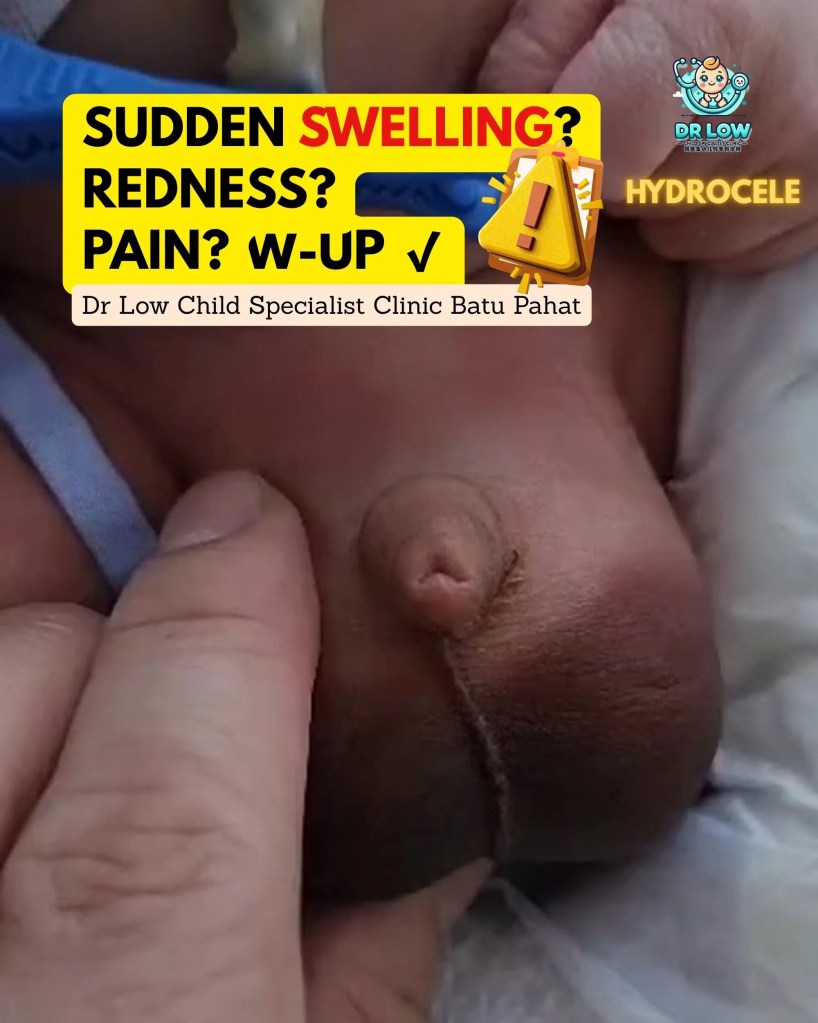
A newborn baby boy was brought to the clinic because his parents noticed that one side of his scrotum looked larger and darker in colour during a diaper change. They searched for Child Specialist Clinic Batu Pahat and decided to see Dr Low Han Nee, a paediatrician experienced in newborn conditions.
On examination, the scrotum was filled with fluid. It looked tense but not red, not painful, and the baby was feeding normally. These are classic characteristics of Hydrocele — a condition where fluid remains around the testicle.

⭐ What Exactly Is Hydrocele? (Knowledge Section)
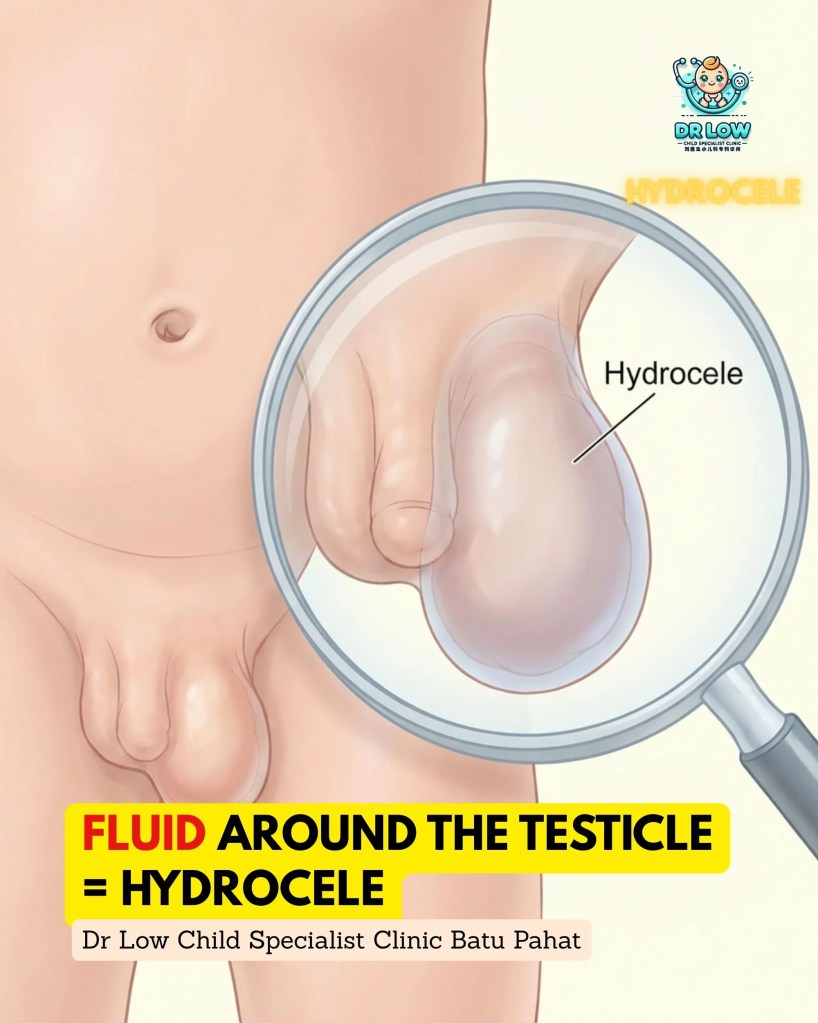
Hydrocele is a collection of fluid inside the scrotum, surrounding the testicle.
There are two main types:
✔ 1. Congenital Hydrocele (Communicating or Non-communicating)
This happens because the passage between the tummy and the scrotum (the processus vaginalis) did not close fully after birth.
- Communicating hydrocele: swelling changes throughout the day
- Non-communicating hydrocele: swelling stays the same size
✔ 2. Acquired Hydrocele
More common in older boys — caused by infection, inflammation, injury.

⭐ Why Hydrocele Happens in Newborns
During pregnancy, baby boys’ testicles move down from the abdomen into the scrotum. This process brings a small “sac” of fluid with it. Usually this sac closes before birth, and the fluid is absorbed.
If not, fluid remains — leading to hydrocele.
⭐ Is Hydrocele Dangerous?
In most newborns, hydrocele is not dangerous and not painful.
Most cases resolve naturally within the first 6–12 months of life.
Hydrocele does NOT affect:
- future fertility
- urination
- development
However, it is important for parents to have it checked by a Child Specialist to rule out other conditions like inguinal hernia, which may require surgery.

⭐ The Examination at Dr Low Child Specialist Clinic Batu Pahat
At Dr Low Child Specialist Clinic Batu Pahat, the hydrocele was confirmed through:
- physical examination
- gentle transillumination (light shows fluid easily)
- monitoring testicle position and size
The baby boy’s case was diagnosed as non-communicating congenital hydrocele, which usually resolves on its own without surgery.
Parents were reassured and advised on what to observe.

⭐ What Parents Should Monitor (Important Knowledge Section)
Parents should look out for:
- sudden increase in size
- redness of the skin
- hardness or sudden firm swelling
- the baby becoming unusually fussy
- swelling becoming smaller in morning, bigger at night (may indicate hernia)
If any of these occur, immediate review by a paediatrician is advised.
⭐ The Monitoring Process
Over the next few months, the parents regularly visited Dr Low Child Specialist Clinic BP for:
- growth monitoring
- physical checks
- scrotal examination
Gradually, the size of the hydrocele reduced as the fluid absorbed naturally — a very common recovery process.
By the sixth month, the swelling had almost completely resolved. The parents felt relieved and grateful that early evaluation helped them understand the condition clearly.

⭐ When Does Hydrocele Need Surgery?
Most hydroceles disappear on their own within the first year.
However, referral to a paediatric surgeon is needed if:
- hydrocele persists after 1 year old
- swelling increases
- hydrocele is communicating (changes size)
- hernia is suspected
This baby’s case improved naturally — requiring no surgery.
⭐ Recovery and Final Follow-Up
During the final review, the swelling was fully gone, and testicles were normal. Parents were reassured that:
- no long-term issues
- normal development
- no effect on fertility
This journey emphasized the importance of early checks with a Child Doctor Batu Pahat whenever parents notice abnormal swelling.
⭐ Educational Message for Parents
Hydrocele is common. Early evaluation by a trusted Child Specialist BP ensures your child receives the correct diagnosis and avoids unnecessary worry.
At Dr Low Child Specialist Clinic Batu Pahat, we provide:
- newborn examination
- scrotal swelling assessment
- growth monitoring
- vaccination
- infection management
For Batu Pahat families searching online for Child Doctor Near By Batu Pahat, Child Doctor Near Me, or Child Clinic BP, our clinic supports you through every step of your child’s development.
#DrLowChildSpecialistClinic #BatuPahat #ChildSpecialistBatuPahat #ChildClinicBatuPahat #ChildDoctorNearMe #Hydrocele #NewbornCare #BabyBoyHealth #PaediatricianMalaysia #BatuPahatCommunity #HydroceleBaby #ScrotalSwelling


