Baby’s Belly Button Has a Red Lump After the Cord Falls Off? Understanding Umbilical Granuloma | Dr Low Child Specialist Clinic Batu Pahat
Dr Low Child Specialist Clinic Batu Pahat – Child Doctor BP
Has your baby’s belly button developed a small red, moist lump after the umbilical cord fell off? Learn about Umbilical Granuloma, including its causes, symptoms, salt treatment, silver nitrate treatment, home care, warning signs of infection, and when parents should seek medical attention.
Umbilical Granuloma in Babies: Red Lump After the Umbilical Cord Falls Off – Causes, Treatment, Home Care & Warning Signs
Many parents become worried when they notice a small red, moist lump appearing in their baby’s belly button after the umbilical cord has fallen off.
Is it infected?
Is it dangerous?
Does the baby need to go to the hospital immediately?
Fortunately, one of the most common causes is Umbilical Granuloma, a condition that is usually harmless and can be treated effectively.
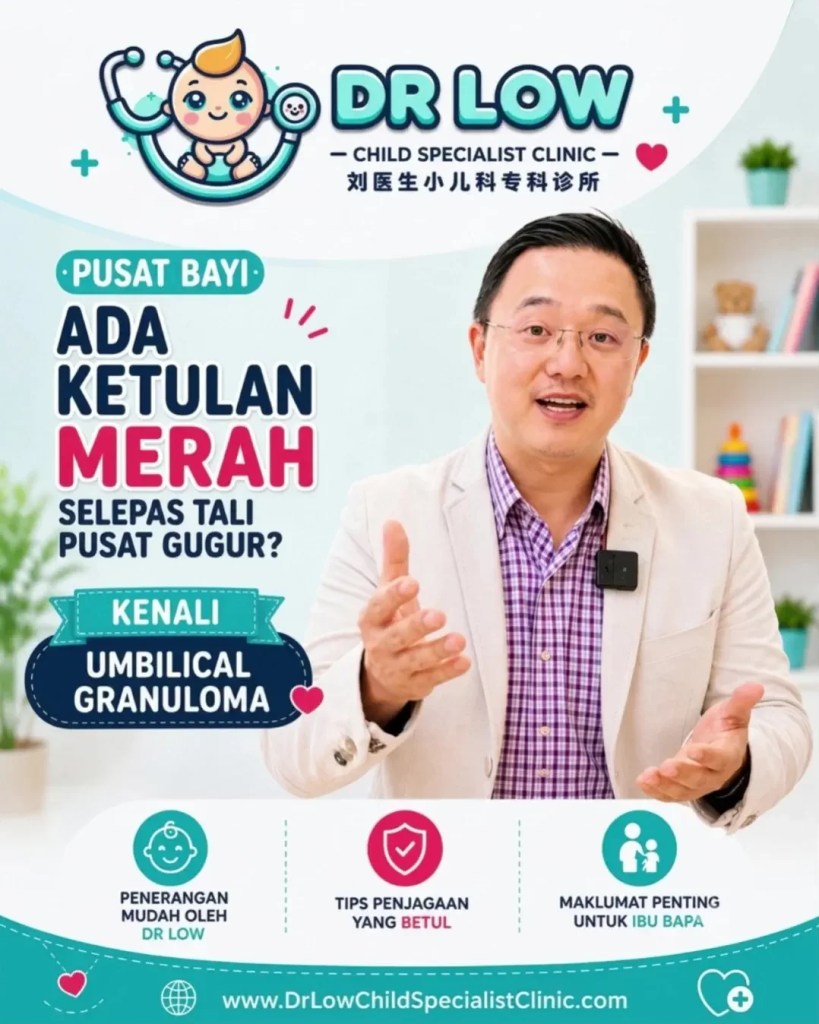
In this article, we explain everything parents should know about Umbilical Granuloma, including its causes, symptoms, treatment options, home care, and when medical attention is necessary.
What Is an Umbilical Granuloma?
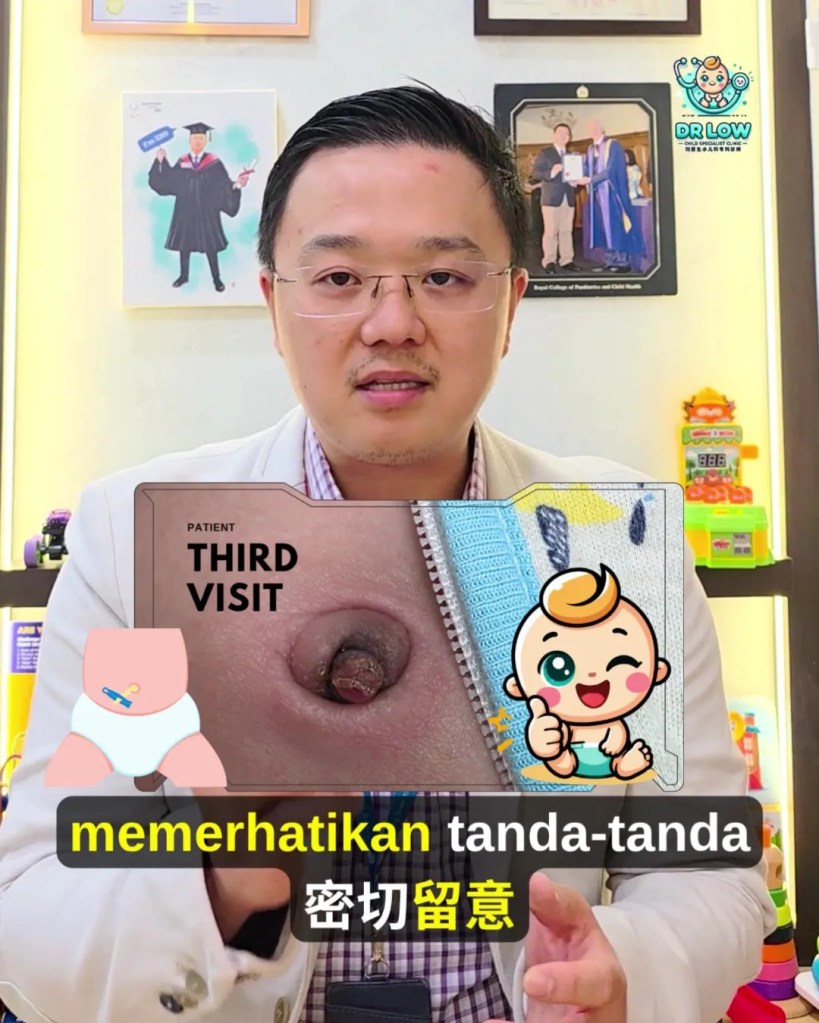
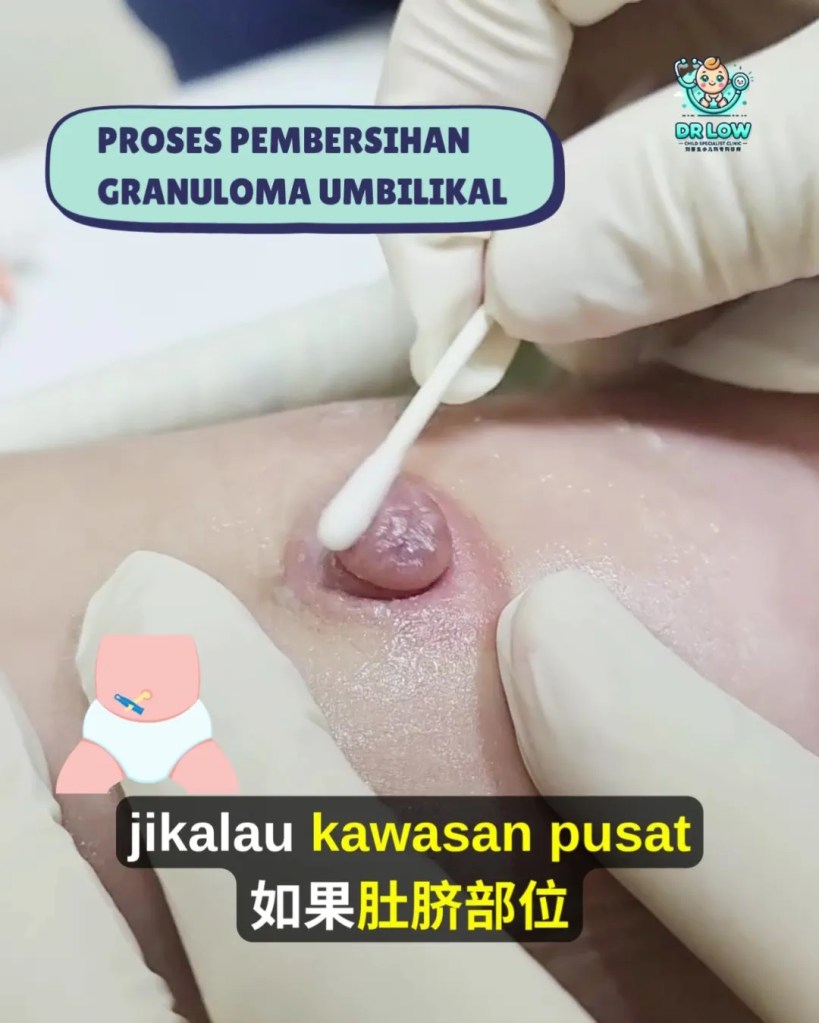
An Umbilical Granuloma is a small overgrowth of healing tissue that develops after the umbilical cord separates from a newborn.
Normally, the umbilical cord dries up and falls off within 1 to 2 weeks after birth, and the belly button heals naturally.
However, in some babies, the healing tissue continues to grow instead of stopping once healing is complete. This extra tissue forms a small red or pink lump known as an Umbilical Granuloma.
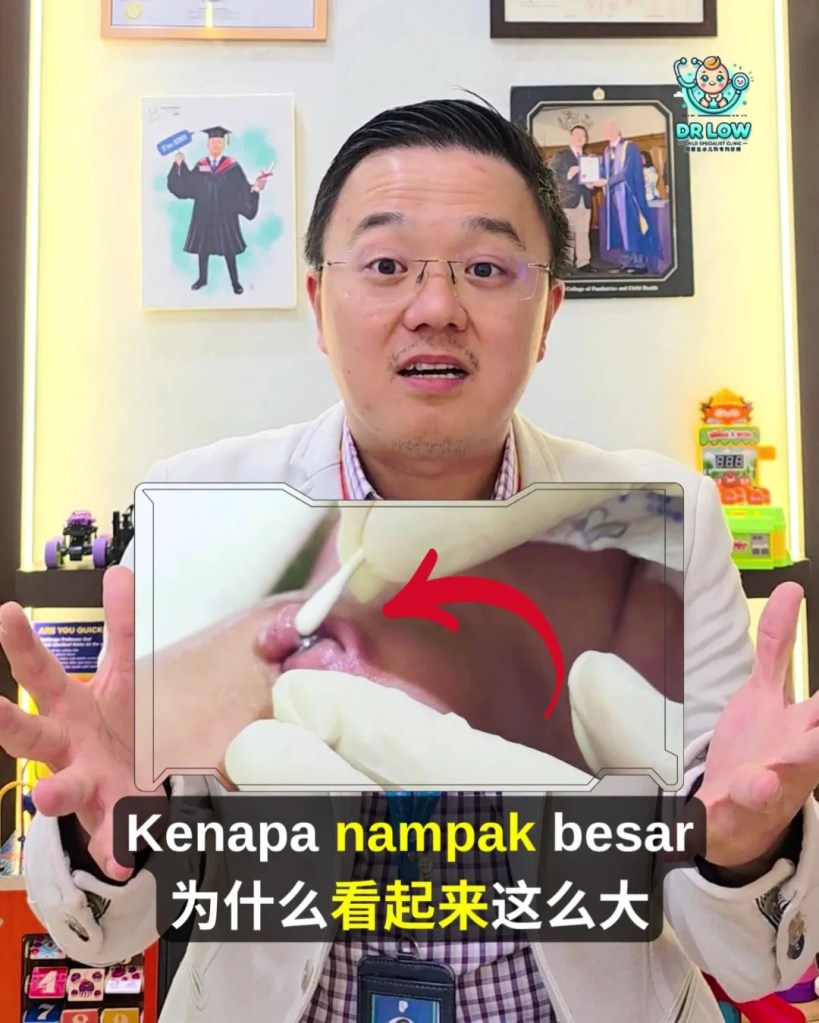
Why Does Umbilical Granuloma Occur?
The exact cause is not completely understood.
It is believed to occur when the normal healing process becomes slightly excessive, resulting in the formation of extra granulation tissue.
Importantly, Umbilical Granuloma is not caused by poor hygiene, incorrect bathing, breastfeeding, or anything parents have done wrong.
It is simply a variation of the normal healing process.
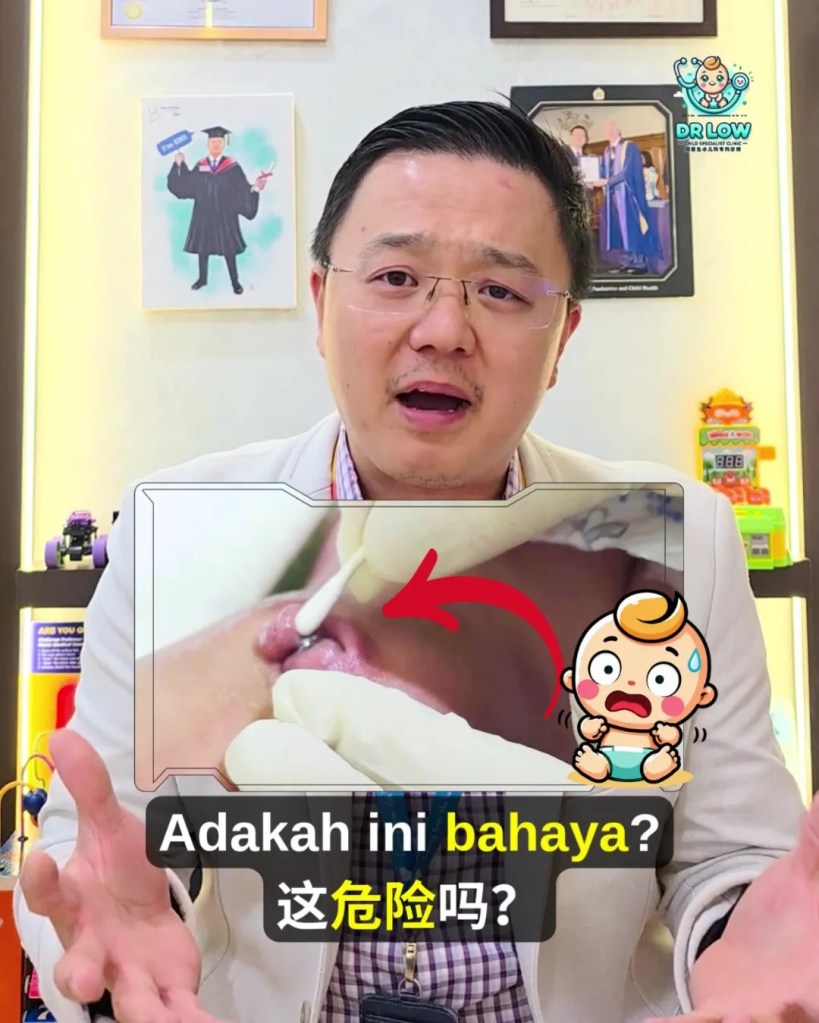
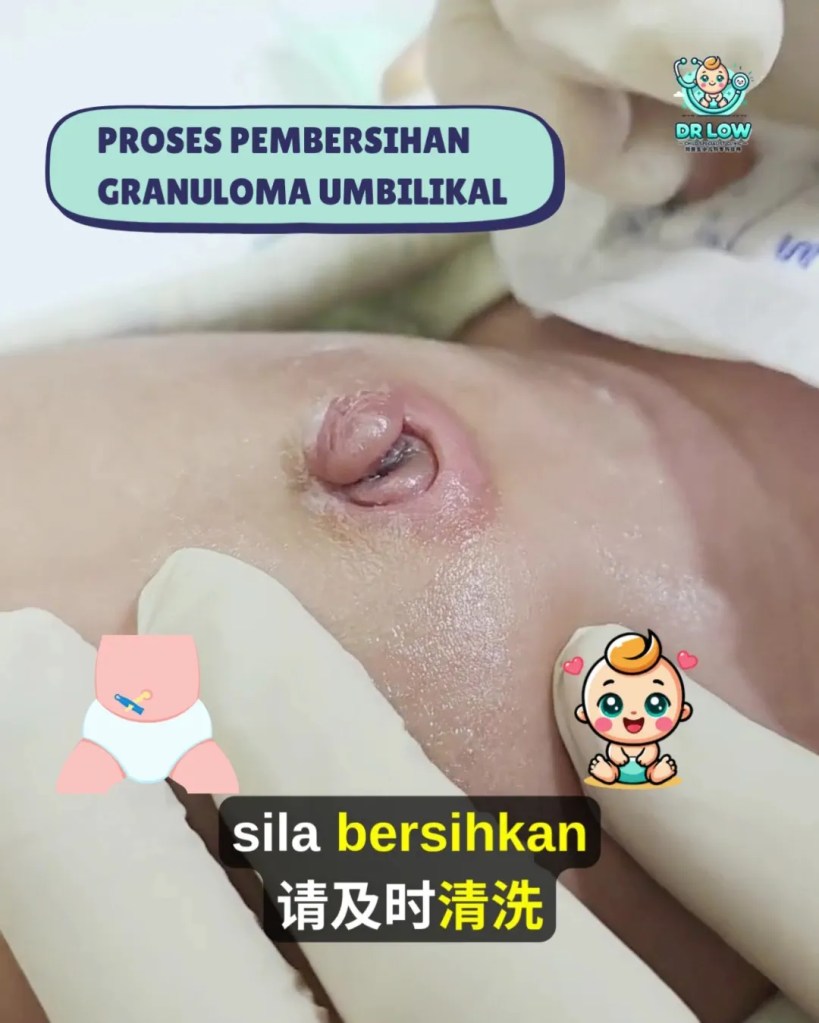
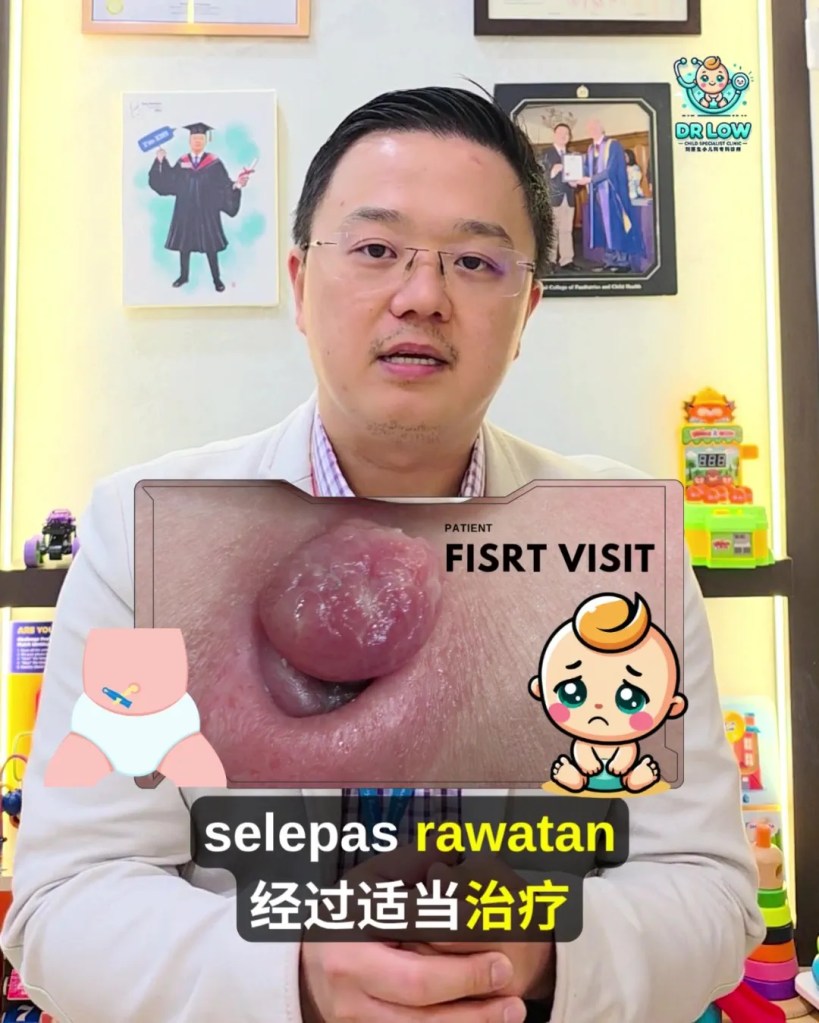
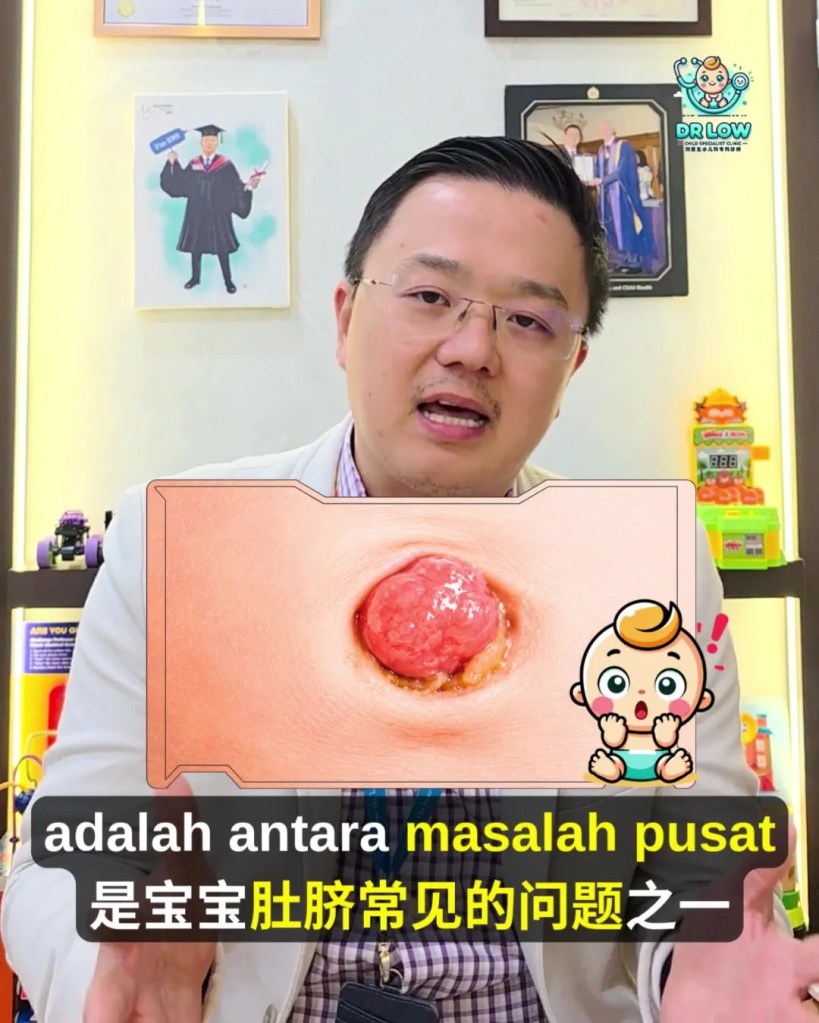
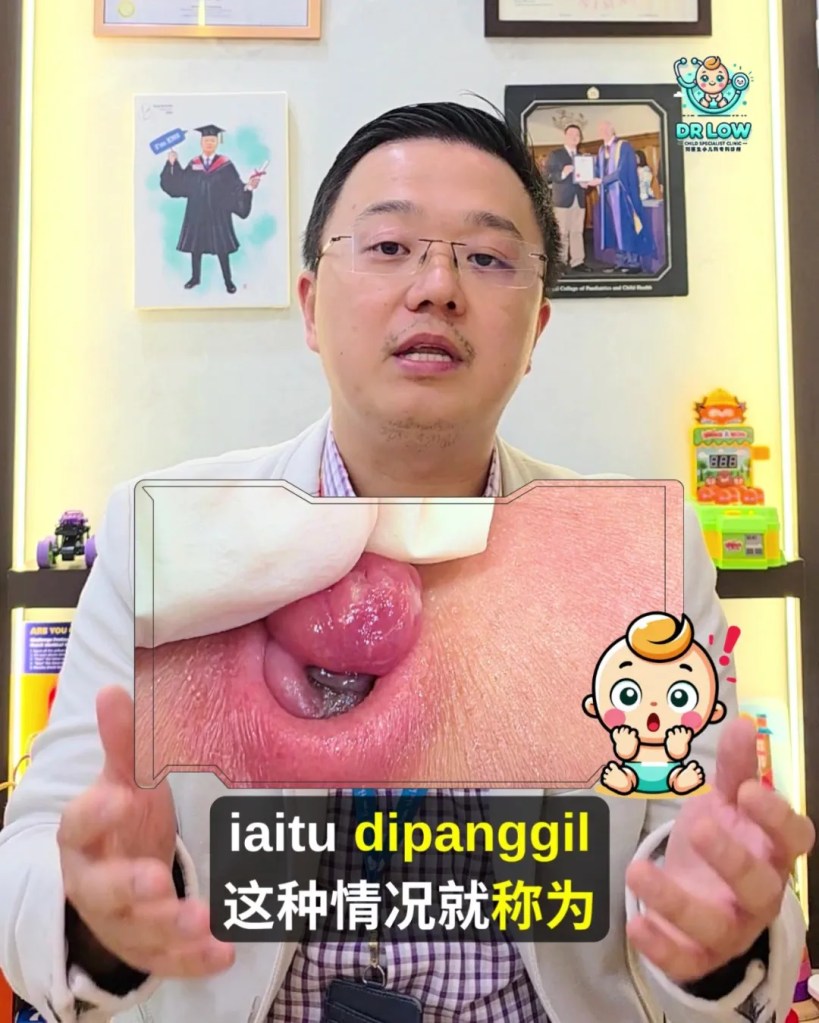
What Does an Umbilical Granuloma Look Like?
Typical features include:
- A small red or pink lump inside the belly button
- Soft, moist, shiny appearance
- May produce a small amount of clear or yellowish discharge
- Usually painless
- Baby generally appears comfortable
- May resemble a tiny piece of red tissue growing from the centre of the umbilicus
The size is usually only a few millimetres, although some granulomas can be larger.
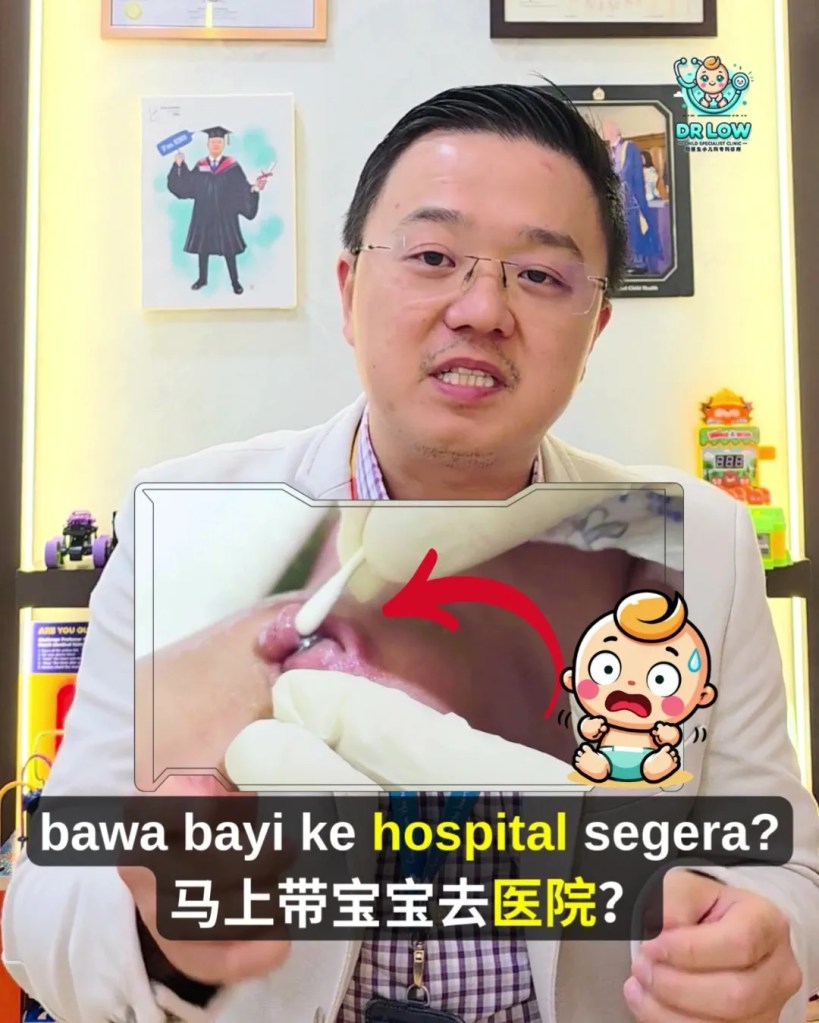
Is Umbilical Granuloma Dangerous?
In most cases, Umbilical Granuloma is not dangerous.
It is not cancer.
It does not spread to other parts of the body.
It usually does not affect a baby’s growth or development.
However, because the tissue remains moist, bacteria may occasionally infect the area. Therefore, proper assessment and treatment are recommended.
When Does It Usually Develop?
Umbilical Granuloma commonly appears:
- After the umbilical cord falls off
- During the first few weeks of life
- While the umbilical stump is healing

Warning Signs of Infection
Although Umbilical Granuloma itself is usually harmless, parents should watch for signs of infection, including:
- Increasing redness around the belly button
- Swelling
- Yellow or green pus
- Foul-smelling discharge
- Fever
- Poor feeding
- Reduced activity
- Baby appearing generally unwell
If any of these symptoms occur, your baby should be assessed by a doctor as soon as possible.
These signs may indicate Omphalitis, a bacterial infection of the umbilicus that requires prompt medical treatment.
Is Every Red Lump an Umbilical Granuloma?
No.
Several other conditions can resemble an Umbilical Granuloma, including:
- Umbilical Polyp
- Omphalitis
- Patent Urachus
- Patent Omphalomesenteric Duct
- Umbilical Hernia
- Other rare congenital abnormalities
Because these conditions require different management, it is important to obtain an accurate diagnosis before starting treatment.
How Is Umbilical Granuloma Diagnosed?
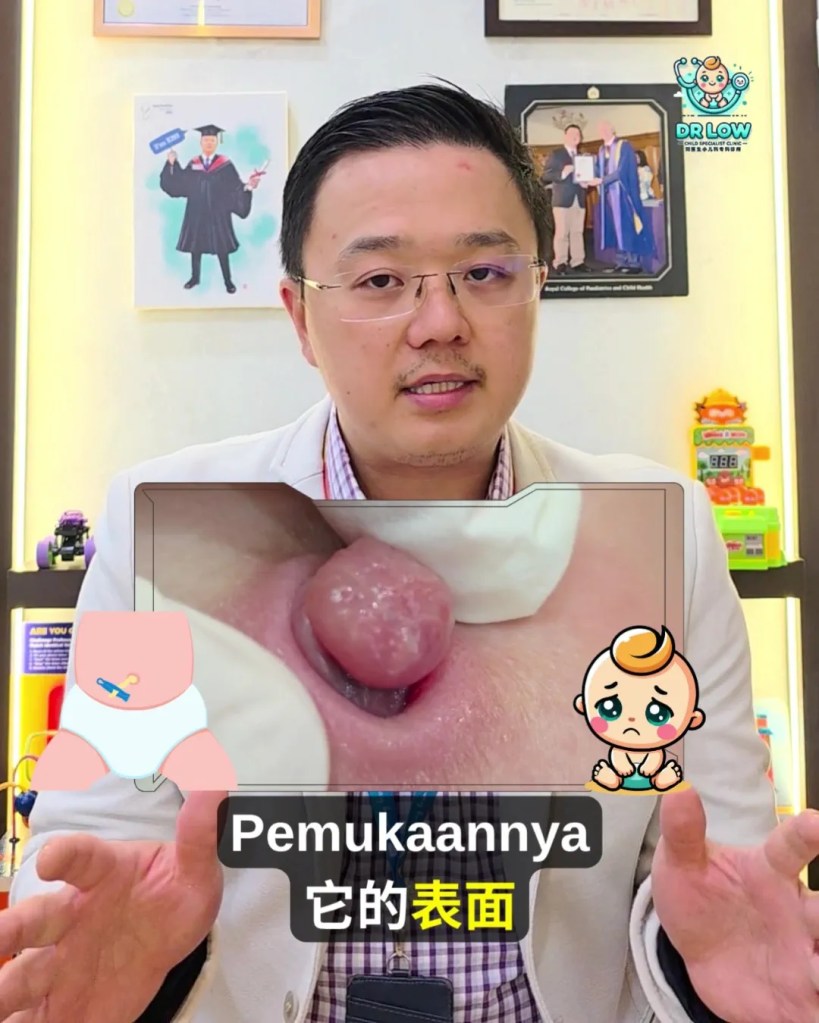
In most babies, diagnosis is made through a physical examination.
Your doctor will assess:
- The colour of the lump
- Its size
- Surface appearance
- Presence of discharge
- Signs of infection
- Whether another condition is more likely
Additional investigations are only required in selected cases.
Treatment Options for Umbilical Granuloma
There are two commonly used treatment methods.
1. Common Salt Therapy
Many parents are surprised to learn that ordinary table salt can be used to treat Umbilical Granuloma.
When used correctly under medical advice, salt helps draw fluid out of the granuloma, causing it to gradually shrink.
Generally, the treatment involves:
- Applying a small amount of common salt onto the granuloma
- Leaving it in place for a short period
- Cleaning the area afterwards
- Repeating the process for several days according to medical advice
Many small granulomas respond well to this simple treatment.
Parents should always ensure the diagnosis has been confirmed before attempting home treatment.
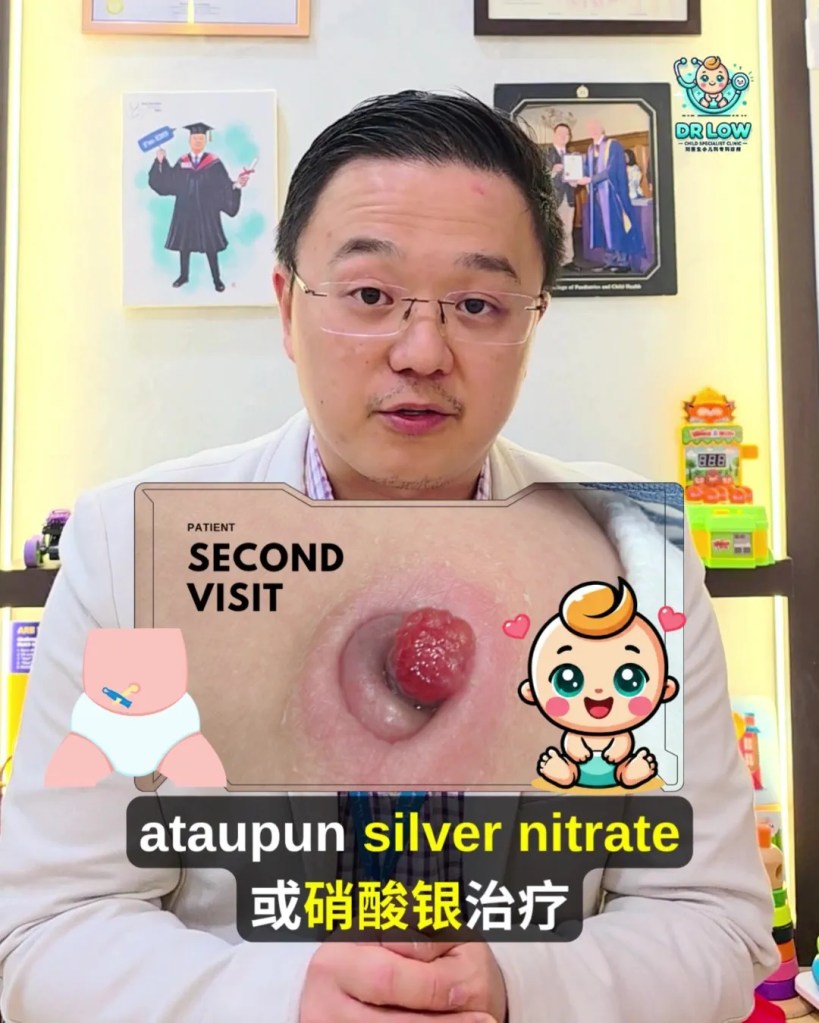
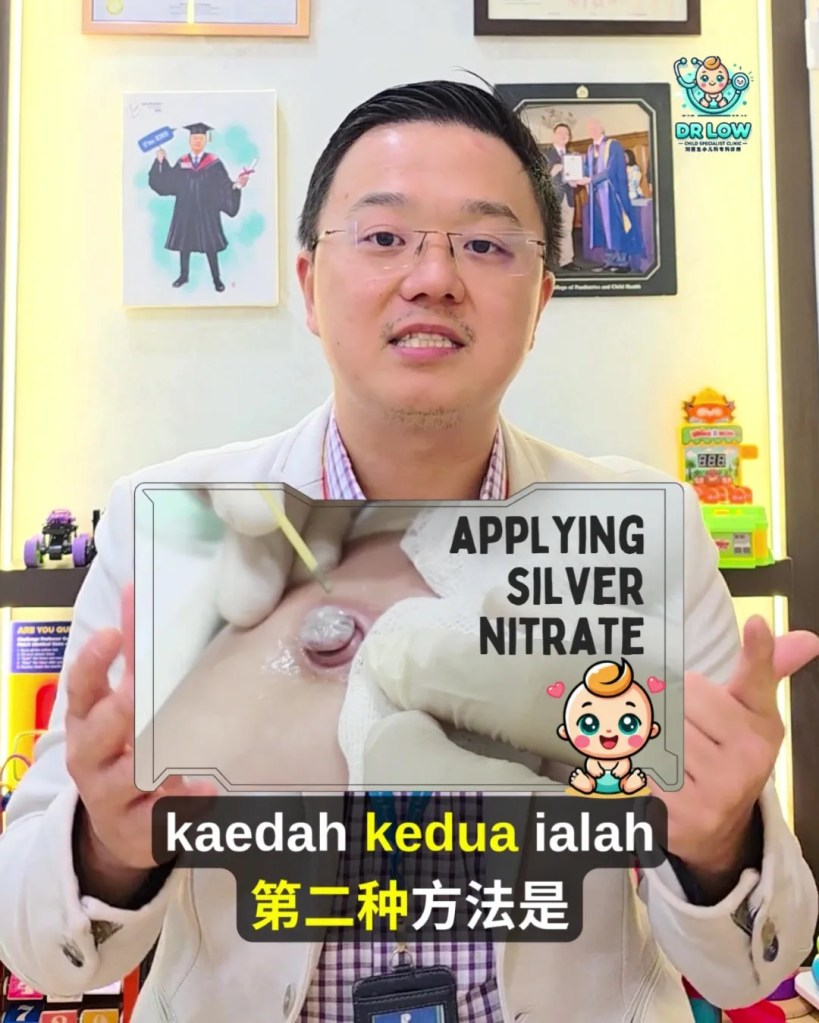
2. Silver Nitrate Treatment
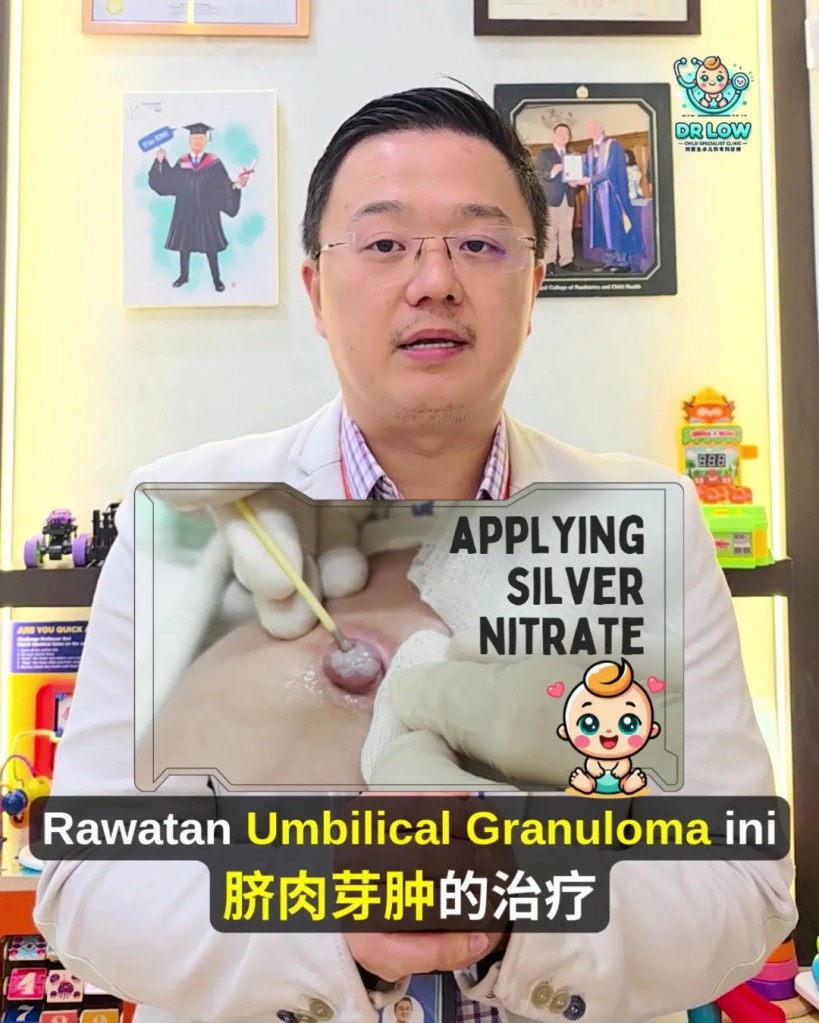
If salt therapy is unsuccessful or if the granuloma is relatively large, your doctor may recommend Silver Nitrate treatment.
Silver Nitrate chemically cauterises the excess tissue, allowing it to dry up and heal.
This treatment:
- Is performed in a clinic or hospital
- Takes only a few minutes
- Usually does not require anaesthesia
- May need to be repeated once or twice
Because Silver Nitrate can damage healthy skin, it should only be applied by trained healthcare professionals.
How to Care for Your Baby’s Belly Button
During healing, parents should:
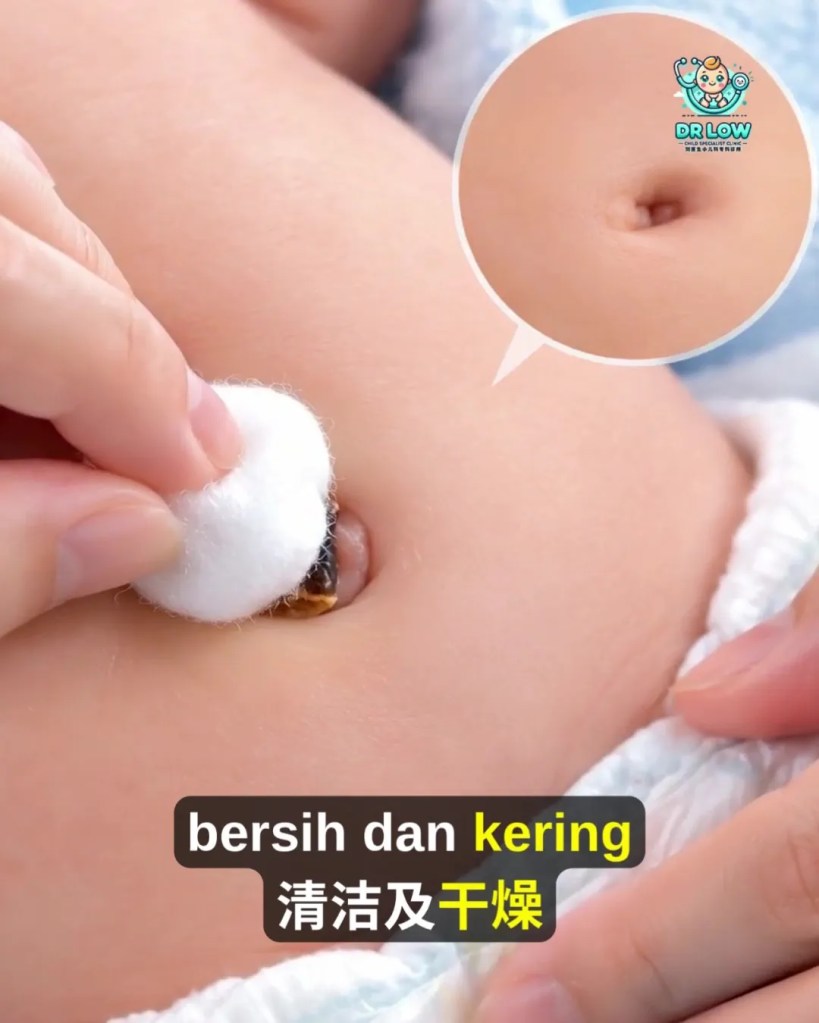
✔ Keep the umbilical area clean.
✔ Keep the area dry.
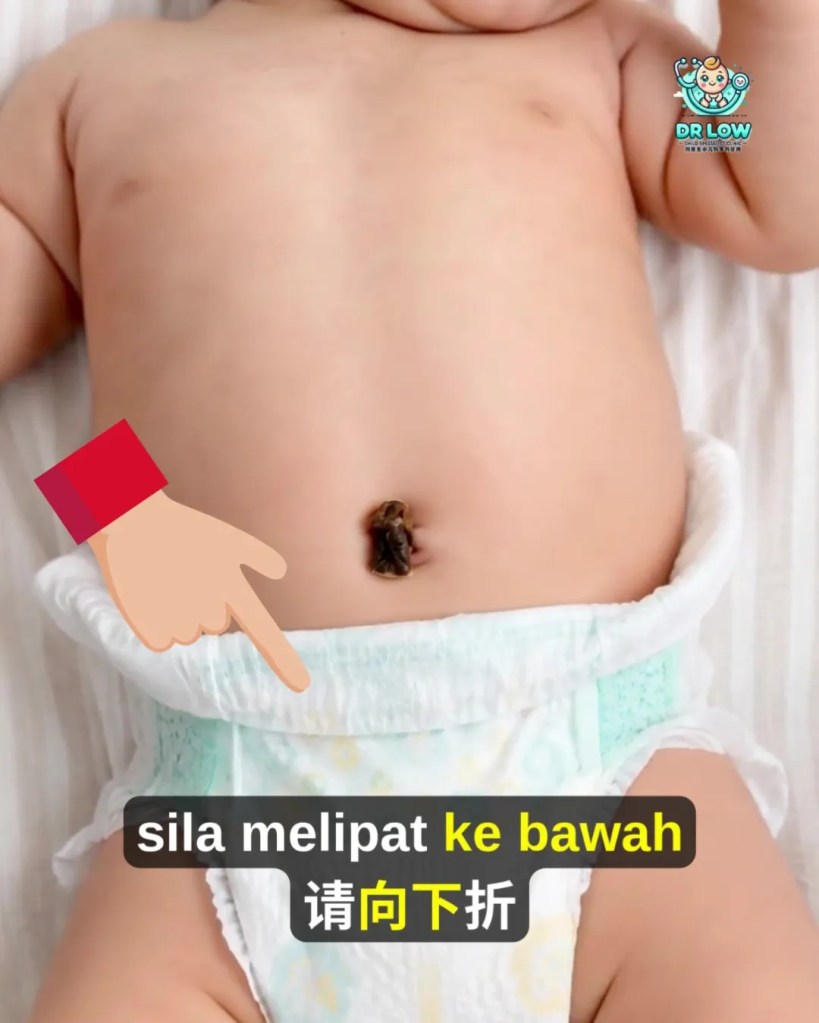
✔ Fold the front of the diaper down so that the belly button is exposed to air.
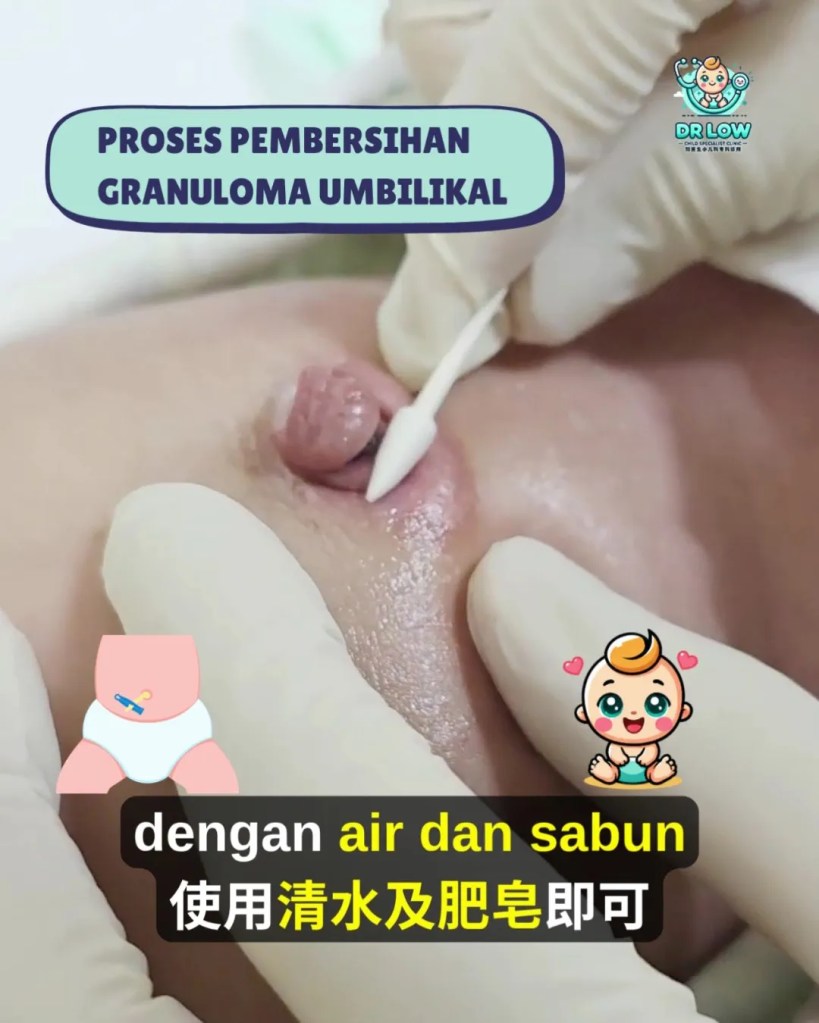
✔ Clean the area with mild soap and water if it becomes soiled with urine or stool.
✔ Avoid applying traditional remedies, herbal products, oils, powders or medications unless advised by your doctor.
✔ Never attempt to cut or pull off the granuloma.
Will Umbilical Granuloma Go Away on Its Own?
Some very small granulomas may gradually resolve without treatment.
However, many require treatment to speed up healing and reduce the risk of infection.
A medical assessment is recommended to determine the most appropriate management.
Can My Baby Still Have a Bath?
Yes.
Babies with Umbilical Granuloma can continue to have normal baths.
After bathing:
- Gently dry the belly button
- Avoid leaving the area damp
- Keep the area clean and well ventilated
 FAQ
FAQFrequently Asked Questions (FAQ)
Get quick answers to frequently asked questions about umbilical granuloma.
No. In most babies, it is a harmless condition that responds well to treatment.
Usually not.
Most babies do not appear to experience pain from the granuloma.
No.
Umbilical Granuloma is not an infection and cannot spread to other babies.
Healing depends on the size of the granuloma and the treatment method used.
Many babies improve within several days to a few weeks.
You should seek medical attention if:
- The lump becomes larger
- Pus develops
- There is a foul smell
- The surrounding skin becomes increasingly red
- Your baby develops a fever
- Your baby feeds poorly or appears unwell
No.
Not every lump in the belly button is an Umbilical Granuloma. Some conditions require different treatment, so parents should obtain a proper medical diagnosis before starting home treatment.
Umbilical Granuloma
Umbilical Granuloma is a common condition that can develop after the umbilical cord falls off.
Although the moist red lump may look alarming, it is usually a harmless overgrowth of healing tissue and can often be treated successfully with common salt therapy or Silver Nitrate.
Parents should continue to keep the belly button clean and dry while monitoring for signs of infection.
If you are unsure whether your baby’s belly button is healing normally or if the lump appears unusual, consult your doctor for an accurate diagnosis and appropriate treatment.
#UmbilicalGranuloma #BabyBellyButton #UmbilicalCord #UmbilicalCordCare #NewbornCare #BabyHealth #InfantHealth #ParentingMalaysia #Paediatrics #ChildHealth #DrLowChildSpecialistClinic #ChildSpecialistClinicBatuPahat #ChildSpecialistBatuPahat #ChildClinicBatuPahat #ChildDoctorBatuPahat #PantaiHospitalBatuPahat #BatuPahat #Johor #BabyCare #ParentEducation