


Haze in Batu Pahat: 5 Important Ways to Protect Your Child’s Health During Unhealthy Air Quality | Dr Low Child Specialist Clinic Batu Pahat
Dr Low Child Specialist Clinic Batu Pahat – Child Doctor BP
Haze in Batu Pahat, Johor, can affect children’s respiratory health, especially those with asthma or existing breathing problems. Dr Low Han Nee, a child specialist at Pantai Hospital Batu Pahat, shares five important ways parents can protect their children during unhealthy air quality, recognise warning signs and know when to seek medical attention.
Haze in Batu Pahat: 5 Important Ways to Protect Your Child’s Health During Unhealthy Air Quality
When the sky over Batu Pahat, Johor, becomes hazy and the air feels uncomfortable, many parents begin to worry about their children’s health.
- Is it safe for my child to play outside?
- Why is my child coughing more during haze season?
- Can haze trigger an asthma attack?
- When should I bring my child to see a doctor?
These are important questions, especially when air quality reaches unhealthy levels.
Haze is a common environmental health concern in Malaysia. It can affect families in Batu Pahat and other parts of Johor when air pollution increases.
Children may be particularly vulnerable to air pollution because their lungs are still developing. They are also generally more active than adults and may spend more time playing outdoors.
During haze episodes, tiny particles suspended in the air can irritate the eyes, nose, throat and respiratory system.
For children with asthma or existing respiratory conditions, exposure to polluted air may also worsen their symptoms.
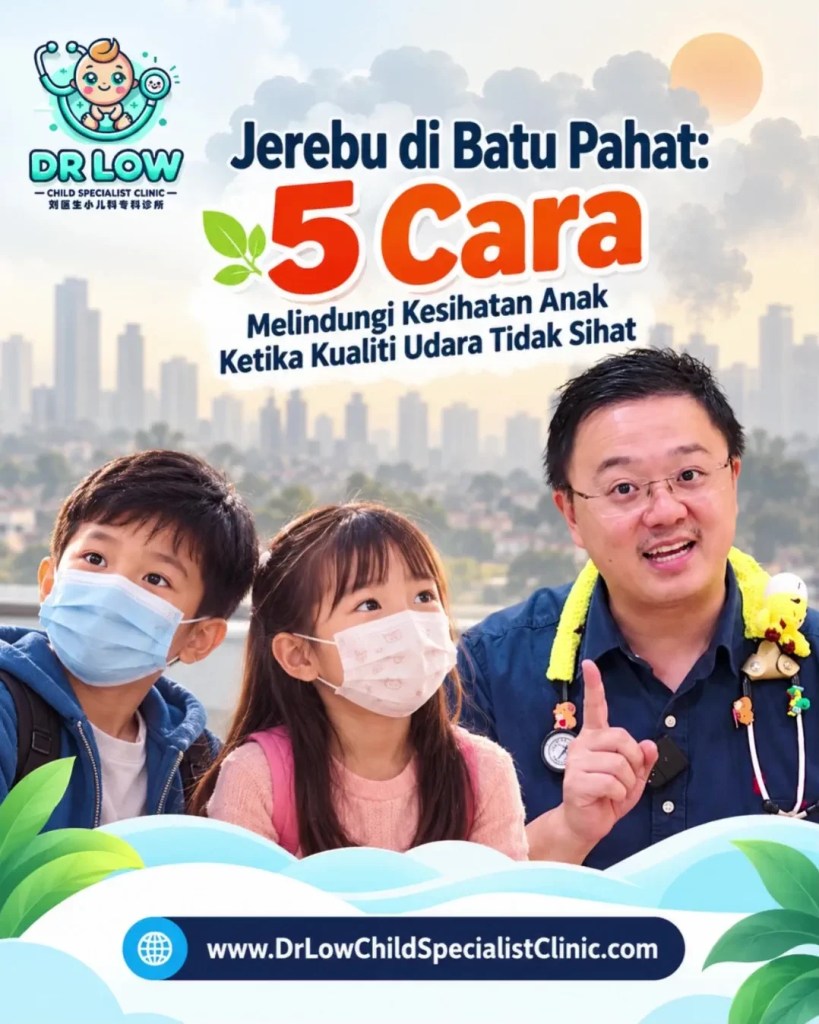
Dr Low Han Nee, a Consultant General Paediatrician at Pantai Hospital Batu Pahat, shares five important precautions that parents can take to protect their children’s health during haze season.
1. Reduce Outdoor Activities When Air Quality Is Unhealthy
Children love outdoor activities.
Whether they are playing football, cycling, running around the playground or participating in school sports, physical activity is an important part of growing up.
However, when air quality becomes unhealthy, parents should consider reducing outdoor activities, particularly strenuous exercise.
Why?
When children run or exercise, they breathe faster and more deeply.
This means they may inhale more polluted air, including fine particles that can irritate their respiratory system.
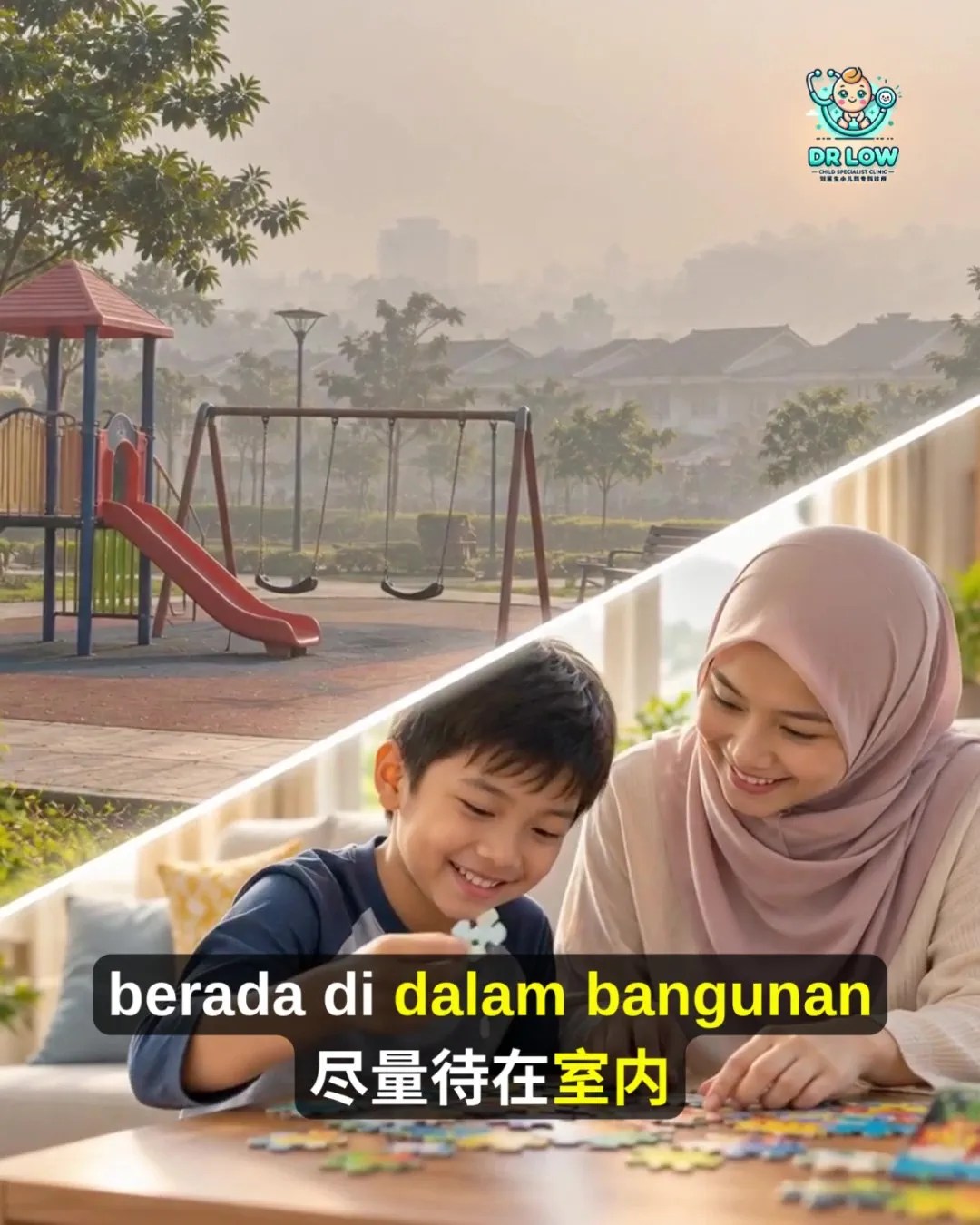
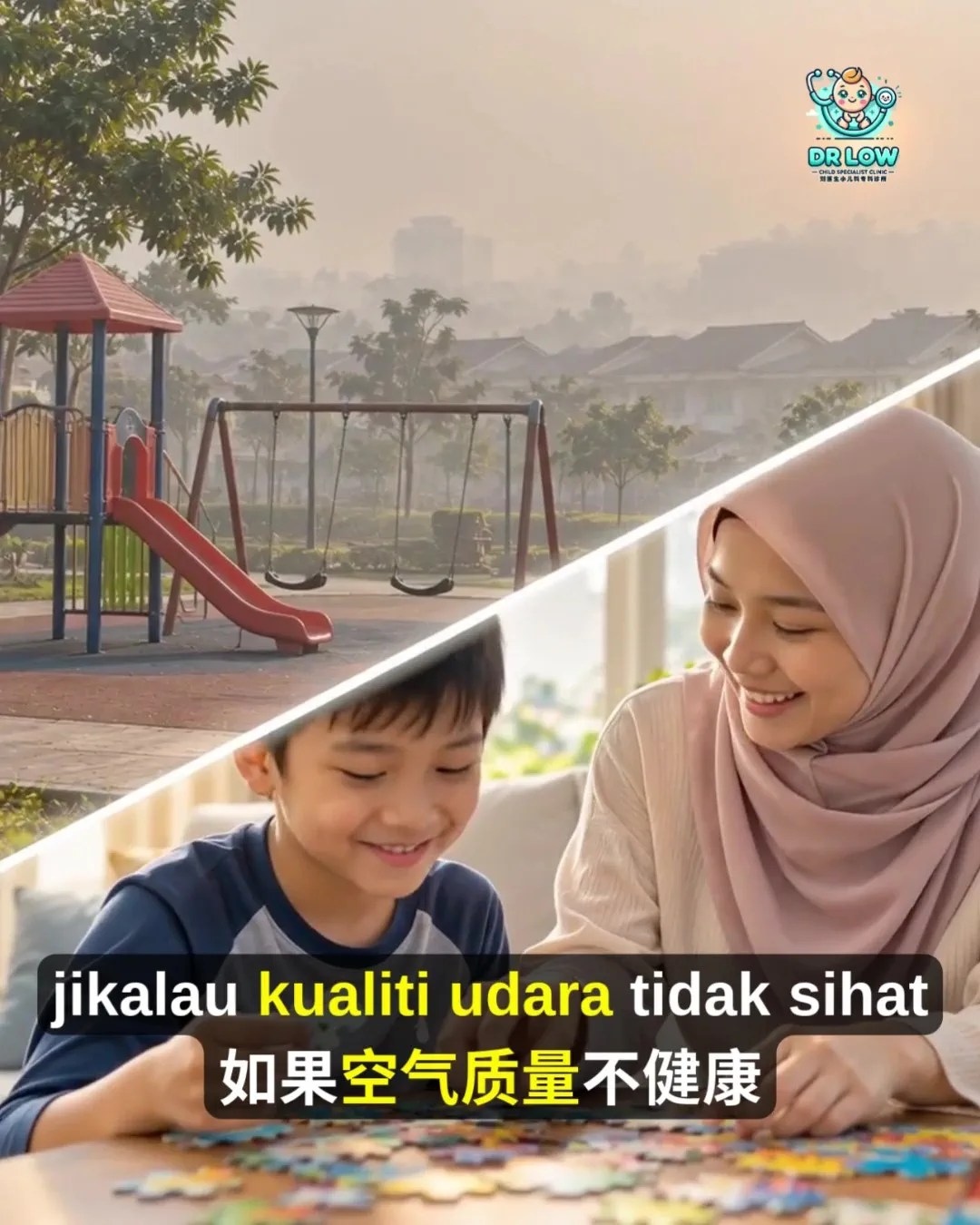
During periods of unhealthy air quality, parents can encourage indoor activities such as reading, drawing, puzzles, board games and creative play.
Children can still have fun while reducing their exposure to polluted outdoor air.
Check the Air Pollution Index in Batu Pahat
Parents are encouraged to monitor Malaysia’s Air Pollutant Index (API), also known locally as IPU or Indeks Pencemaran Udara.
The API provides information about outdoor air quality.
| API Reading | Air Quality Category |
|---|---|
| 0–50 | Good |
| 51–100 | Moderate |
| 101–200 | Unhealthy |
| 201–300 | Very Unhealthy |
| Above 300 | Hazardous |
When the API reaches unhealthy levels, outdoor physical activities should be reduced, especially for children with asthma or other respiratory conditions.
For the latest information, parents can check the official Malaysia Air Pollutant Index Management System.
Parenting tip: Do not rely only on how the sky looks. Air pollution can still be present even when visibility appears relatively normal.

2. Make Sure Your Child Stays Properly Hydrated
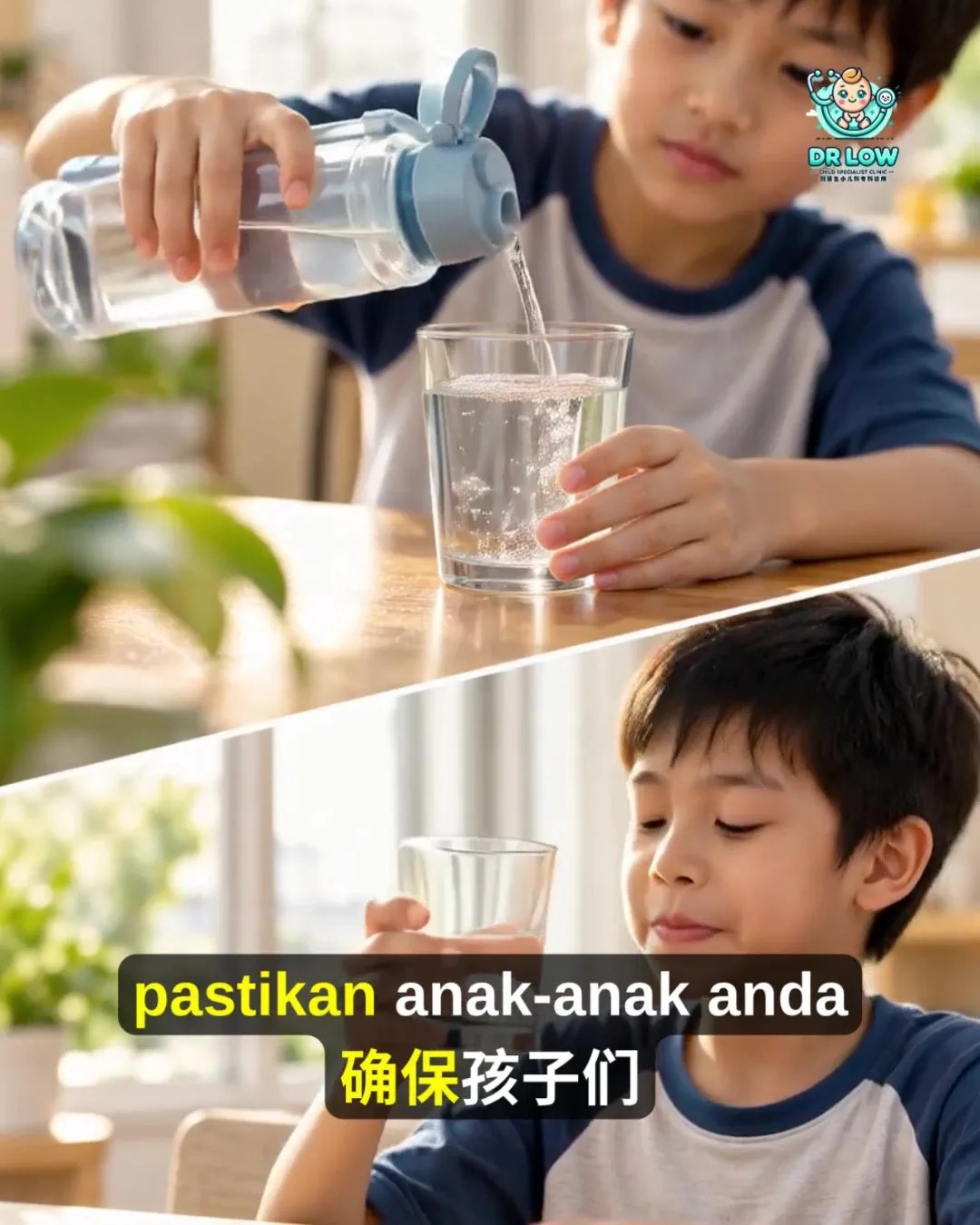
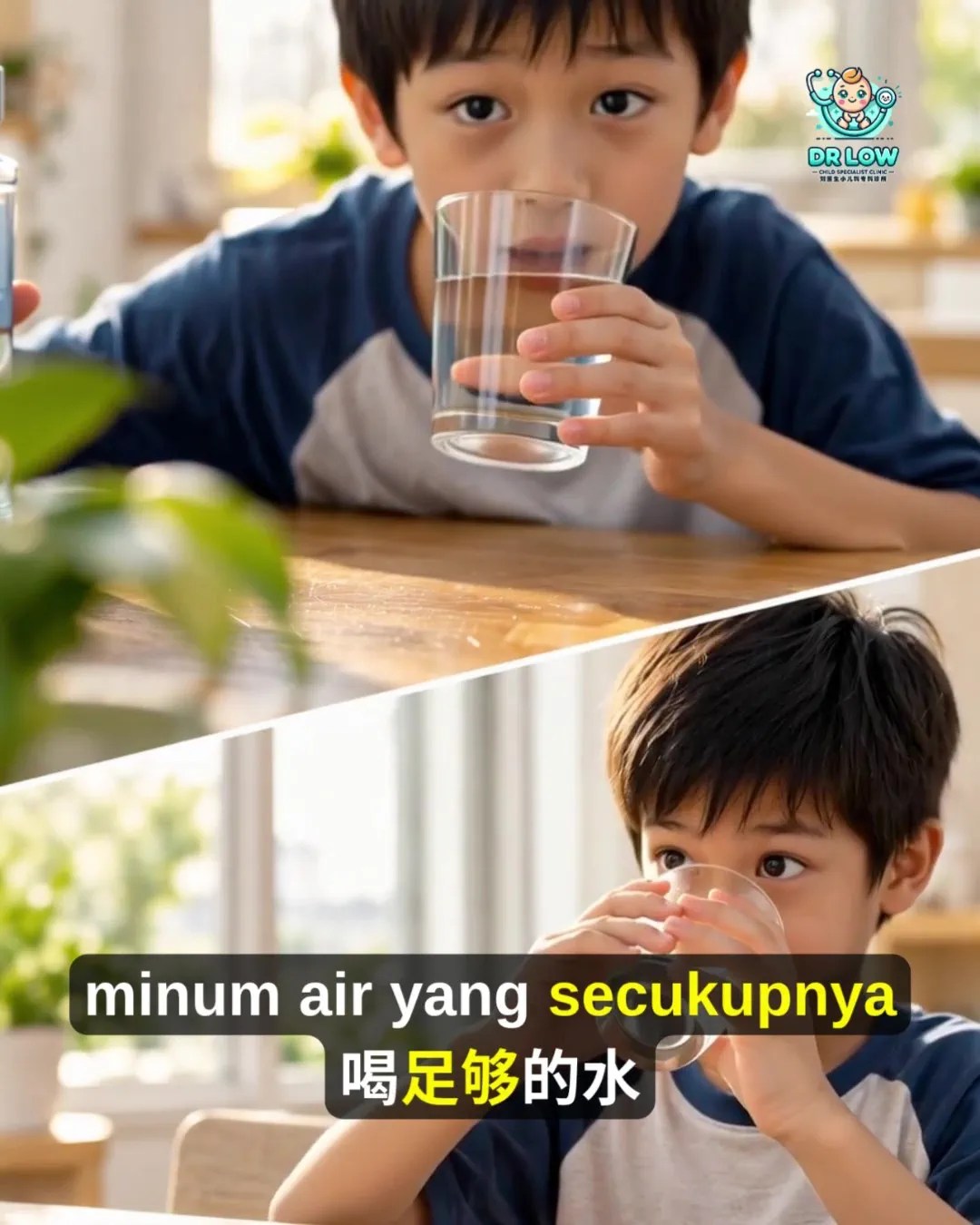
During hot and hazy weather, parents should ensure their children drink enough fluids.
Encourage children to drink water regularly throughout the day, particularly after physical activity.
For school-going children, preparing a reusable water bottle can help them develop healthy hydration habits.
You can also remind them to drink water during breaks at school.
However, it is important to understand that drinking water does not remove haze particles from the lungs.
Staying hydrated supports normal body functions, but it does not replace the need to reduce exposure to polluted air.
For babies younger than six months, continue breastfeeding or formula feeding as appropriate. Do not give additional plain water unless advised by a healthcare professional.
3. Watch for Coughing, Eye Irritation and Breathing Problems
Haze can irritate a child’s eyes and respiratory system.
Some children may experience symptoms after exposure to polluted air.
Common symptoms can include:
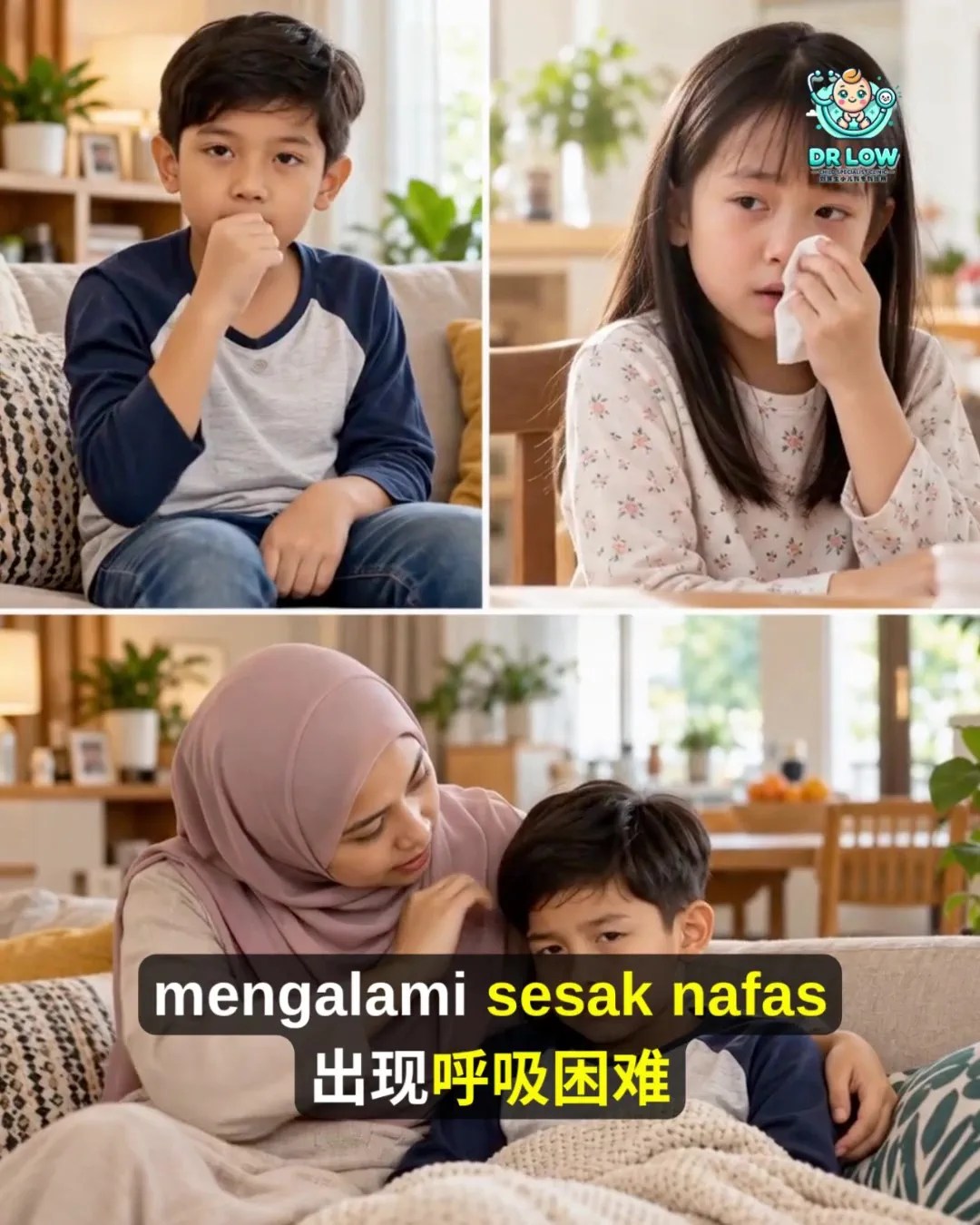
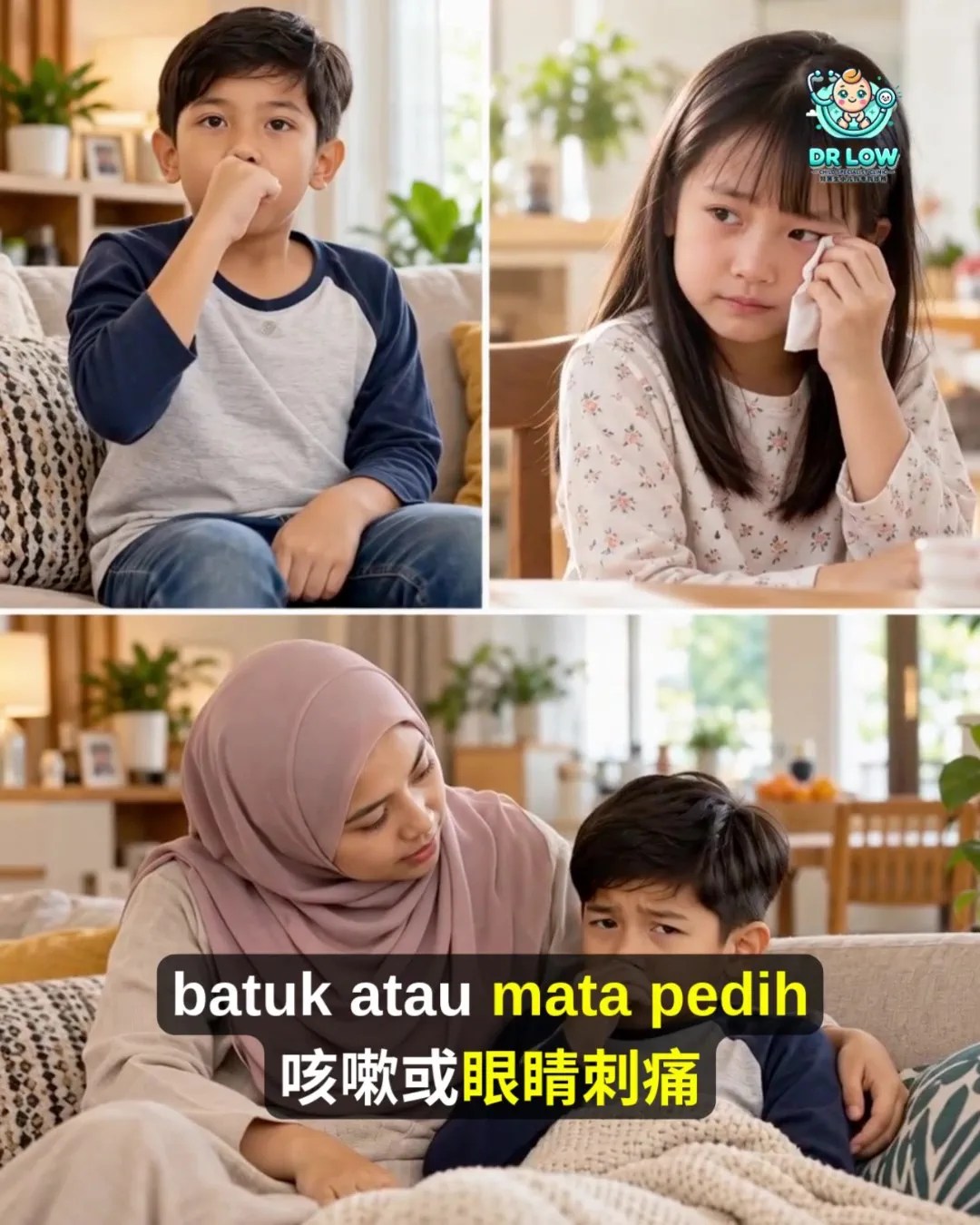
- Coughing or throat irritation
- Red, watery or irritated eyes
- Runny nose or nasal discomfort
- Chest discomfort
- Wheezing, or a whistling sound when breathing
- Shortness of breath
- Difficulty breathing
Not every child will experience these symptoms, and their severity may vary.
If your child develops mild discomfort, reducing exposure to polluted air may help.
However, do not ignore symptoms that persist, worsen or affect your child’s daily activities.
For example, if your child continues coughing, develops wheezing or appears unusually tired, a medical assessment may be necessary.
Is My Child’s Cough Caused by Haze?
Not necessarily.
Although haze can irritate the respiratory tract, coughing may also be caused by other conditions such as viral infections, influenza, asthma or allergies.
A child who develops a fever, persistent cough or worsening breathing symptoms should not automatically be assumed to be reacting to haze.
A doctor may need to examine the child to determine the cause.
Parents searching for a Child Specialist Batu Pahat, Child Clinic Batu Pahat or Child Doctor Batu Pahat can contact Dr Low Child Specialist Clinic Batu Pahat to enquire about paediatric consultations.
4. Take Extra Precautions if Your Child Has Asthma
Children with asthma may be more sensitive to air pollution.
Haze can irritate their airways and trigger or worsen asthma symptoms.
These symptoms may include:
Persistent coughing, wheezing, chest tightness and shortness of breath.
If your child has already been diagnosed with asthma, it is important to continue following the treatment plan provided by their doctor.
Do not stop prescribed asthma controller medication simply because your child appears well.
Controller medications help manage airway inflammation and reduce the risk of asthma symptoms.
If your child has been prescribed a reliever inhaler, ensure it is available when needed and used according to medical instructions.
Parents should also follow their child’s asthma action plan, if one has been provided.
What If My Child’s Asthma Becomes Worse During Haze?
If your child begins coughing more frequently, develops wheezing or experiences increasing breathing difficulties, follow the asthma action plan provided by their doctor.
If symptoms are not improving as expected after prescribed reliever medication, seek urgent medical attention.
Severe breathing difficulties require emergency care.
Important: Do not independently change, increase or discontinue asthma medications without appropriate medical guidance.
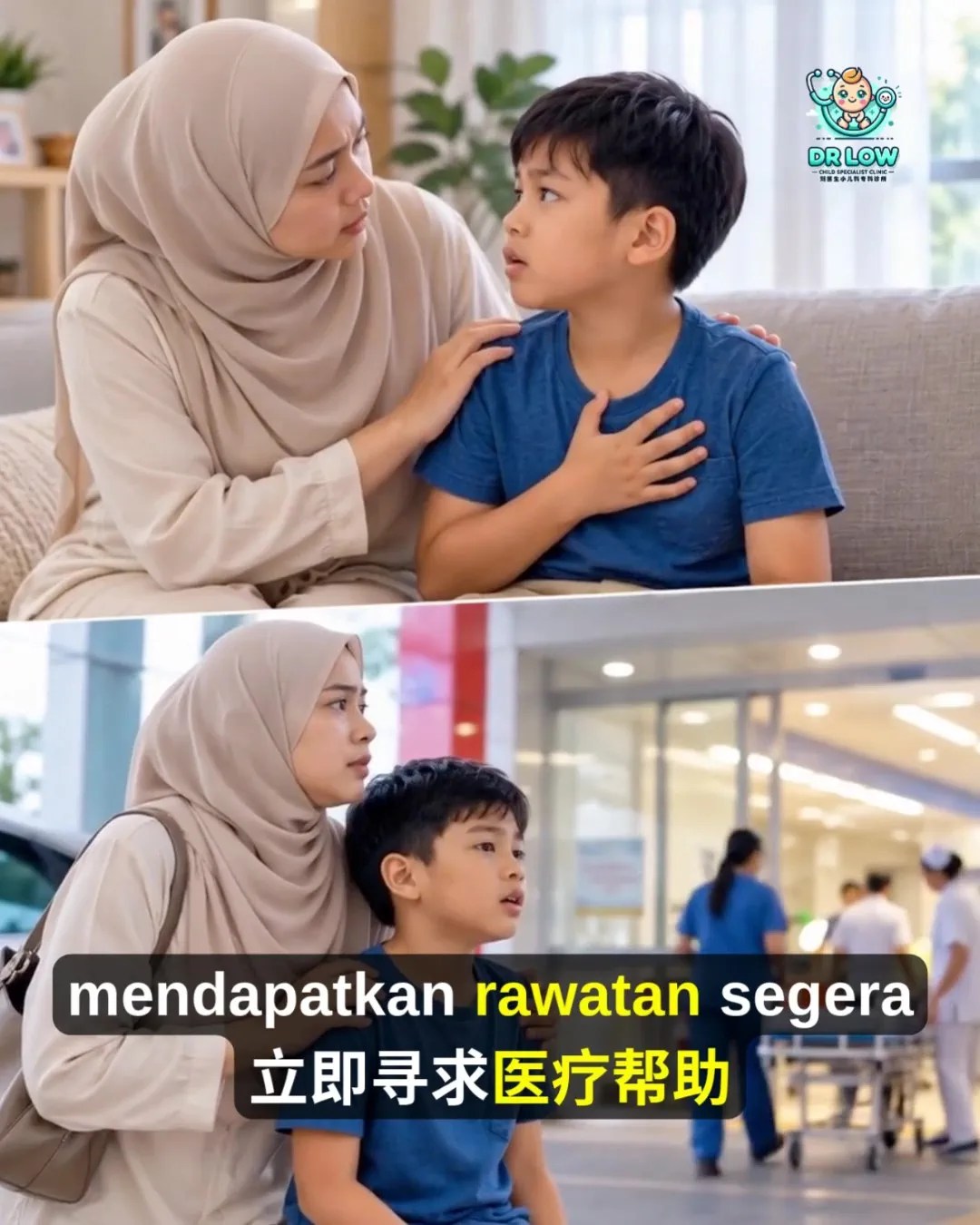
5. Seek Immediate Medical Attention for Serious Breathing Difficulties
This is one of the most important messages for parents.
While some haze-related symptoms may be mild, significant breathing difficulties should never be ignored.
Seek emergency medical care if your child experiences:
- Severe or rapidly worsening difficulty breathing
- Very fast or laboured breathing
- Visible pulling in of the chest or ribs during breathing
- Difficulty speaking, drinking or feeding because of breathlessness
- Blue or grey lips
- Unusual drowsiness, confusion or reduced responsiveness
- Severe asthma symptoms that do not improve with prescribed reliever treatment
For babies and younger children, recognising breathing problems can be particularly challenging because they may not be able to explain how they feel.
Parents should observe their child’s breathing, feeding, activity level and overall behaviour.
If your child is struggling to breathe, do not wait for the symptoms to disappear.
Seek emergency care immediately. In Malaysia, call 999 if emergency assistance is needed.

Which Children Need Extra Protection During Haze Season?
Although all children should avoid unnecessary exposure to unhealthy air, certain groups may require additional precautions.
Babies and Young Children
Their respiratory systems are still developing, and they may be unable to communicate symptoms clearly.
Children with Asthma
Air pollution can trigger airway irritation and worsen asthma symptoms.
Children with Chronic Respiratory Conditions
Children with existing lung or breathing conditions may experience increased discomfort when exposed to polluted air.
Children with Recurrent Breathing Problems
If your child frequently develops wheezing, persistent coughing or breathing difficulties, consult a paediatrician to determine whether further assessment is necessary.
Parents looking for a Child Specialist Clinic Batu Pahat or Child Specialist Clinic BP may seek paediatric advice on managing their child’s respiratory health.
Should Children Wear Face Masks During Haze?
Many parents ask whether their children should wear face masks when going outside during haze season.
A properly fitted particulate respirator, such as an appropriate N95 mask, can help reduce exposure to certain airborne particles.
However, its effectiveness depends on the type of mask, its fit and whether it is worn correctly.
Adult-sized N95 masks may not fit children’s faces properly.
Children younger than two years should not wear face masks.
For older children, parents should consider whether the mask fits correctly and can be worn safely.
Children with respiratory conditions may need individual advice from their doctor.
Remember that masks are not a complete solution.
When outdoor air quality is unhealthy, reducing unnecessary outdoor exposure remains an important protective measure.


Is Indoor Air Always Safe During Haze?
Not necessarily.
Although staying indoors can reduce exposure to outdoor pollution, haze particles may still enter buildings through open windows, doors and ventilation systems.
Parents can take practical steps to improve the indoor environment.
Keep windows and doors closed when outdoor pollution is high, where appropriate and safe.
Avoid smoking or vaping indoors.
Reduce activities that generate unnecessary smoke or particles.
If available, consider using an appropriately sized air purifier equipped with a HEPA filter.
Maintain air-conditioning and filtration equipment according to the manufacturer’s instructions.
These measures can help reduce indoor particle exposure, particularly for children with asthma or other respiratory conditions.

Haze, Common Cold or Influenza: How Can Parents Tell the Difference?
During haze season, parents may notice their children coughing more often.
However, not every cough is caused by haze.
Several conditions can produce similar symptoms.
| Condition | Possible symptoms |
|---|---|
| Haze-related irritation | Coughing, throat discomfort, eye irritation |
| Common cold | Runny nose, nasal congestion, sore throat, coughing |
| Influenza | Fever, coughing, tiredness, body aches |
| Asthma | Recurrent coughing, wheezing, chest tightness, breathing difficulties |
| Allergic rhinitis | Sneezing, itchy nose, runny nose, nasal congestion |
These symptoms can overlap, and the table cannot confirm a diagnosis.
For example, a child may have asthma and a viral infection at the same time.
If your child develops persistent symptoms, fever, wheezing or difficulty breathing, medical assessment may be needed.

5 Important Haze Safety Tips Every Parent Should Remember
1. Reduce Outdoor Activities
Keep children indoors when air quality is unhealthy and avoid strenuous outdoor exercise.
2. Maintain Proper Hydration
Ensure children receive enough fluids for their age and needs.
3. Monitor Symptoms
Watch for coughing, eye irritation, wheezing and breathing difficulties.
4. Continue Prescribed Asthma Treatment
Follow your child’s asthma management plan and do not stop controller medication without medical advice.
5. Recognise Emergency Warning Signs
Seek immediate medical attention if your child develops serious breathing difficulties.

 FAQ
Frequently Asked Questions (FAQ)
Frequently Asked Questions About Haze and Children’s Health
Haze contains airborne pollutants that may irritate the eyes and respiratory tract. Children, especially those with asthma or chronic respiratory conditions, may be more vulnerable to its effects. Reducing unnecessary exposure is important.
It depends on the current air quality, your child’s health and the activity involved. When the Air Pollution Index reaches unhealthy levels, outdoor physical activities should be reduced, particularly strenuous or prolonged exercise.
If coughing persists, becomes worse or is accompanied by fever, wheezing, breathing difficulties or unusual tiredness, consult a doctor. Haze is not the only possible cause of coughing.
Yes. Air pollutants can irritate sensitive airways and trigger asthma symptoms. Children with asthma should continue prescribed treatment and follow their asthma action plan.
No. Staying hydrated is important for general health, but drinking water does not remove inhaled air pollution particles from the lungs.
An appropriately fitted particulate respirator may help reduce exposure to airborne particles in some older children. However, fit and safe use are important, and adult-sized masks may not fit properly. Children younger than two years should not wear masks.
Seek immediate emergency medical care if your child has severe breathing difficulties, blue or grey lips, difficulty speaking or feeding because of breathlessness, or reduced responsiveness.
Parents searching for a Child Specialist Clinic Batu Pahat, Child Specialist BP, Child Doctor Near Me or Child Doctor Near By Batu Pahat can contact Dr Low Child Specialist Clinic Batu Pahat for information about paediatric consultation services.
For serious breathing emergencies, proceed directly to the nearest emergency department.

A Message from Dr Low Han Nee to Parents in Batu Pahat
Dear parents,
Haze season can be worrying, especially when you have young children at home.
However, there are simple steps we can take to reduce their exposure and protect their health.
Monitor the air quality.
Reduce outdoor activities when the air is unhealthy.
Make sure your children receive enough fluids.
Watch for coughing, wheezing or breathing difficulties.
And if your child has asthma, continue their prescribed medications and follow the treatment plan given by their doctor.
Most importantly, do not delay seeking medical attention when your child develops serious breathing difficulties.
We may not be able to control the haze, but we can take steps to protect our children.
Together, we can help our children stay healthier and safer during haze season.
About Dr Low Child Specialist Clinic Batu Pahat
Dr Low Child Specialist Clinic Batu Pahat, also known as Klinik Pakar Kanak-Kanak Batu Pahat Dr Low and 刘医生峇株吧辖小儿科专科诊所, provides paediatric healthcare services for babies, children and adolescents in Batu Pahat, Johor, Malaysia.
#HazeBatuPahat #HazeJohor #HazeMalaysia #HazeSeason #HazeAwareness #ChildrenHealth #ChildHealth #ChildSafety #HazeProtection #AirPollution #AirQuality #AsthmaAwareness #ChildhoodAsthma #RespiratoryHealth #ParentingTips #ParentingMalaysia #BatuPahat #Johor #ChildSpecialistBatuPahat #ChildSpecialistClinicBatuPahat #ChildClinicBatuPahat #ChildDoctorBatuPahat #ChildSpecialistBP #ChildClinicBP #ChildDoctorBP #DrLowHanNee #DrLowChildSpecialistClinic #PantaiHospitalBatuPahat


