A Small Red Patch Spread Across the Leg in 24 Hours! Cellulitis Warning Signs in Children | Dr Low Batu Pahat
Dr Low Child Specialist Clinic Batu Pahat – Child Doctor BP
A small red patch on your child’s leg can sometimes develop into cellulitis. Dr Low Han Nee, Child Specialist Batu Pahat, explains 4 warning signs, causes, antibiotic treatment and when parents should seek urgent medical care.
Cellulitis in Children: When Red, Hot and Swollen Skin Becomes a Warning Sign
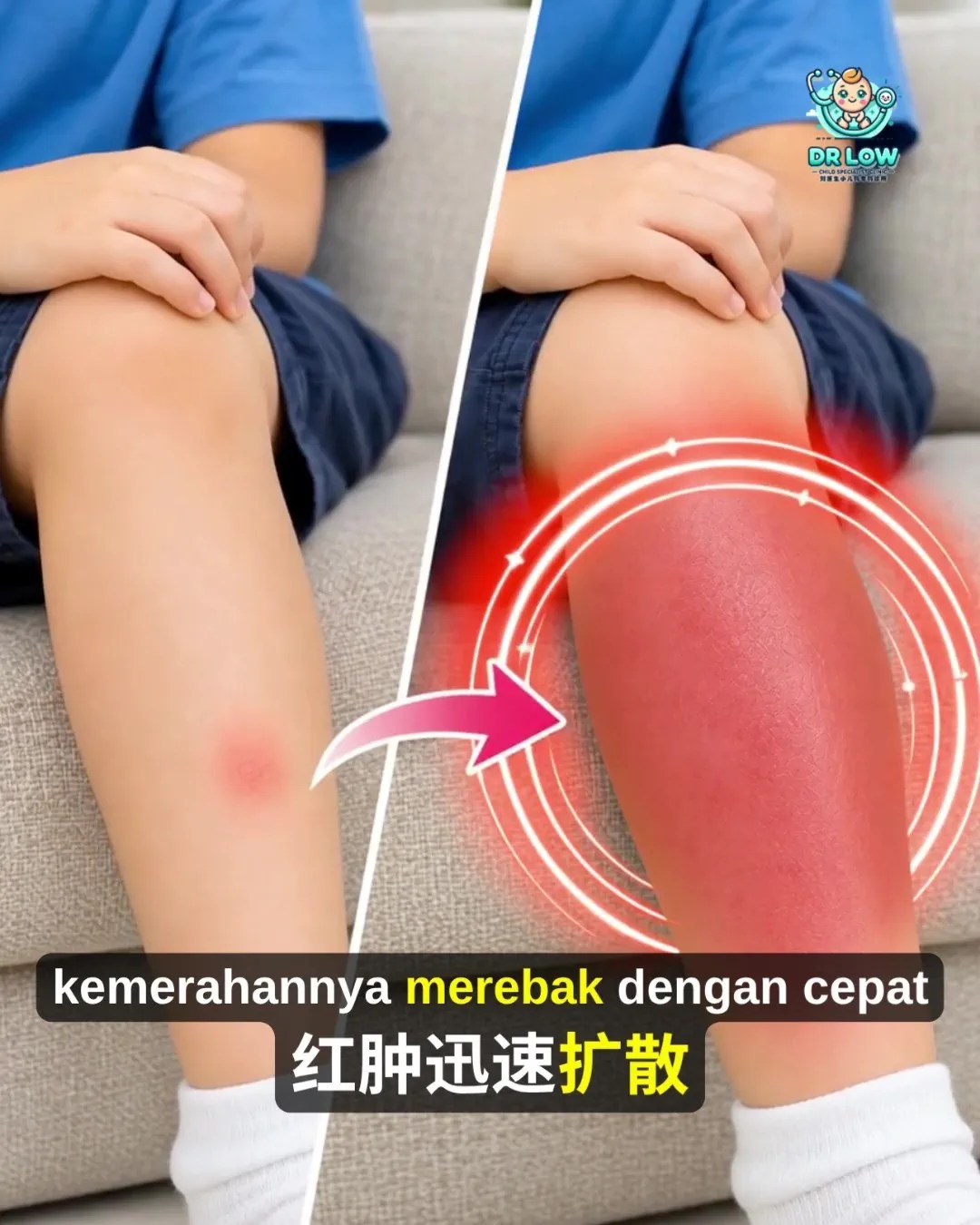
Yesterday, there was only a small red patch on your child’s leg.
At first, it might have looked like an ordinary insect bite or mild skin irritation. Nothing particularly worrying.
But by the following day, that small red patch had spread across a much larger area. The leg became swollen, warm to the touch and painful.
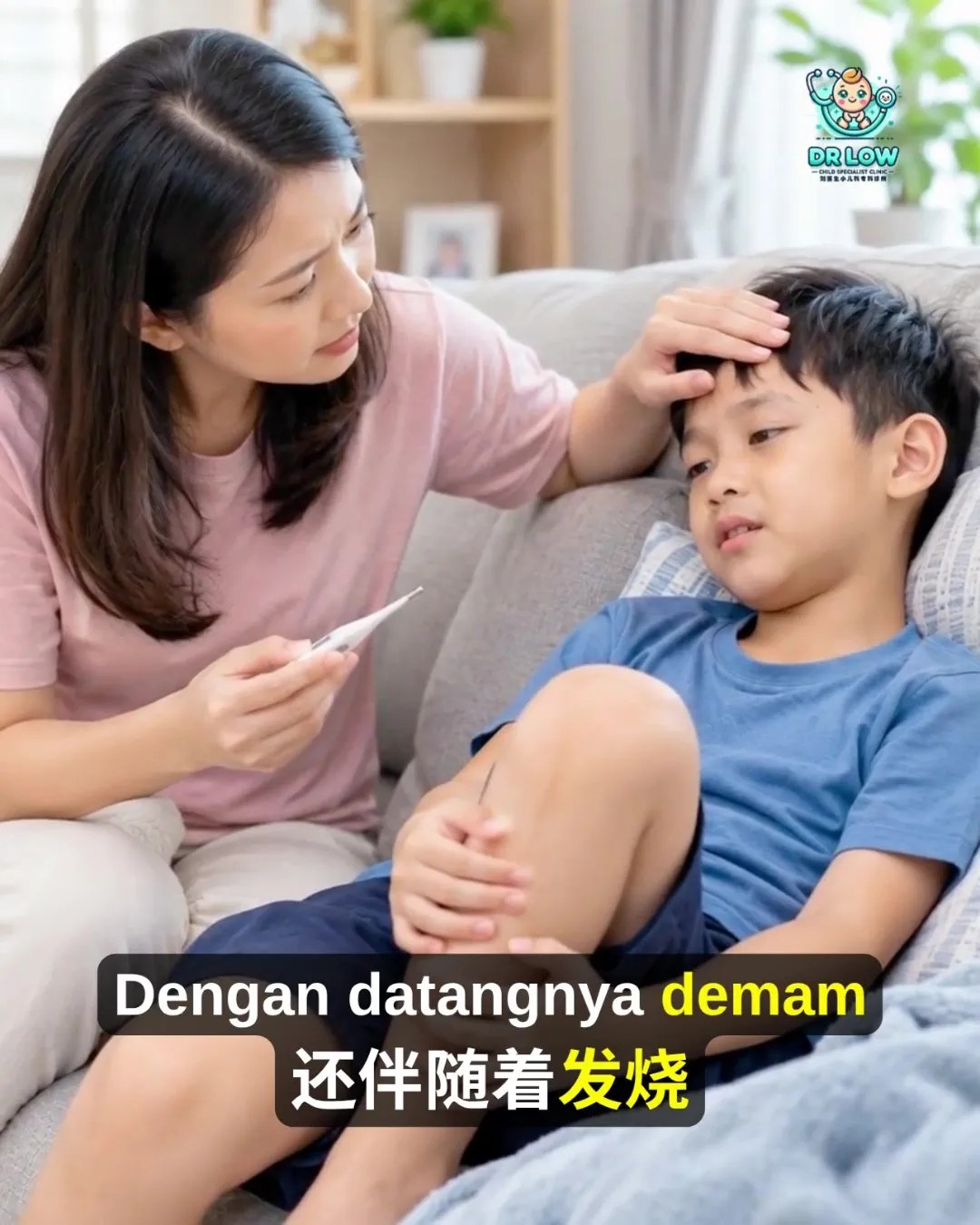
Your child developed a fever, complained of severe pain, and eventually could not even walk.
This is not something parents should ignore.
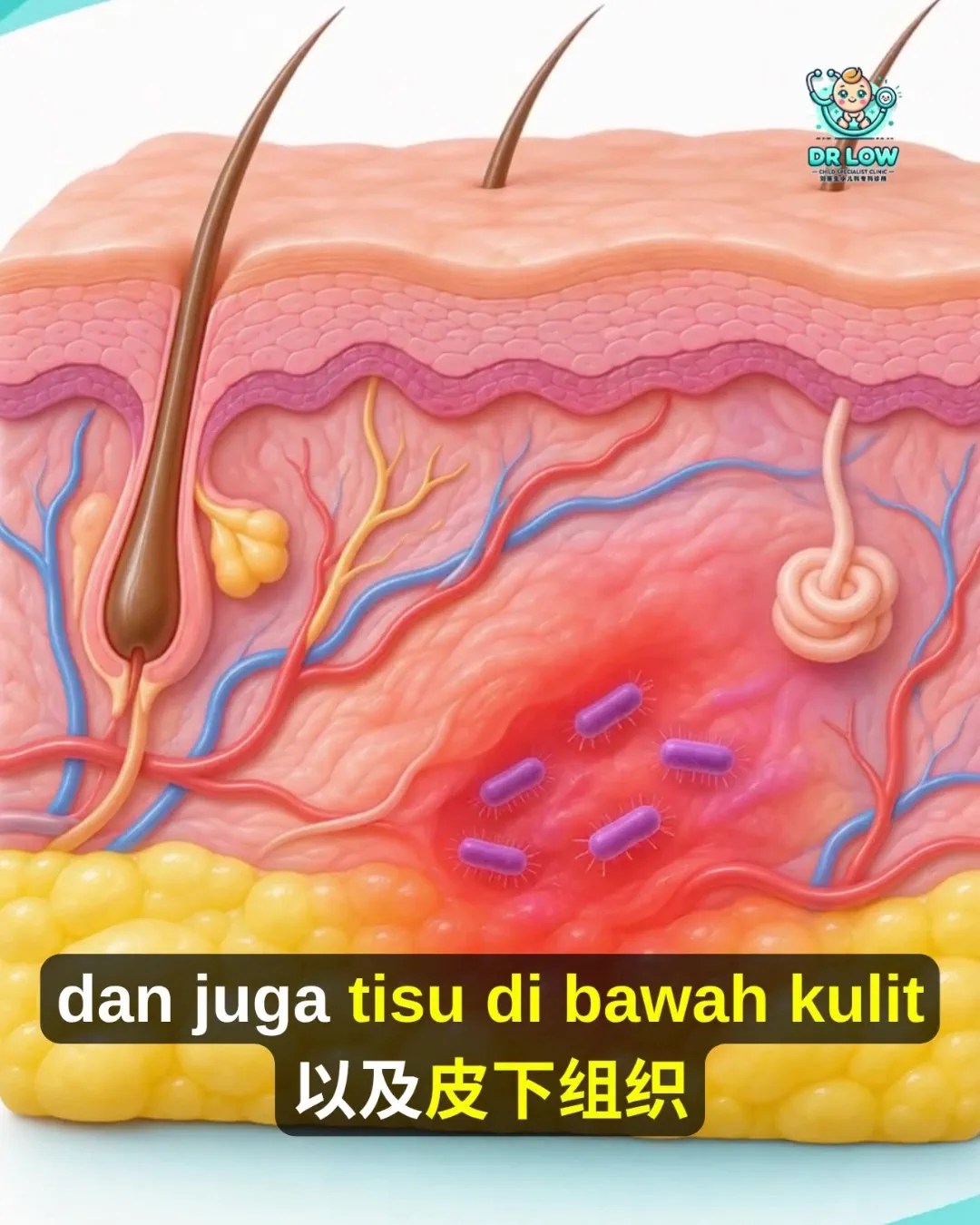
It could be cellulitis, a bacterial infection affecting the deeper layers of the skin and the soft tissues underneath.
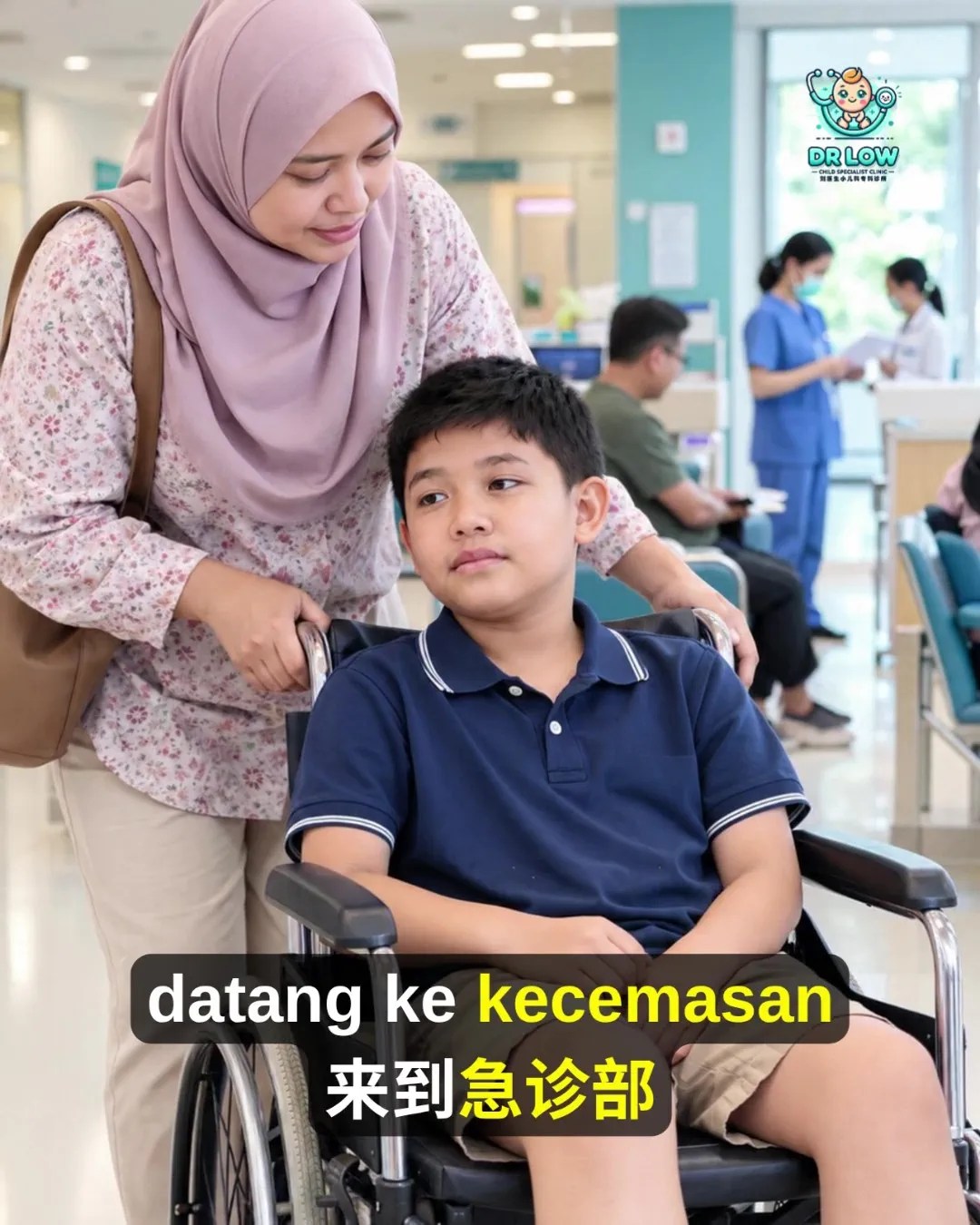
In his educational video, Dr Low Han Nee, a Consultant General Paediatrician at Pantai Hospital Batu Pahat, shares a real clinical experience involving a child who arrived at the emergency department with rapidly spreading redness on the leg.
What began as a small red patch had spread significantly within approximately 24 hours. The child developed a fever and severe pain, making walking impossible.
This experience highlights an important message for parents:
When skin redness spreads rapidly, especially when accompanied by fever or significant pain, seek medical attention promptly.

What Is Cellulitis?
Cellulitis is a bacterial infection involving the deeper layers of the skin and the soft tissues beneath it.
It is different from ordinary skin redness or mild irritation.
When bacteria enter the skin and cause an infection, the body’s inflammatory response can produce several noticeable symptoms.
Common signs of cellulitis include:
- Redness or changes in skin colour
- Skin that feels unusually warm to the touch
- Swelling around the affected area
- Pain or tenderness
- Redness that gradually or rapidly spreads
- Fever, chills or general discomfort in some children
Cellulitis can occur almost anywhere on the body, including the feet, legs, hands and arms.
The legs are among the commonly affected areas.
One important point to remember is that cellulitis does not always produce pus or an obvious open wound.
Sometimes, the earliest sign is simply a small patch of red skin.


What Causes Cellulitis in Children?
Our skin acts as a natural protective barrier against bacteria and other harmful microorganisms.
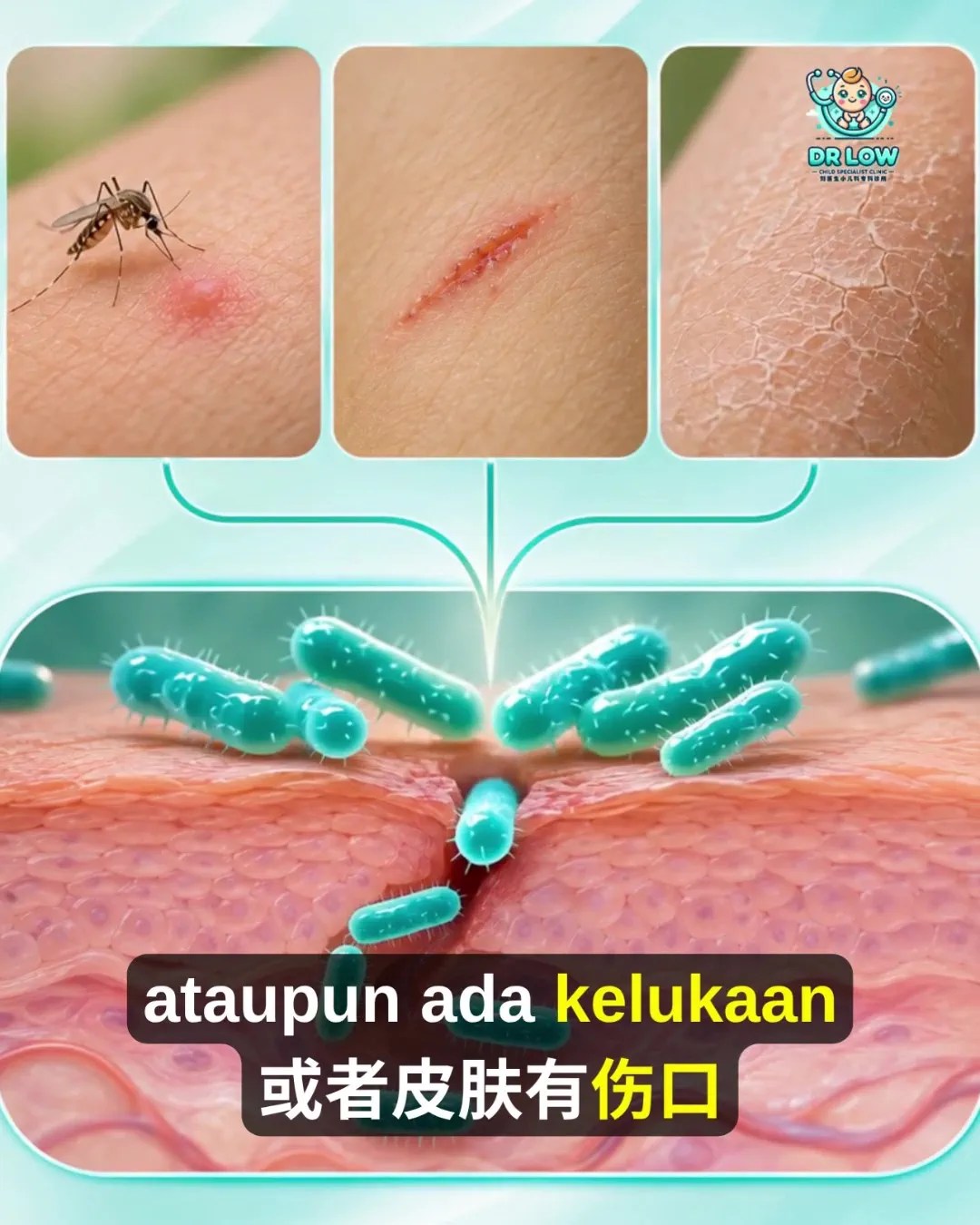
However, when the skin becomes damaged, bacteria may enter through small openings and reach deeper tissues.
These openings can be so tiny that parents may not even notice them.
Several common situations can increase the risk of cellulitis in children.
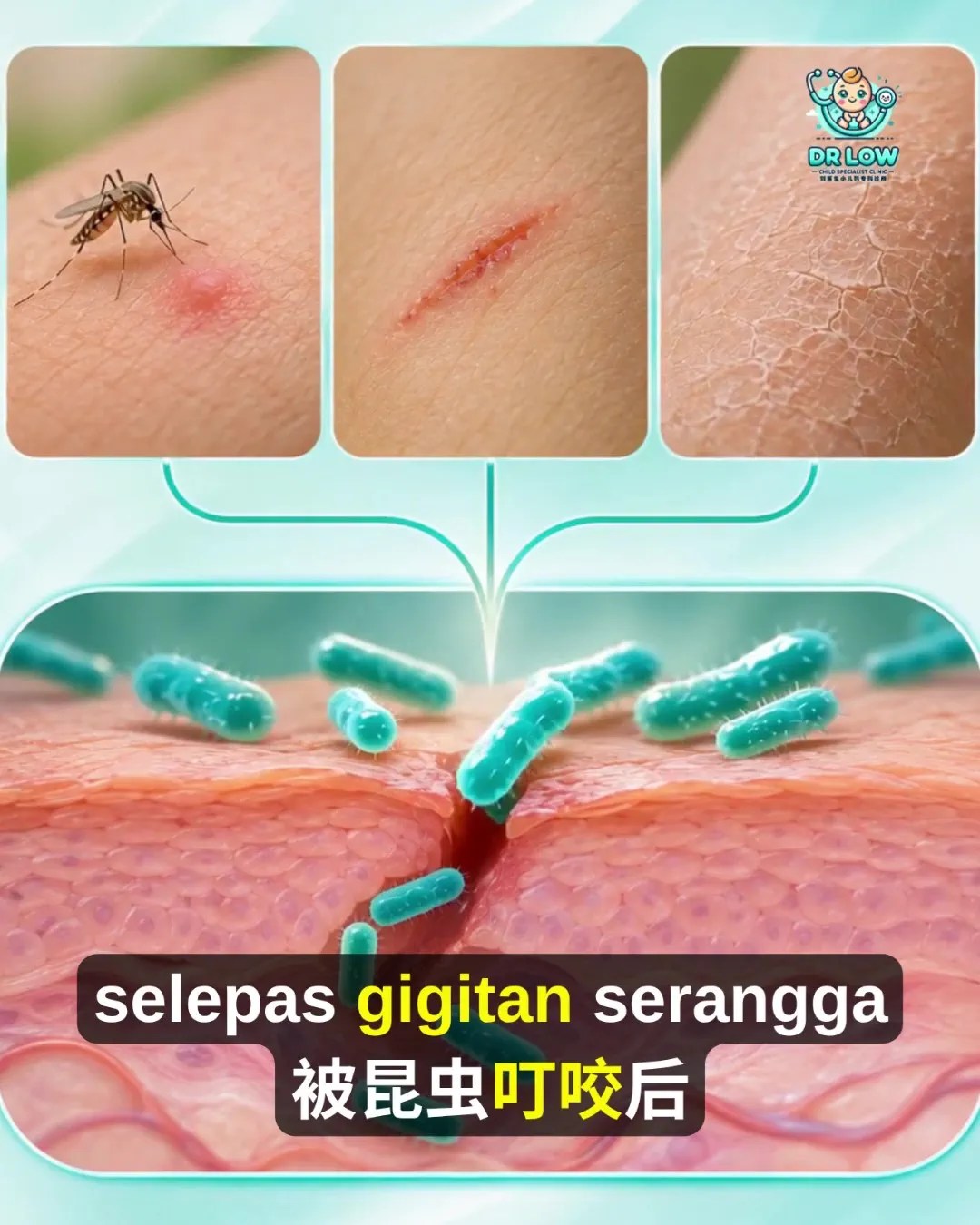
1. Insect Bites
Children may scratch mosquito bites or other insect bites because of itching.
Repeated scratching can damage the skin, creating an entry point for bacteria.
However, not every insect bite leads to cellulitis.
2. Small Cuts and Scratches
Children are naturally active.
Running, cycling, playing outdoors or accidentally falling can result in small cuts and abrasions.
Even a minor break in the skin can sometimes allow bacteria to enter.
3. Dry and Cracked Skin
Very dry skin may develop tiny cracks.
When the skin barrier becomes damaged, bacteria have an opportunity to enter and cause an infection.
4. Eczema and Other Skin Conditions
Children with eczema may have a weakened skin barrier.
Frequent scratching can further damage the skin, increasing the risk of bacterial skin infections.
Proper eczema management and skin moisturisation can help reduce this risk.
5. Other Skin Injuries
Minor wounds, scratches and other skin injuries can also provide an entry point for bacteria.
This explains why some parents may wonder:
“My child didn’t have a big wound. Why did the whole leg suddenly become red and swollen?”
The answer is simple.
The opening that allows bacteria to enter does not have to be large or easily visible.

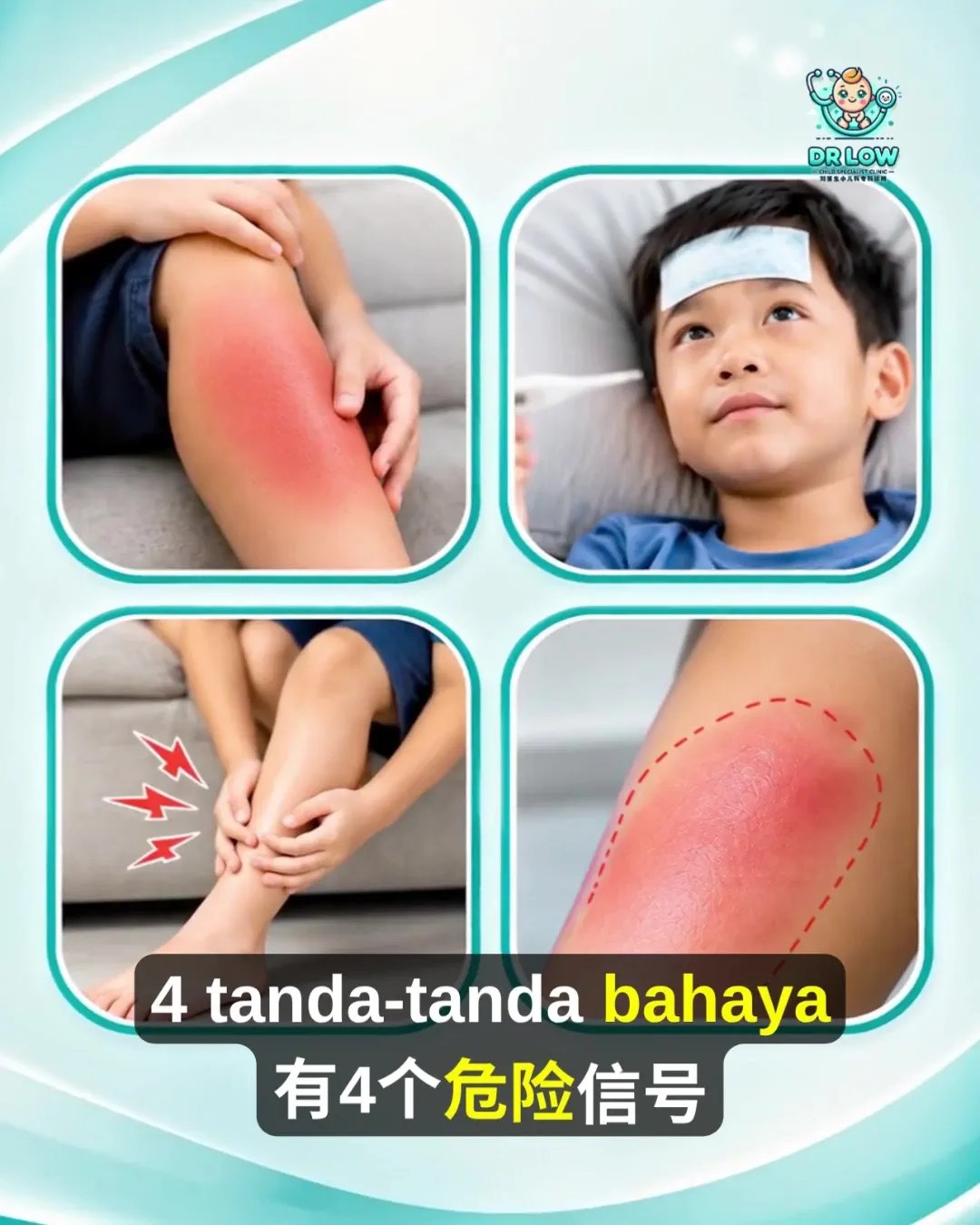
4 Warning Signs of Cellulitis Every Parent Should Know
In his educational video, Dr Low Han Nee highlights four important warning signs that parents should recognise.
1. Redness That Spreads Rapidly
A small red patch may become significantly larger within several hours or over the course of a day.
Parents should observe not only the colour of the skin but also whether the affected area is expanding.
Rapidly spreading redness requires prompt medical assessment.
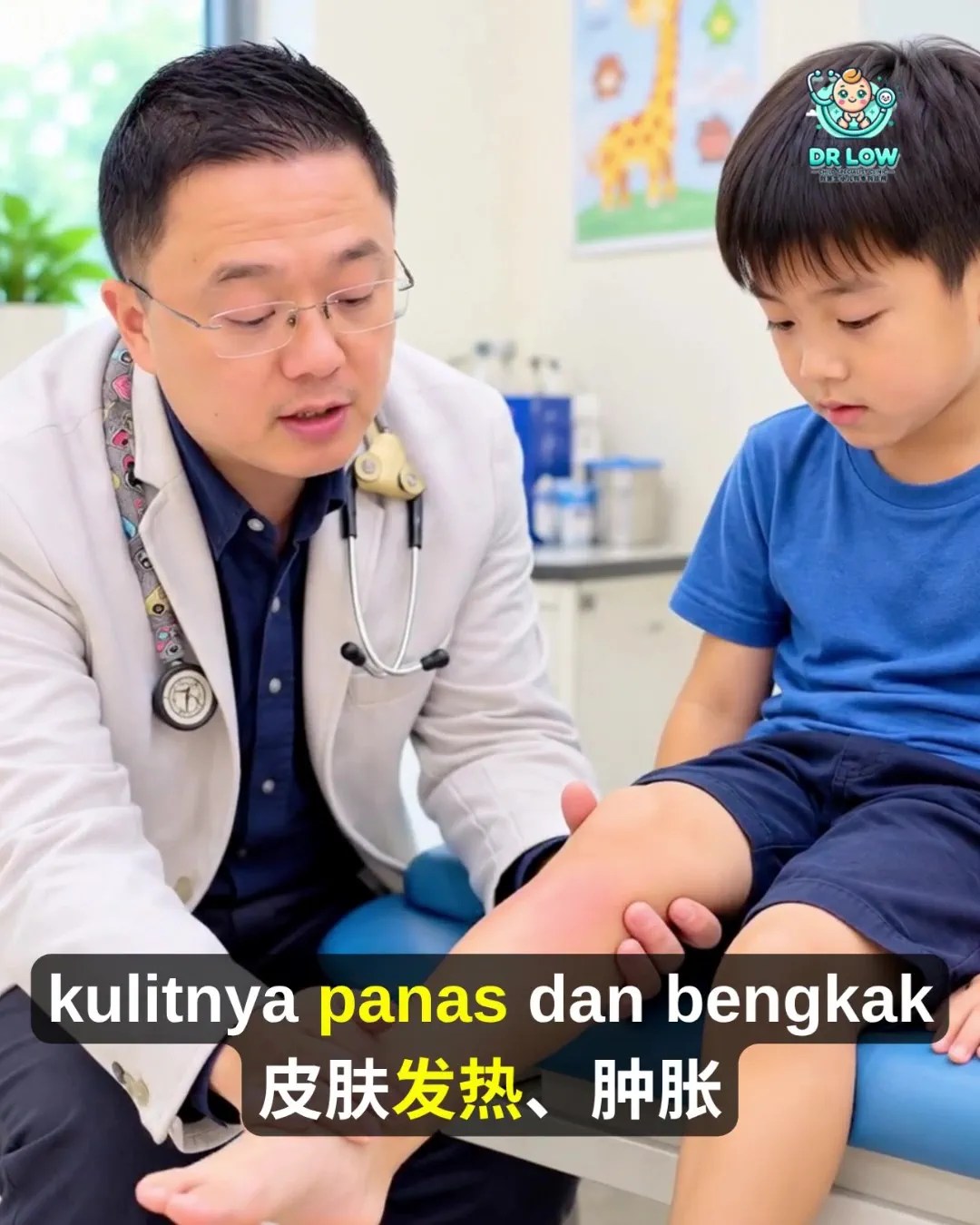
2. Skin That Feels Hot and Swollen
Cellulitis causes inflammation in the affected skin and underlying tissues.
The area may feel warmer than the surrounding skin and become increasingly swollen.
When redness, warmth, swelling and pain occur together, a bacterial infection should be considered.
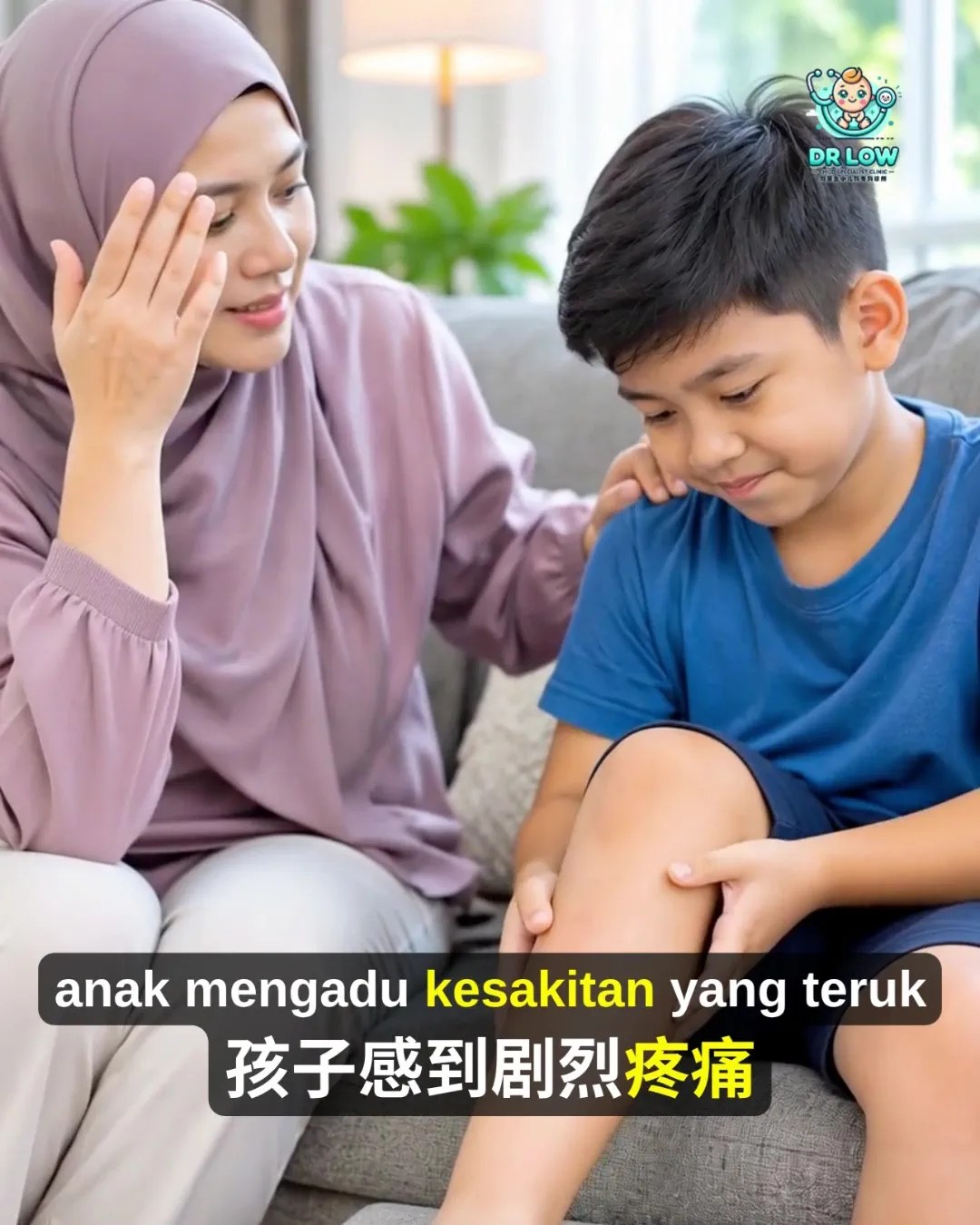
3. Significant or Severe Pain
Cellulitis can cause considerable discomfort.
If the infection affects the leg, a child may begin limping, refuse to stand or become unable to walk because of pain.
Severe or worsening pain, particularly when accompanied by rapidly changing skin symptoms, should not be ignored.
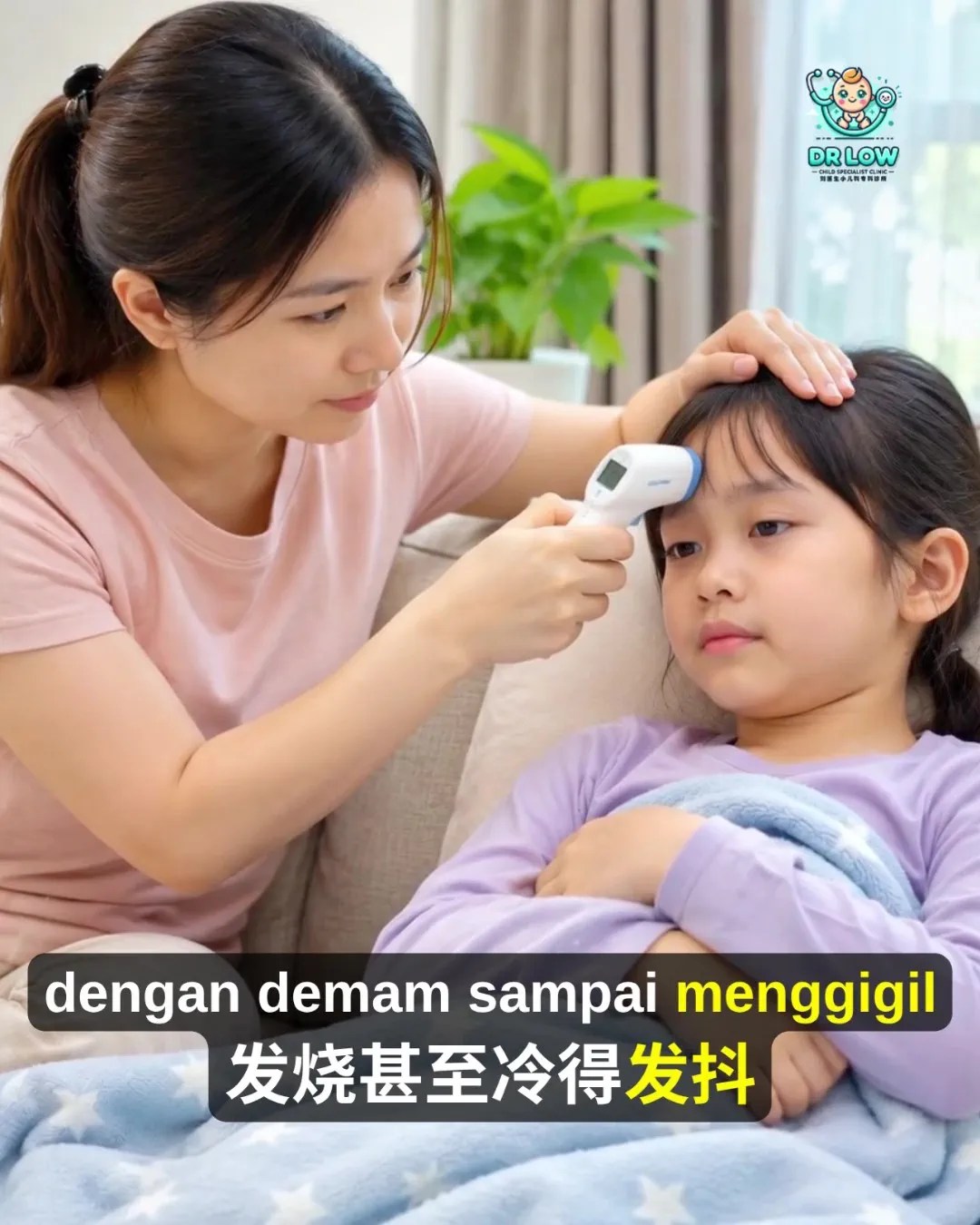
4. Fever or Chills
Some children with cellulitis develop a fever or chills as their body responds to the infection.
If your child has spreading skin redness together with fever, chills or appears increasingly unwell, seek medical attention promptly.
Remember these four warning signs:
Rapidly spreading redness, hot and swollen skin, significant pain, and fever or chills.
Don’t Wait Until Pus Appears
One important misunderstanding about skin infections is the belief that an infection is only serious when pus becomes visible.
That is not true.
Cellulitis can occur without any visible pus.
This is because cellulitis affects the deeper layers of the skin and the tissues beneath it, rather than necessarily forming a collection of pus.
An abscess, on the other hand, is a localised collection of pus within the tissue.
Cellulitis and abscesses are different conditions, although they can sometimes occur together.
If your child’s skin is becoming increasingly red, swollen, hot or painful, particularly when the redness is spreading, do not wait for pus to develop before seeking medical attention.
Is Cellulitis Dangerous?
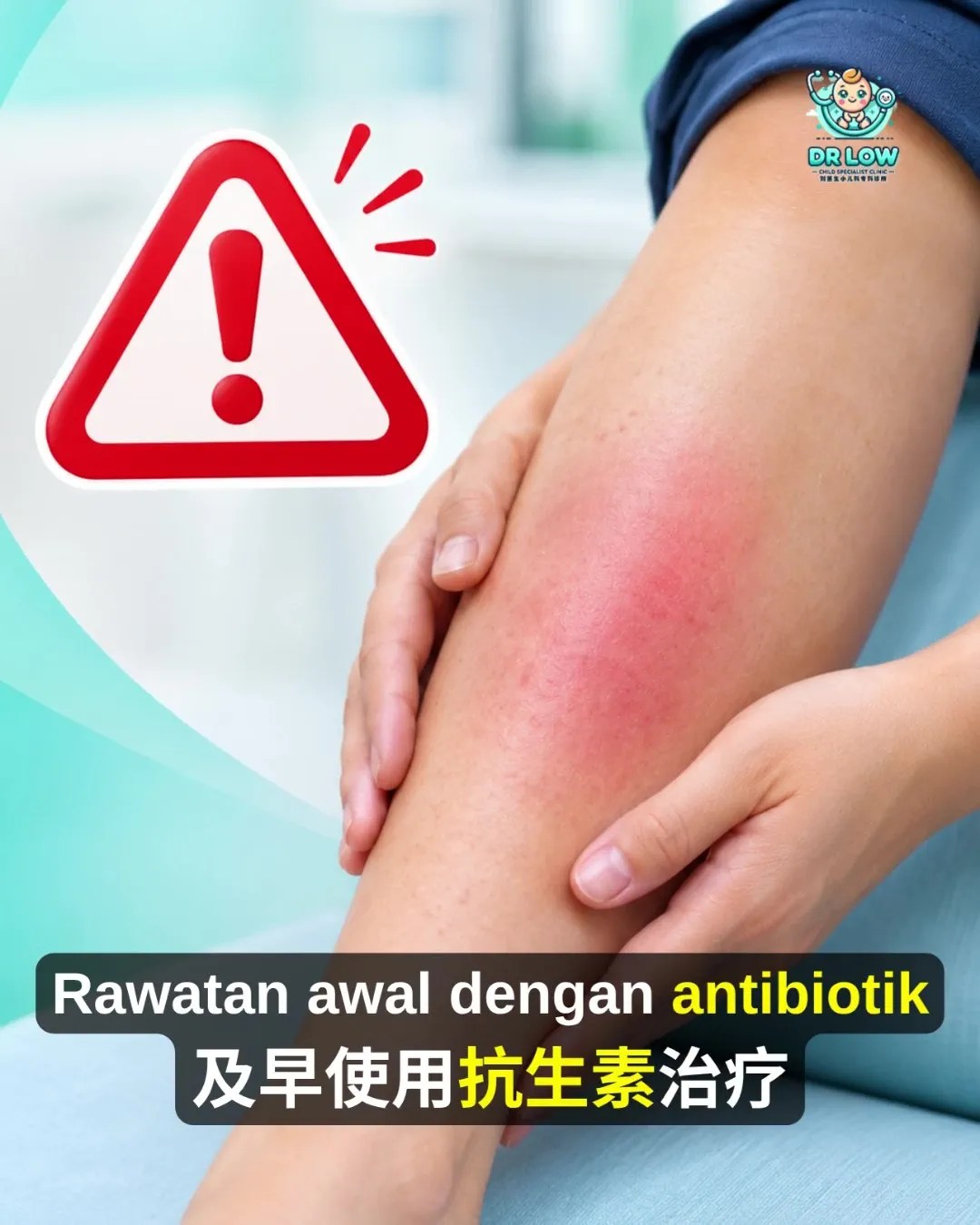
Most cases of cellulitis respond well to appropriate antibiotic treatment, especially when the infection is recognised and treated early.
However, an infection that is not adequately controlled can become more serious.
In certain cases, bacteria may spread into deeper tissues or affect other parts of the body, including muscles, bones or the bloodstream.
One potentially life-threatening complication is sepsis.
Sepsis occurs when the body’s response to an infection causes serious dysfunction and may affect vital organs.
Although severe complications are uncommon, parents should understand that a bacterial skin infection can sometimes become more than a local skin problem.
That is why a child’s overall condition is just as important as the appearance of the affected skin.


How Is Cellulitis Treated in Children?
Treatment depends on several factors, including the severity of the infection, the area affected, the child’s age and their overall health.
A doctor will assess the child before deciding on the most appropriate treatment.
1. Mild Cellulitis: Oral Antibiotics
For milder cases, when the infection is localised and the child is otherwise well, oral antibiotics may be prescribed.
These medicines help the body control the bacterial infection.
Parents should follow the prescribed dosage and treatment duration carefully.
Even if the child’s symptoms begin to improve, antibiotics should not be stopped or changed without medical advice.
2. Severe Cellulitis: Hospital Treatment
If the infection spreads rapidly, the child develops significant fever, severe pain, difficulty walking or appears generally unwell, hospital treatment may be necessary.
Some children require antibiotics administered directly into a vein.
This treatment is known as intravenous antibiotics (IV antibiotics).
Doctors will monitor the child’s temperature, skin changes, pain and overall response to treatment.
In the case shared by Dr Low Han Nee, the child developed a severe infection involving the leg and required intravenous antibiotic treatment in hospital.
This illustrates why recognising worsening symptoms and seeking medical attention early are so important.

Why Is the Skin Still Red After Starting Antibiotics?
Some parents expect the redness and swelling to disappear immediately after their child begins antibiotic treatment.
However, recovery takes time.
During the early stages of treatment, redness and swelling may remain noticeable. In some cases, the affected area may appear slightly worse initially before improving.
This does not necessarily mean the antibiotics are ineffective.
However, if redness continues spreading rapidly, pain becomes more severe, fever persists or the child appears increasingly unwell, the child should be reassessed promptly.
If there is no improvement within approximately 48 hours of starting treatment, parents should contact their doctor for further advice.
Do not wait if serious warning signs develop.
When Should Parents Seek Immediate Medical Attention?
Parents should arrange prompt medical assessment if their child experiences:
- Rapidly spreading skin redness
- Increasing warmth or swelling
- Severe or worsening pain
- Difficulty standing or walking because of pain
- Fever or chills
- Increasing tiredness or unusual weakness
- Redness or swelling around the face or eyes
- Significant swelling or pain near a joint
- Worsening symptoms despite treatment
If your child develops difficulty breathing, confusion, unusual drowsiness, difficulty waking, very pale or cold skin, or appears seriously unwell, seek emergency medical care immediately.
Do not delay treatment when your child shows signs of a serious infection.
How Can Parents Reduce the Risk of Cellulitis?
Not every case of cellulitis can be prevented, but good skin care can help reduce the risk.
Keep Minor Wounds Clean
Clean small cuts and scratches with water and protect them appropriately.
Monitor wounds for increasing redness, swelling, warmth or pain.
Prevent Excessive Scratching
If your child has an insect bite, try to reduce itching and discourage scratching that could break the skin.
Manage Eczema and Dry Skin
Children with eczema or very dry skin benefit from appropriate skin care.
Using suitable moisturisers and following medical advice can help maintain the skin’s protective barrier.
Observe Changes in the Skin
If your child develops an unusual red patch, pay attention to whether the area becomes larger, warmer, swollen or more painful.
Taking photographs at different times may help document changes for the doctor.
However, photographs and home observation should never delay medical assessment when warning signs are present.
Cellulitis vs Insect Bite: How Can Parents Tell the Difference?
This is a common concern among parents.
An ordinary insect bite can cause itching, redness and local swelling.
Cellulitis, however, is more likely to cause increasing warmth, tenderness, pain and spreading redness.
Some children may also develop fever.
Nevertheless, the two conditions can sometimes look similar, particularly during the early stages.
A medical examination may be necessary to determine whether the child has a bacterial skin infection.

Cellulitis vs Abscess: What Is the Difference?
Although both conditions may involve bacterial infections, their characteristics and treatments are different.
| Feature | Cellulitis | Abscess |
|---|---|---|
| Main problem | Infection of deeper skin and underlying tissue | Localised collection of pus |
| Common symptoms | Redness, warmth, swelling and pain | Painful lump or swelling, sometimes with visible pus |
| Is pus always present? | No | Pus is present within the collection |
| Common treatment | Antibiotics | May require drainage, sometimes with antibiotics |
| Medical assessment | Recommended promptly | Required to determine treatment |
In some situations, cellulitis and an abscess can occur together.
The appropriate treatment depends on the doctor’s assessment.


 FAQ
Frequently Asked Questions (FAQ)
Frequently Asked Questions About Cellulitis in Children
Yes, it is possible.
If a child scratches an insect bite until the skin breaks, bacteria may enter through the damaged skin and cause an infection.
However, most insect bites do not develop into cellulitis.
No.
Some children may have localised redness, warmth, swelling and pain without developing a fever.
The absence of fever does not rule out cellulitis.
No.
Cellulitis can develop without any visible pus or abscess.
Parents should not wait for pus to appear before seeking medical attention if the affected area is spreading or becoming increasingly painful.
No.
Milder cases may be treated with oral antibiotics at home.
More serious infections may require hospital monitoring and intravenous antibiotics.
Cellulitis itself is generally not spread directly from one child to another like a cold or influenza.
However, bacteria associated with skin infections can sometimes spread through contact with infected wounds or drainage.
Good hand hygiene and proper wound care remain important.
If the redness is spreading, the area is unusually warm, swollen or painful, medical assessment is recommended even without fever.
Recovery varies depending on the severity of the infection and the child’s response to treatment.
Many children begin improving within the first few days of appropriate antibiotic treatment, although complete resolution of redness and swelling may take longer.
If symptoms worsen or fail to improve after approximately 48 hours of treatment, contact the doctor for reassessment.
Cellulitis generally requires systemic antibiotics, such as oral or intravenous antibiotics, because it affects deeper skin tissues.
Topical creams alone are usually insufficient to treat cellulitis.
Parents should not self-medicate with leftover antibiotics.
Recovery varies depending on the severity of the infection and the child’s response to treatment.
Many children begin improving within the first few days of appropriate antibiotic treatment, although complete resolution of redness and swelling may take longer.
If symptoms worsen or fail to improve after approximately 48 hours of treatment, contact the doctor for reassessment.


An Important Reminder from Dr Low Han Nee
A small red patch on your child’s skin may be nothing more than an ordinary insect bite.
But it can also be the early sign of a bacterial skin infection.
The important thing is to observe how the affected area changes and how your child is feeling.
If the redness spreads rapidly, the skin becomes increasingly hot, swollen or painful, or your child develops fever or difficulty walking, seek medical attention promptly.
Do not wait until pus appears.
Timely antibiotic treatment can help control the infection and reduce the risk of serious complications.
Child Specialist and Paediatric Care in Batu Pahat, Johor
If your child develops unusual skin redness, swelling, pain, fever or symptoms suggesting cellulitis, a medical assessment can help identify the cause and determine appropriate treatment.
Dr Low Han Nee is a Consultant General Paediatrician at Pantai Hospital Batu Pahat, Johor, Malaysia.
Dr Low Child Specialist Clinic Batu Pahat provides paediatric healthcare services for babies, children and adolescents.
For parents searching for a Child Specialist Clinic Batu Pahat, Child Specialist Batu Pahat, Child Clinic Batu Pahat, Child Doctor Batu Pahat, Child Specialist Clinic BP, Child Specialist BP, Child Clinic BP, or Child Doctor BP, the clinic provides child healthcare consultations and advice.
Families searching online for a Child Doctor Near Me, Child Doctor Near By Batu Pahat, or Child Doctor Near By BP can also visit the clinic website to learn more about its paediatric services.
Website: www.DrLowChildSpecialistClinic.com
A Question for Parents
Has your child ever experienced redness or swelling after an insect bite that became noticeably worse the following day?
Did you initially monitor the area at home, or did you seek medical advice?
Feel free to share your experiences or general questions in the comments.
Your experience may help other parents become more aware of the early warning signs of bacterial skin infections in children.
* Medical Disclaimer: This article is intended for general health education and does not replace professional medical examination, diagnosis or treatment. If your child develops symptoms of a serious infection, seek immediate medical attention.
#Cellulitis #CellulitisInChildren #ChildhoodCellulitis #SkinInfection #BacterialSkinInfection #ChildHealth #PaediatricCare #ParentingTips #ChildhoodIllness #CellulitisWarningSigns #ChildSkinHealth #InsectBiteInfection #ChildSpecialistBatuPahat #ChildSpecialistClinicBatuPahat #ChildDoctorBatuPahat #ChildClinicBatuPahat #ChildSpecialistBP #DrLowHanNee #DrLowChildSpecialistClinic #PantaiHospitalBatuPahat #BatuPahat #Johor #Malaysia