


Bacterial Skin Infection and Abscess in Babies: Incision and Drainage Treatment to Remove Pus | Child Specialist Batu Pahat
Dr Low Child Specialist Clinic Batu Pahat – Child Doctor BP
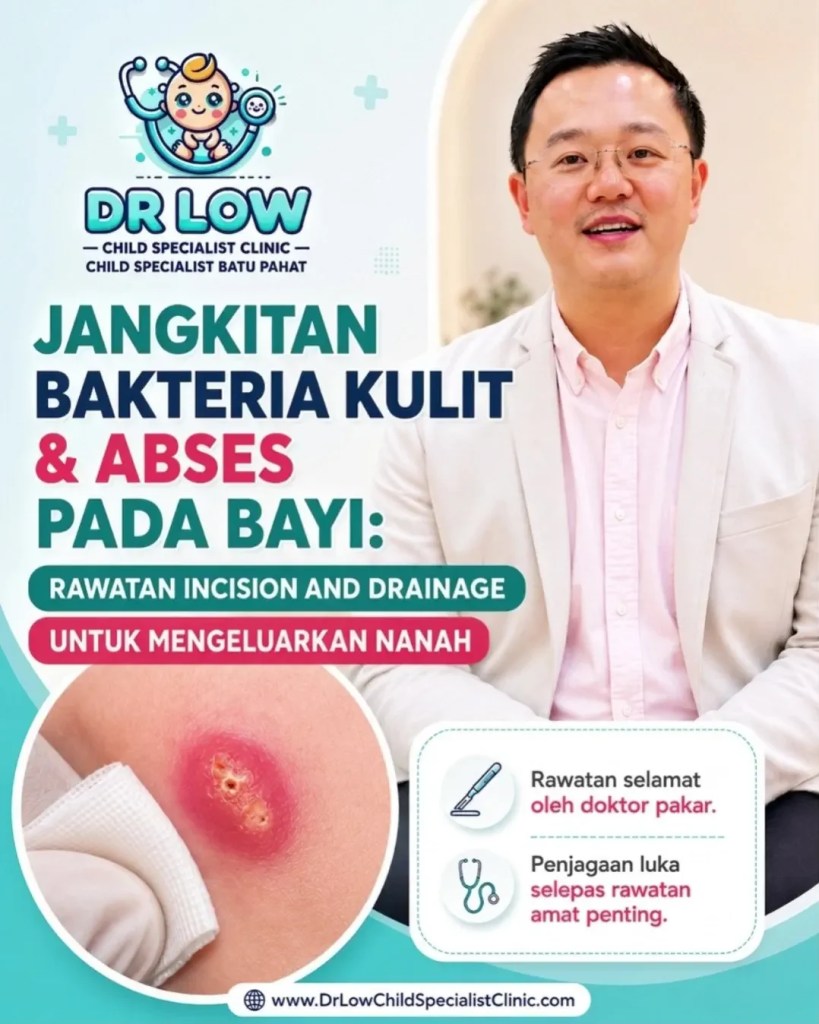
A red, swollen or pus-filled lump on a baby’s skin may be a skin abscess caused by a bacterial infection. Learn about the common signs of a skin abscess, why some abscesses may require incision and drainage (I&D) to remove trapped pus, wound care after the procedure, and when your baby should be assessed promptly by a child specialist.
Baby Skin Abscess and Bacterial Infection: When Is Incision and Drainage Needed?
A small red bump on a baby’s skin may initially look harmless.
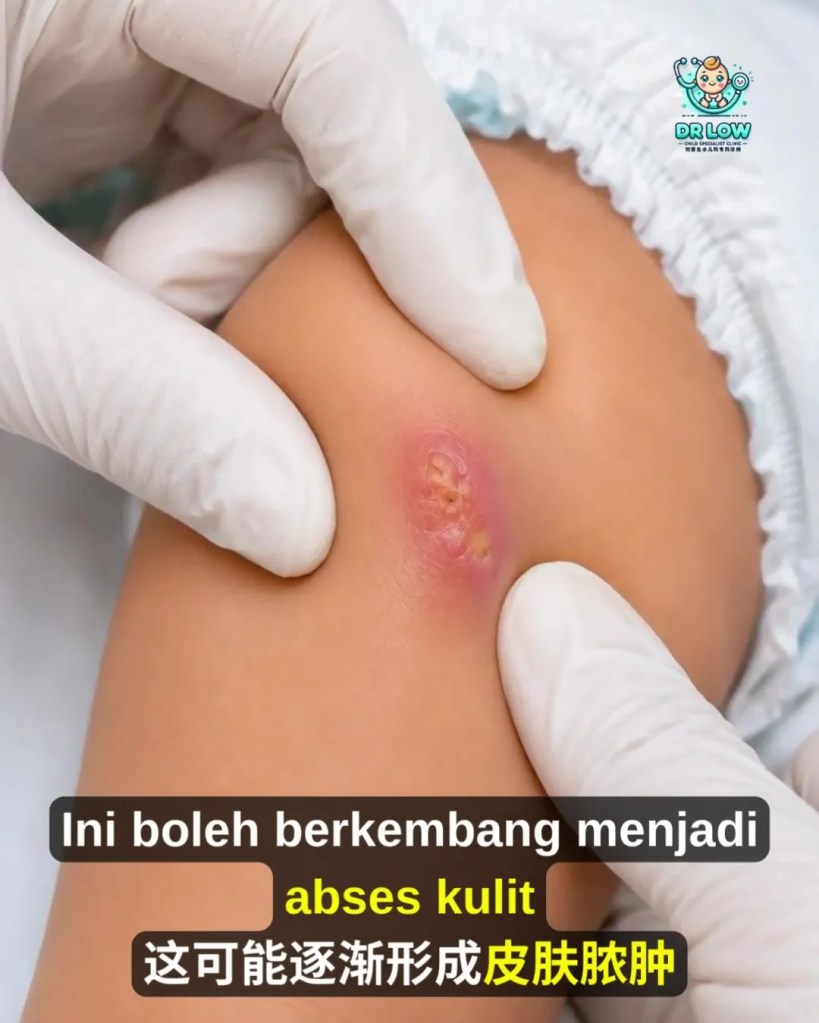
However, if the area becomes increasingly swollen, warm, painful, or develops a white or yellow centre, it may indicate that a bacterial skin infection has progressed into a skin abscess.
A skin abscess is a collection of pus that forms underneath the skin. Once pus becomes trapped inside a defined pocket, simply cleaning the surface may not be enough.
In some babies and children, the doctor may recommend a minor procedure known as:
Incision and Drainage (I&D)
This procedure allows the pus to be released and the infected area to be properly cleaned.
In this educational sharing, Dr Low Han Nee from Dr Low Child Specialist Clinic Batu Pahat explains what a skin abscess is, why it can happen, what parents should look out for, and why some abscesses may need incision and drainage.
Important note: This article and related procedure video are for health education purposes only. Every baby and child is different, and treatment should be based on an individual medical assessment.
What Is a Skin Abscess in a Baby?
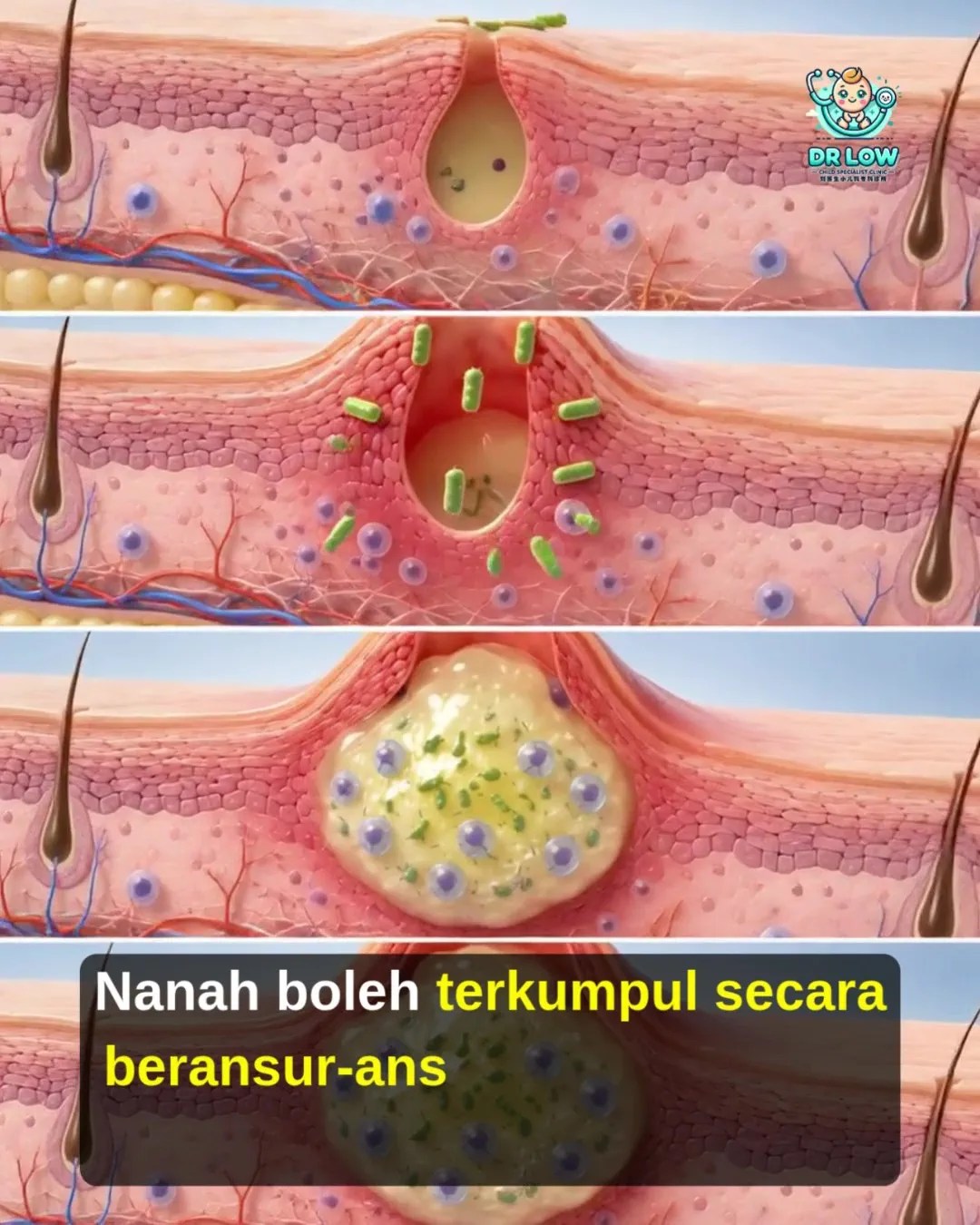
A skin abscess is a pocket of pus that develops beneath the skin, usually as a result of infection.
When bacteria enter the skin, the immune system responds by sending white blood cells to fight the infection.
During this process, pus can gradually form.
Pus may contain:
- white blood cells,
- bacteria,
- damaged tissue,
- inflammatory fluid.
In simple terms:
Bacteria enter the skin → inflammation develops → the immune system fights the infection → pus accumulates → an abscess forms.
This is why a skin abscess should not simply be thought of as a “big pimple.”
It is a type of skin and soft tissue infection that may require proper medical assessment, particularly in young babies.


How Does a Bacterial Skin Infection Develop?
The skin is one of the body’s most important protective barriers.
Normally, it helps prevent bacteria from entering deeper tissues.
However, bacteria may enter through even a very small break in the skin.
Possible entry points include:
- small scratches,
- minor cuts,
- insect bites,
- irritated skin,
- areas of eczema,
- inflamed hair follicles,
- skin that has been repeatedly scratched.
Once bacteria enter the skin, the affected area may become:
red, swollen, warm and painful.
If the infection continues and pus begins to collect under the skin, a skin abscess may develop.

What Can a Skin Abscess Look Like in Babies and Children?
Not every abscess looks exactly the same.
At the beginning, it may appear as a small red bump.
Over time, parents may notice:
🔴 Increasing redness
The skin around the infected area may become more red or inflamed.
🔥 Swelling and warmth
The area may feel warmer than the surrounding skin.
😣 Pain or tenderness
A baby may cry, pull away, become irritable or appear uncomfortable when the area is touched.
🟡 A white or yellow centre
This may indicate that pus is collecting closer to the surface.
💧 Pus draining from the skin
Some abscesses may open and discharge pus on their own.
🌡️ Fever or the baby appearing unwell
This is more concerning, especially in young babies.

Is Every Red Skin Lump an Abscess?
No.
A red or swollen lump on a baby’s skin can have many different causes.
These may include:
- insect bites,
- dermatitis,
- eczema-related inflammation,
- folliculitis,
- cysts,
- local skin irritation,
- different types of skin infection.
This is why it is difficult to diagnose a skin lump accurately based only on a photograph.
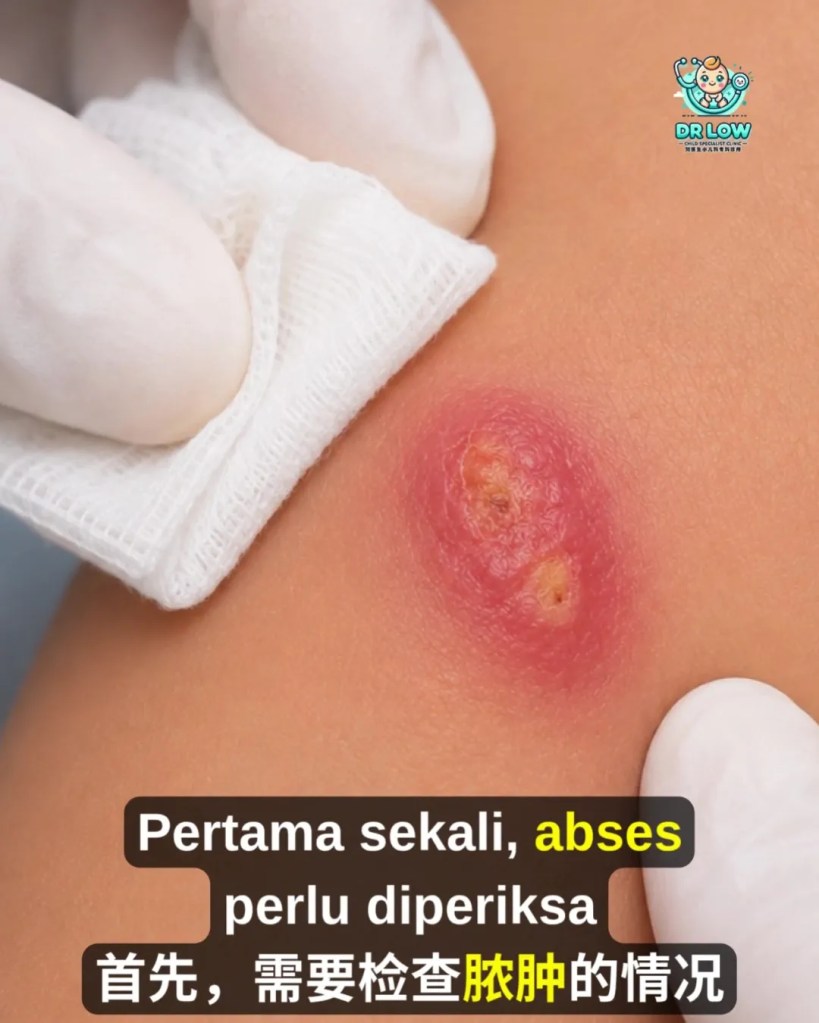
During an examination, a doctor may assess:
- the size of the swelling,
- the location,
- how red the surrounding skin is,
- whether the area feels warm,
- whether pus is present,
- whether the lump feels soft or fluctuant,
- whether redness is spreading,
- whether the child has fever,
- feeding and activity,
- how long the problem has been present.
What Is the Difference Between Cellulitis and an Abscess?
This is an important distinction.
Cellulitis
Cellulitis is an infection involving the skin and the tissue underneath it.
The area may be:
red, warm, swollen and painful.
However, there may not be a clearly defined pocket of pus.
Abscess
An abscess means that pus has collected in a pocket underneath the skin.
A child can also have both at the same time:
abscess + surrounding cellulitis.
This difference matters because treatment may be different.
Why Does Pus Sometimes Need to Be Drained?
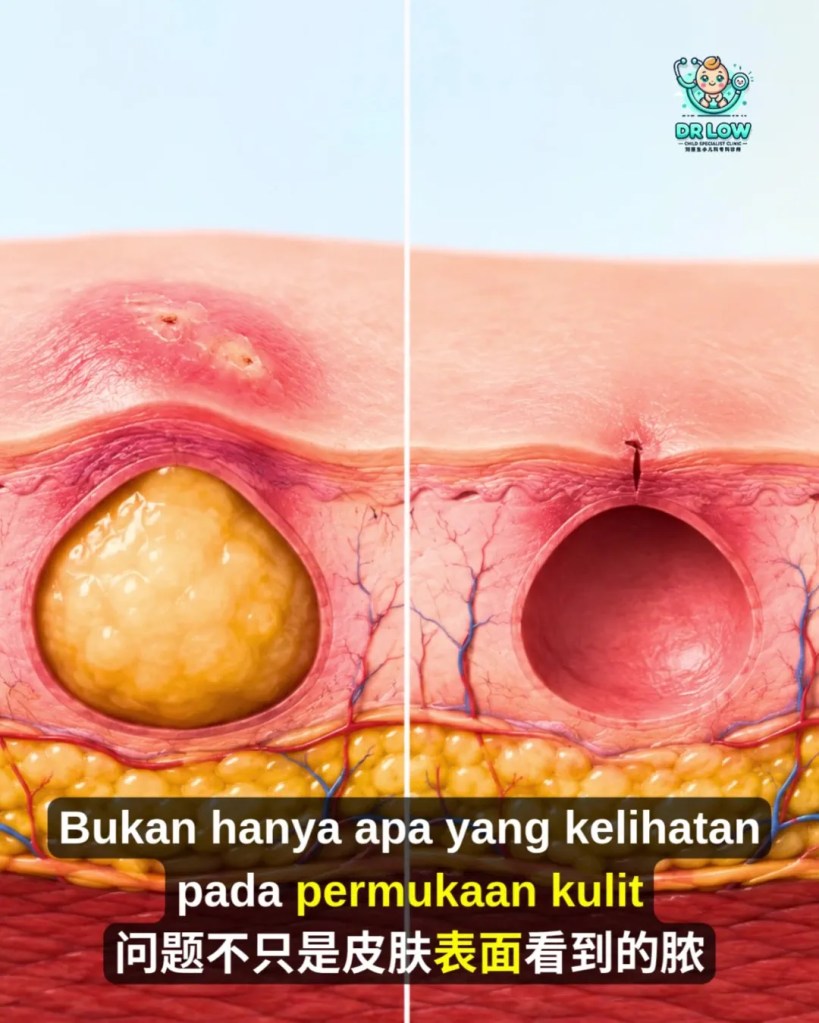
It may help to imagine an abscess as a small sealed pocket underneath the skin.
Inside that pocket is pus.
When a clear collection of pus has formed, treating only the surface of the skin may not be enough.
In suitable cases, the pus needs to be released.
This procedure is called:
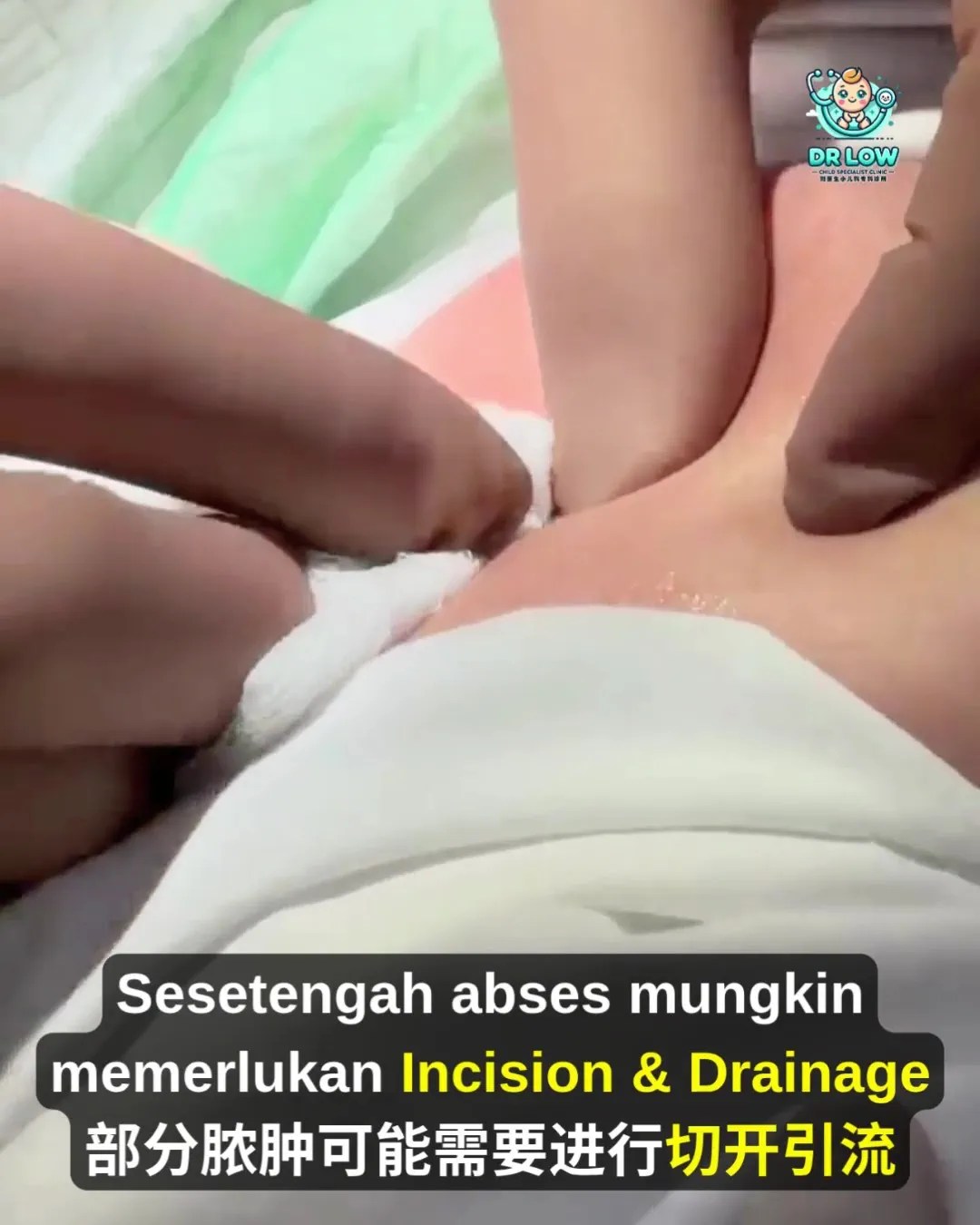
Incision and Drainage
I&D
Incision means making a small opening in the appropriate area.
Drainage means allowing the accumulated pus to come out.
The aim is to remove the trapped pus and allow the infected area to be properly treated.

What Happens During Incision and Drainage?
The way the procedure is performed depends on several factors, including:
- the baby’s age,
- size of the abscess,
- depth of the infection,
- location,
- amount of pus,
- surrounding redness,
- the child’s overall condition.
The doctor first examines the area and determines whether drainage is appropriate.
The skin is then prepared and cleaned according to the clinical situation.
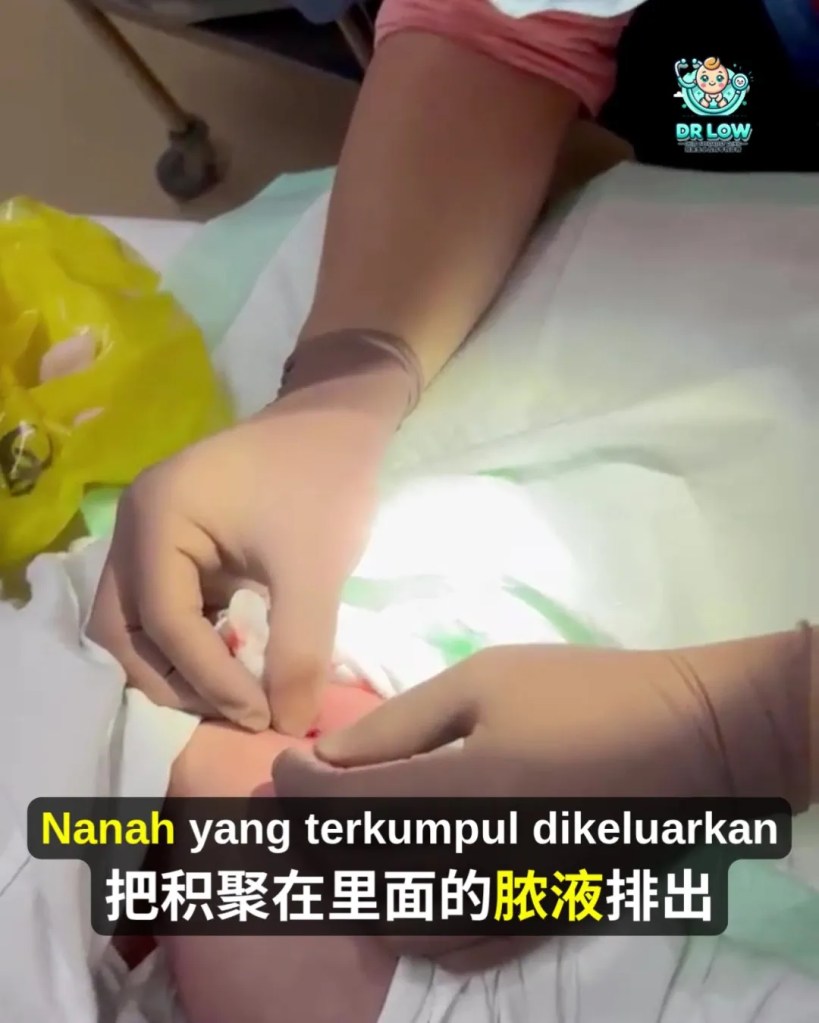
A small opening may be made at the appropriate part of the abscess to allow the pus to drain.
The abscess cavity may also need to be cleaned.
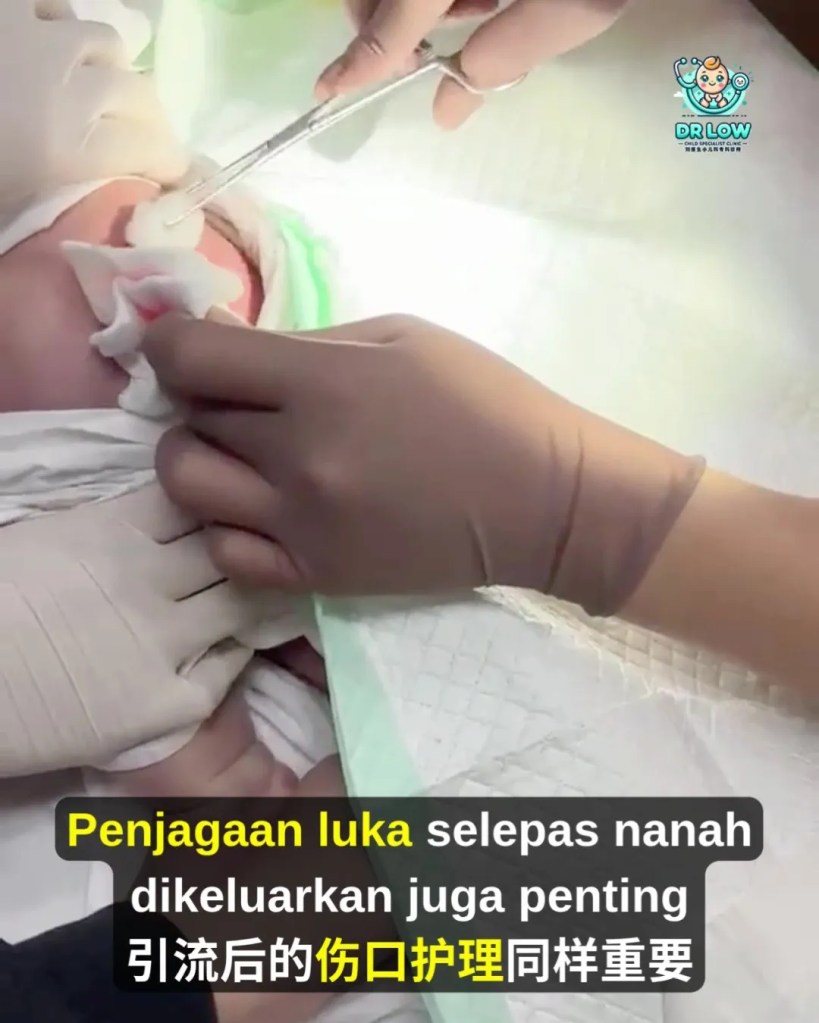
Afterwards, the wound is managed according to its size and condition, and a dressing may be applied if needed.
So when parents see pus being removed during a medical procedure, the important issue is not simply “squeezing out what is visible.”
The concern is the infected pocket beneath the skin.
Why Should Parents Not Squeeze an Abscess at Home?
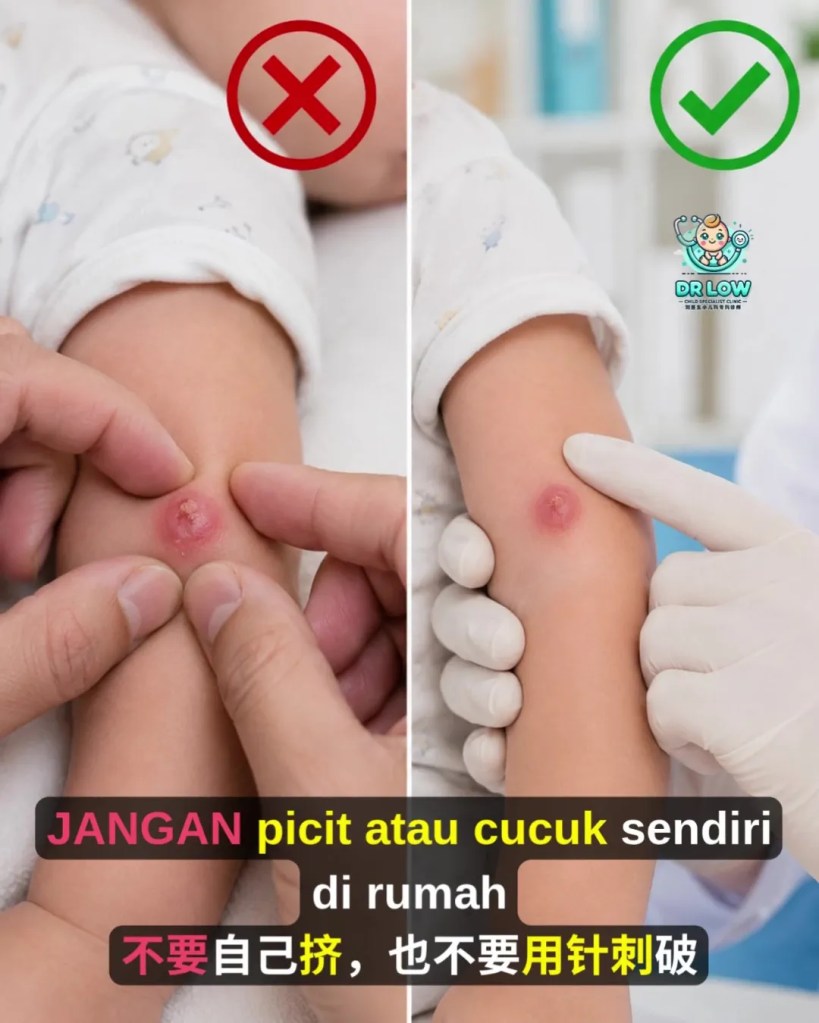
This is very important.
When parents see a white or yellow centre, it may be tempting to think:
“Can I just squeeze the pus out?”
For babies and children, parents should avoid:
- squeezing,
- poking,
- piercing,
- cutting,
- using a needle at home.
Trying to drain an abscess at home may cause:
- further skin injury,
- bleeding,
- unnecessary pain,
- incomplete drainage,
- introduction of more bacteria,
- worsening infection.
If a skin abscess is suspected, it is safer to have the child assessed by a doctor.
Does Every Abscess Need Incision and Drainage?
No.
Not every skin abscess requires the same treatment.
The decision depends on factors such as:
- abscess size,
- location,
- amount of pus,
- whether pus has already drained,
- surrounding cellulitis,
- baby’s age,
- presence of fever,
- whether the infection is spreading,
- overall condition of the child.
Some small infections may be managed differently.
However, if there is a clear collection of pus, the doctor will consider whether drainage is required.
Are Antibiotics Always Needed After Drainage?
Not necessarily.
Not every abscess is treated with antibiotics in exactly the same way.
The doctor may consider:
- age of the child,
- fever,
- severity of infection,
- amount of surrounding cellulitis,
- presence of multiple abscesses,
- immune status,
- whether the child looks unwell,
- response after drainage.
For this reason, parents should not use leftover antibiotics from a previous illness or start antibiotics without medical advice.
What Bacteria Commonly Cause Skin Abscesses?
One important bacterium associated with skin abscesses is:
Staphylococcus aureus
This bacterium can live on the skin or inside the nose without causing any problem.
However, if it enters deeper tissue through a break in the skin, it may cause infection.
Some infections may involve:
MRSA
MRSA stands for:
Methicillin-resistant Staphylococcus aureus.
This is a strain of Staphylococcus aureus that is resistant to certain antibiotics.
This is one reason why antibiotic treatment should be selected carefully when it is needed.

Why Might the Doctor Send Pus for Culture?
In some cases, a sample of pus may be sent to the laboratory for:
Bacterial Culture
This can help answer two important questions:
Which bacteria are causing the infection?
and
Which antibiotics are likely to work against them?
Culture may be particularly useful when:
- the infection is severe,
- abscesses keep recurring,
- the response to treatment is poor,
- there are other medical concerns.
Not every small abscess requires exactly the same laboratory testing.

What Should Parents Do After Incision and Drainage?
The care after the procedure is also important.
Parents should follow the doctor’s instructions regarding:
- wound cleaning,
- dressing,
- medication,
- follow-up.
Hands should be washed before and after touching the wound or changing a dressing.
Parents should monitor for:
- spreading redness,
- increasing swelling,
- worsening pain,
- new pus collecting,
- increasing discharge,
- fever,
- reduced feeding,
- unusual sleepiness,
- the child appearing generally unwell.
Some drainage may continue for a short period depending on the wound, so follow-up should be based on the doctor’s advice.

Why Should Towels and Personal Items Not Be Shared?
Good hygiene is important when a child has a draining skin infection.
Wash hands after handling the wound or dressing.
Avoid sharing:
- towels,
- clothing,
- washcloths,
- personal items that may come into contact with wound discharge.
Used dressings that contain pus or wound fluid should also be disposed of carefully.
These steps can help reduce the chance of bacteria spreading through direct contact.

Why Do Some Children Keep Getting Abscesses?
If a child develops skin abscesses repeatedly, further assessment may be needed.
The doctor may consider:
- recurrent bacterial infection,
- local skin problems,
- underlying skin conditions,
- repeated colonisation with certain bacteria,
- whether a bacterial culture is needed,
- other contributing factors.
Repeated abscesses should not simply be treated by squeezing the pus out each time.
When Should a Baby Be Seen by a Doctor Urgently?
Seek medical assessment promptly if a baby with a skin infection or suspected abscess also has:
- fever,
- very young age,
- poor feeding,
- unusual sleepiness,
- reduced activity,
- rapidly spreading redness,
- increasing swelling,
- worsening pain,
- multiple areas of pus,
- large amounts of discharge,
- recurrence after treatment,
- poor wound healing,
- infection near the eye or another sensitive area,
- a general appearance that worries the parents.
One particularly important point is:
A baby younger than 3 months with a temperature of 38°C or above should receive prompt medical assessment.
Fever in a very young baby should not simply be observed at home as a minor skin problem.
Can Skin Abscesses Be Prevented?
Not every abscess can be prevented, but some simple measures may reduce the risk.
Parents can help by:
- keeping the child’s skin clean,
- cleaning minor cuts and scratches appropriately,
- keeping fingernails clean and trimmed,
- managing eczema properly,
- washing hands before and after wound care,
- covering draining wounds with appropriate dressings,
- avoiding shared towels and personal items.
If a child has eczema or another condition that damages the skin barrier, proper skin care is also important because scratching may create small openings where bacteria can enter.
 FAQ
FAQFrequently Asked Questions
Get quick answers to frequently asked questions about bacterial skin infections and abscesses in babies.
A skin abscess is a pocket of pus that develops underneath the skin, usually because of infection. The area may become red, warm, swollen and painful.
The terms are sometimes used loosely in everyday conversation. A boil, or furuncle, often begins as an infected hair follicle, while an abscess more broadly refers to a collection of pus within tissue.
This can happen when pus collects close to the surface of the skin.
It is not recommended. Parents should not pierce, cut or squeeze a baby’s abscess themselves.
Incision and Drainage, or I&D, is a minor medical procedure where the doctor makes a small opening in the abscess to allow pus to drain and the infected area to be cleaned.
It is commonly considered a minor procedure for a simple skin abscess, but the actual setting and method depend on the child’s age, the size and location of the abscess, and the severity of infection.
No. Antibiotic treatment depends on the clinical situation, including fever, surrounding cellulitis, the child’s age and overall condition.
A bacterial culture may help identify the bacteria causing the infection and guide antibiotic treatment when required.
Yes. Recurrent abscesses may require further evaluation to identify contributing factors.
Healing time varies depending on the size, depth and location of the abscess, the severity of infection and the child’s overall health.
The Main Message for Parents
When a baby develops a red, swollen lump that starts to contain pus, the problem may be more than just what is visible on the skin surface.
There may already be a:
bacterial skin infection with a pocket of pus underneath the skin.
For certain abscesses, Incision and Drainage may be needed to release the trapped pus and clean the infected area.
Parents should remember:
- Do not squeeze it yourself.
- Do not pierce it with a needle.
- Do not cut it open at home.
- Do not use leftover antibiotics without medical advice.
If the baby is very young, the redness is spreading, the swelling is increasing, the child has fever, feeds poorly or appears unwell, medical assessment should be arranged promptly.
For parents searching for a Child Specialist Clinic Batu Pahat, Child Specialist Batu Pahat, Child Clinic Batu Pahat, Child Doctor Batu Pahat, Child Doctor Near By Batu Pahat, Child Doctor Near Me, Child Specialist Clinic BP, Child Specialist BP, Child Clinic BP or Child Doctor BP, Dr Low Child Specialist Clinic Batu Pahat provides paediatric assessment for babies and children, including evaluation of skin infections and other childhood health concerns.
This article is for health education purposes and does not replace an individual medical consultation, diagnosis or treatment plan.
Has your child ever developed a small red bump that later became swollen or filled with pus?
#DrLowHanNee #DrLowChildSpecialistClinic #ChildSpecialistClinicBatuPahat #ChildSpecialistBatuPahat #ChildClinicBatuPahat #ChildDoctorBatuPahat #ChildDoctorNearMe #ChildSpecialistBP #ChildClinicBP #BabySkinInfection #BacterialSkinInfection #BabySkinAbscess #SkinAbscess #BabyAbscess #ChildSkinInfection #ChildSkinAbscess #IncisionAndDrainage #PaediatricCare #BabyHealth #ChildHealth #BatuPahat #Johor


