Childhood Measles: Early Signs, Serious Complications and The Importance of Vaccination | Dr Low Child Specialist Clinic Batu Pahat
Dr Low Child Specialist Clinic Batu Pahat – Child Doctor BP
Measles remains a serious infectious disease affecting children in Malaysia and can lead to severe complications such as pneumonia, encephalitis, and vision problems. Learn about the early signs of measles, how it spreads, the infectious period, and the importance of the MMR vaccine with Dr Low Han Nee from Dr Low Child Specialist Clinic Batu Pahat, Johor.
Childhood Measles Still Exists in Malaysia – Do Not Take It Lightly
Many people think that measles is a disease of the past. While it may not be as common as before, the reality is that measles still exists in Malaysia and continues to affect children, infants, and individuals who have not completed their vaccinations.
According to the Ministry of Health Malaysia, measles outbreaks can occur when vaccination rates within a community decline. Measles spreads very easily and can lead to serious complications, especially among infants and young children.
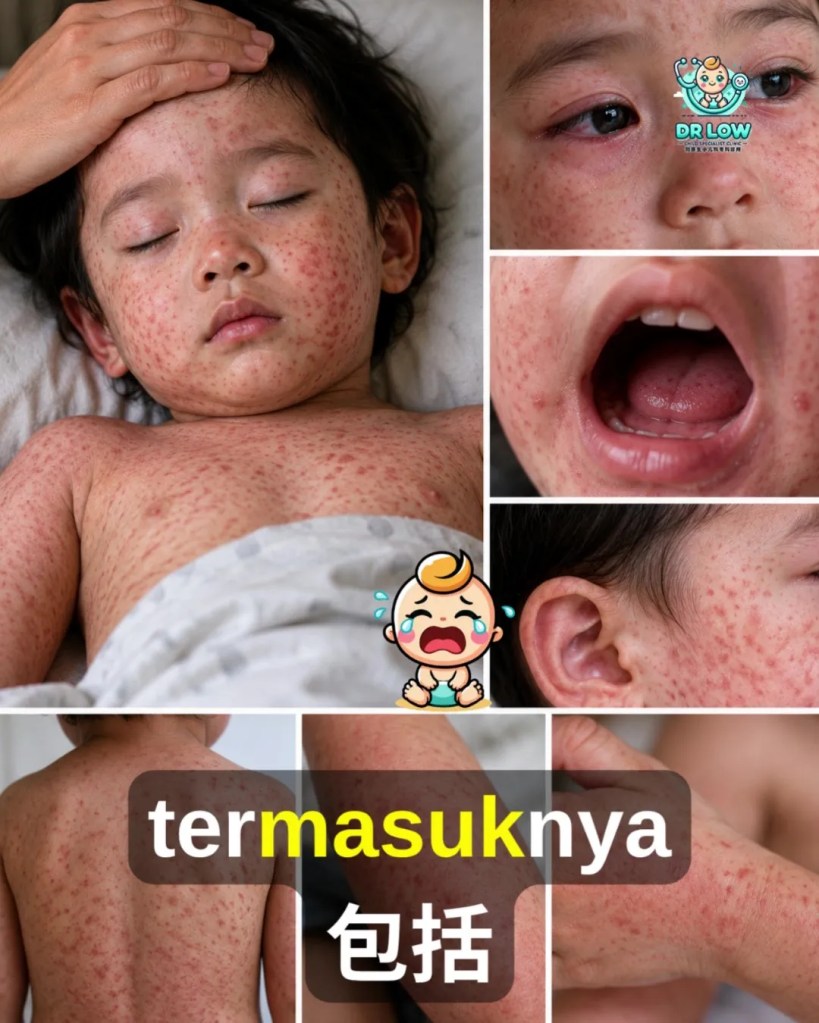
At Dr Low Child Specialist Clinic Batu Pahat, cases of childhood measles are still seen from time to time. Some patients develop high fever, widespread skin rashes, red eyes, and breathing difficulties due to complications of measles infection.
One of the most heartbreaking situations is when very young children become infected. Recently, one of my patients was only one year old and required hospital admission because the illness became serious. Thankfully, with proper medical care and ward treatment, the child recovered well and was safely discharged home.
For parents in Batu Pahat and throughout Malaysia, understanding the early signs of measles is important so that medical attention can be sought before complications occur.
What Is Measles?
Measles is a highly contagious viral infection caused by the measles virus.
The virus primarily attacks the respiratory system before spreading throughout the body.
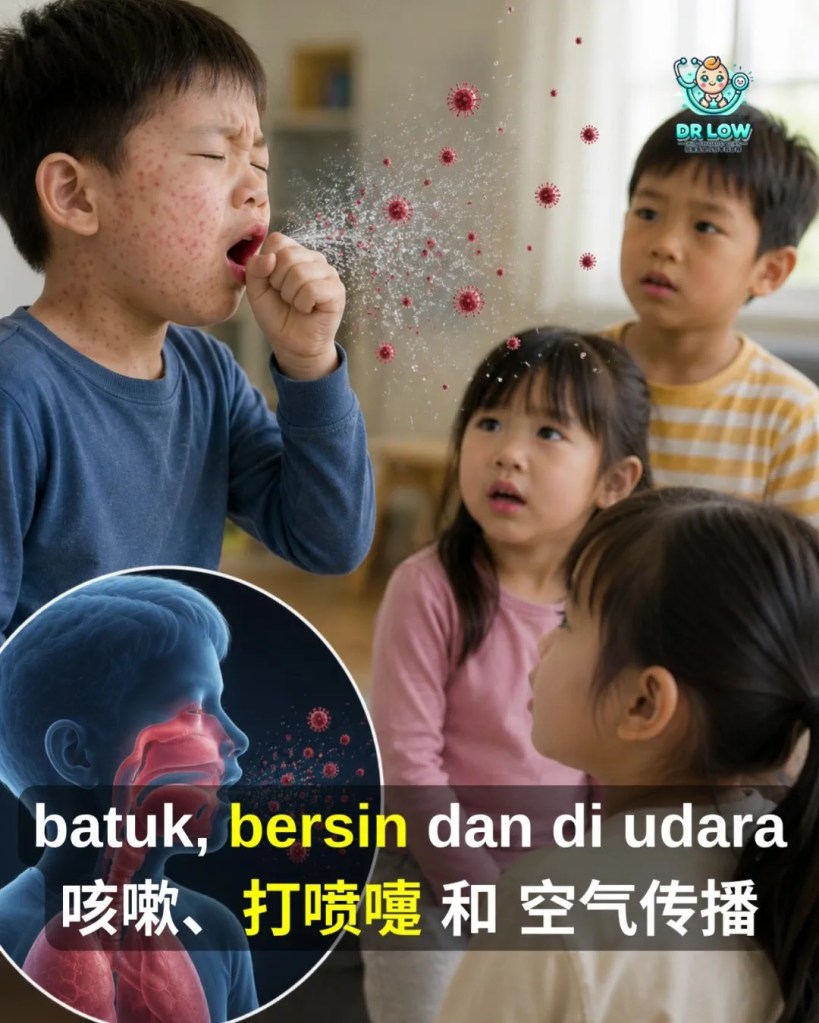
Measles can spread through:
- Coughing
- Sneezing
- Airborne droplets
- Contaminated surfaces
- Air within a room previously occupied by an infected patient
Many people do not realize that the measles virus can remain suspended in the air for several hours even after an infected person has left the area.
Because of this, measles spreads very quickly, especially in:
- Childcare centres
- Kindergartens
- Schools
- Public places
- Indoor environments
Measles is considered one of the most contagious diseases in the world. One infected person can spread the virus to many others who are not protected by vaccination.

The Incubation Period of Measles
After a person is infected with the measles virus, symptoms do not appear immediately.
The incubation period is usually:
- 7 to 14 Days
During this time:
- The child may appear healthy
- No obvious symptoms may be present
- Parents may not realize the child has already been infected
However, the virus is actively multiplying inside the body.
This is one reason why measles can spread before anyone realizes an infection has occurred.

Measles Can Spread Before the Rash Appears
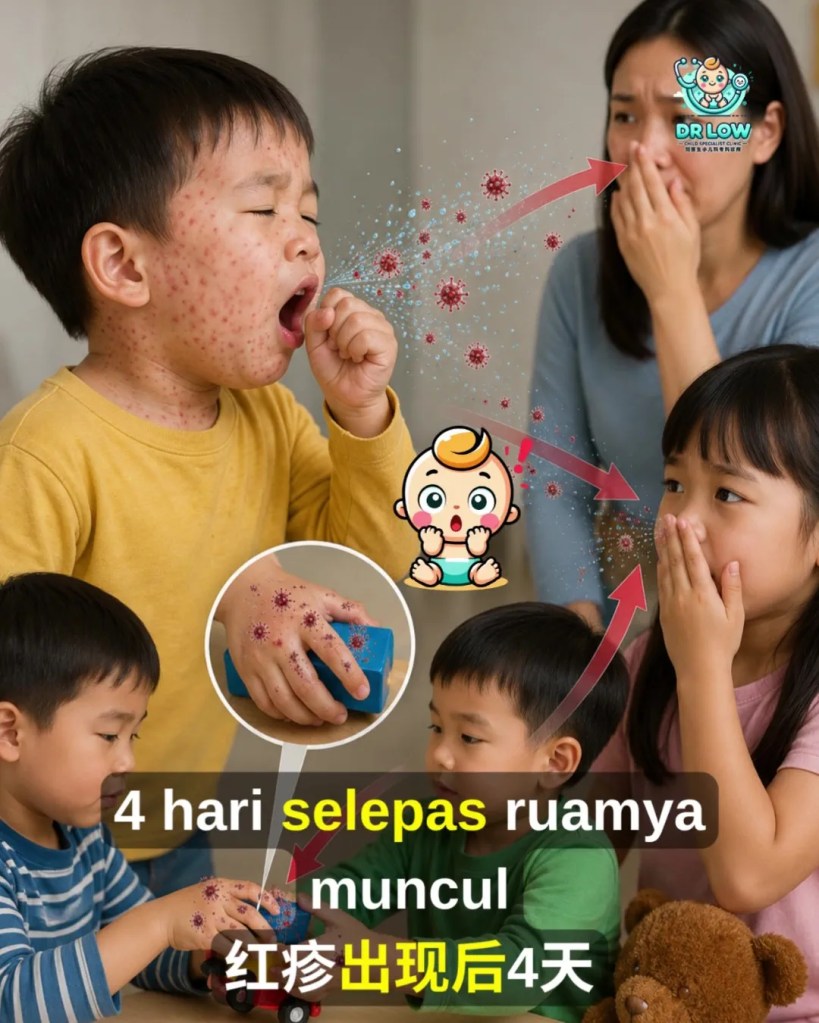
One important fact about measles is that infected individuals can spread the virus before the characteristic rash develops.
A measles patient can spread the virus:
From
- 4 Days Before the Rash Appears
Until
- 4 Days After the Rash Appears
This makes measles extremely difficult to control if it is not identified early.
Sometimes a child may only appear to have a mild fever or common cold, but may already be carrying and spreading the measles virus.

Early Signs of Measles Parents Should Know
A simple way to remember the early symptoms of measles is the “3C” concept.
1. Cough
Children often develop a persistent cough.
2. Coryza
This refers to a runny nose and cold-like symptoms.
3. Conjunctivitis
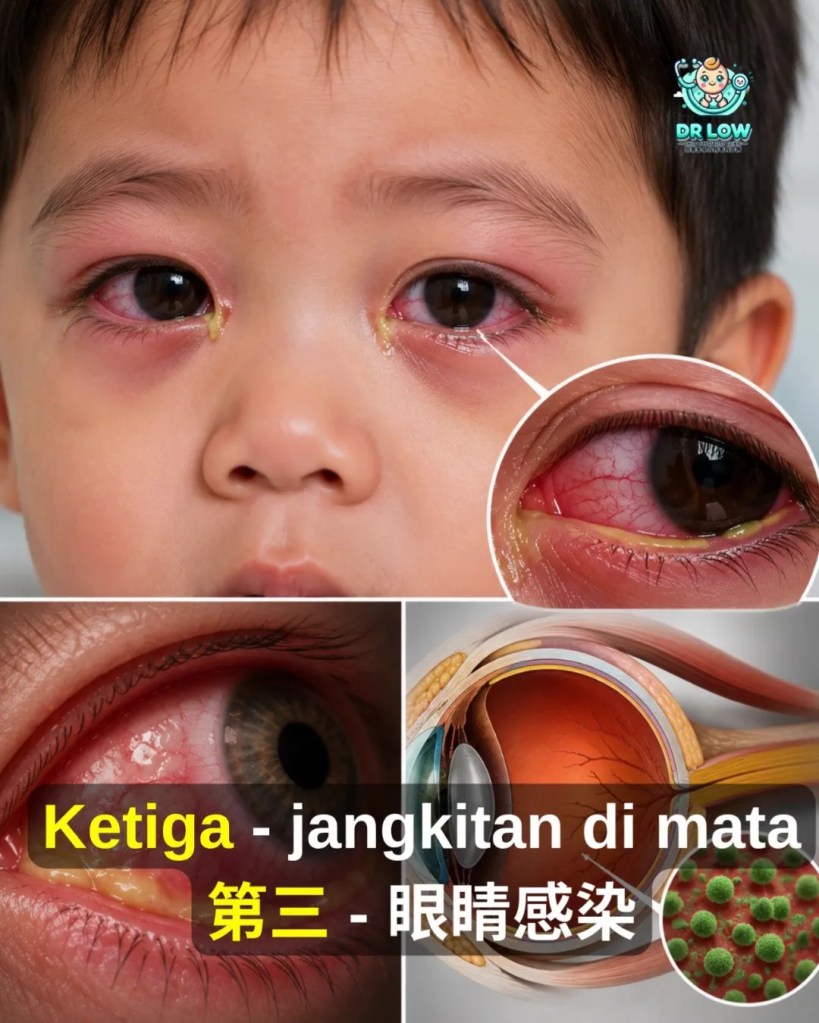
The eyes become red, watery, and sensitive to light.
In addition to the 3Cs, children may also experience:
- High fever
- Poor appetite
- Weakness
- Irritability
- Reduced activity levels
After approximately 3 to 5 days of fever, the characteristic measles rash begins to appear.
The rash usually:
- Starts on the face and head
- Spreads to the neck
- Moves down to the body
- Eventually reaches the arms and legs
As the rash appears, the child’s fever often becomes even higher and the child may look significantly unwell.

Measles Rash Is Different from Ordinary Rashes
Many parents confuse measles with common childhood rashes.
A typical measles rash:
- Appears red in colour
- Spreads rapidly
- Begins on the face
- Is accompanied by high fever
- Often causes the child to appear very weak and unwell
If your child develops a rash together with high fever and red eyes, medical evaluation should be sought promptly.
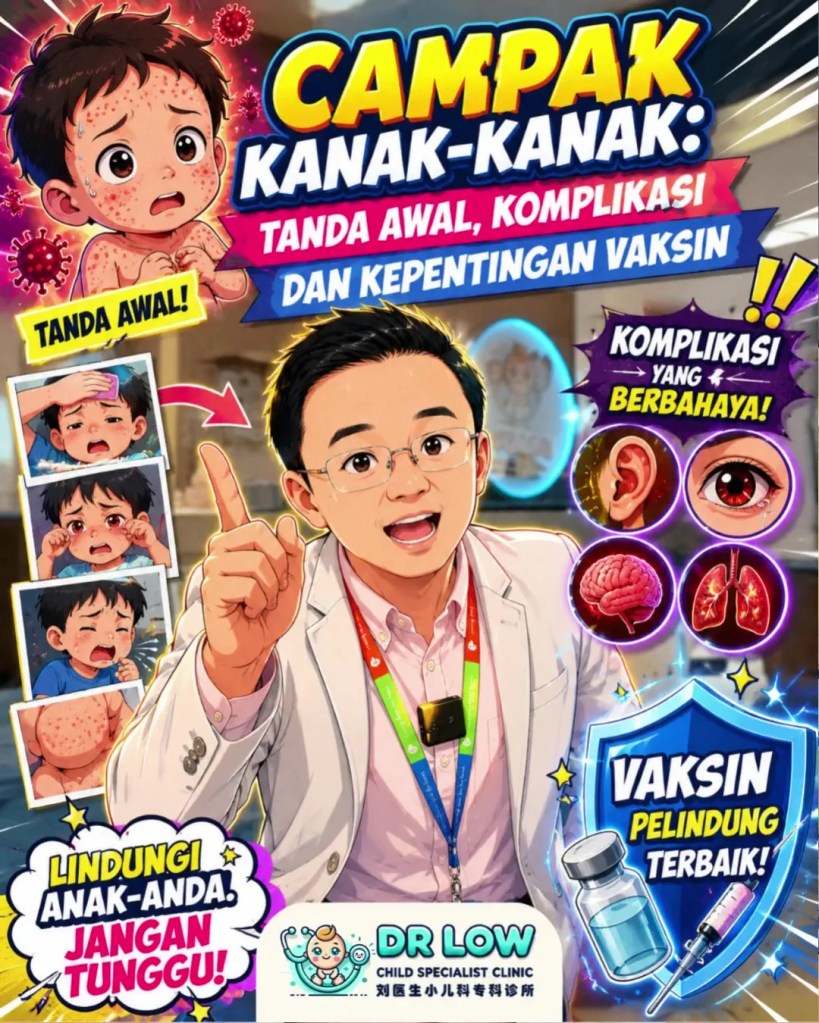
Serious Complications of Measles
Measles is far more than just fever and a skin rash.
It can cause severe complications, particularly in:
- Infants
- Young children
- Individuals with weakened immune systems
- Malnourished children

Some of the most serious complications include:
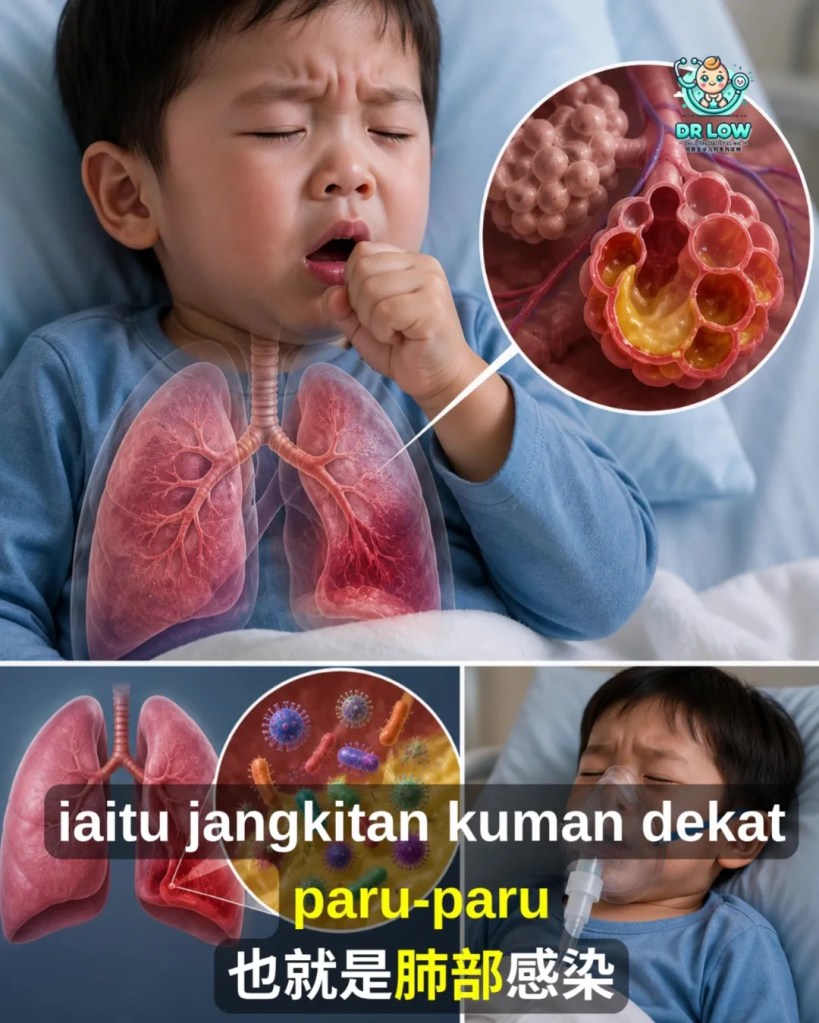
1) Pneumonia
Pneumonia is the most common serious complication of measles.
It can cause:
- Difficulty breathing
- Low oxygen levels
- Hospitalisation
Some children may require:
- Oxygen therapy
- Nebuliser treatment
- Inpatient ward care
2) Ear Infections
Measles can lead to ear infections that may affect hearing if left untreated.
3) Eye Infections
Some children develop severe eye infections that can interfere with vision and eye health.
4) Encephalitis
Encephalitis is inflammation of the brain and is one of the most serious complications of measles.
Brain inflammation can lead to:
- Seizures
- Permanent brain damage
- Developmental delays
- Learning difficulties
- Death in severe cases
For this reason, measles should never be considered a harmless childhood illness.

How Does Measles Spread?
The measles virus spreads very easily through the air.
When an infected person:
- Coughs
- Sneezes
- Talks
Tiny virus-containing droplets are released into the surrounding air.
Other individuals may become infected simply by breathing in these airborne particles.
High-risk environments include:
- Kindergartens
- Childcare centres
- Schools
- Clinics
- Shopping malls
- Crowded indoor spaces
If measles is suspected, children should avoid public places to reduce the risk of spreading the infection.
The Importance of the MMR Vaccine
The good news is that measles can be prevented through vaccination.
In Malaysia, the MMR vaccine is included in the National Immunisation Programme.
The vaccine protects children against:
- Measles
- Mumps
- Rubella
Vaccination helps:
- Reduce the risk of infection
- Lower the risk of serious complications
- Reduce hospital admissions
- Strengthen community protection
When more children are vaccinated, the spread of measles outbreaks can be significantly reduced.

When Should You See a Doctor?
Seek medical attention immediately if your child develops:
- High fever
- Red rash
- Red eyes
- Persistent cough
- Poor fluid intake
- Breathing difficulties
- Severe weakness
- Seizures
Early diagnosis and treatment are essential in preventing complications.
Protect Your Child from Measles
As parents, do not wait until your child becomes seriously ill before taking action.
Make sure:
- Your child’s vaccinations are up to date
- Contact with infected individuals is avoided
- Good hand hygiene is practised
- Masks are used when appropriate
- Medical attention is sought early when fever and rash occur
Measles is preventable.
Early treatment can save lives.
If you have concerns about measles symptoms, childhood vaccination, or your child’s health, consult Dr Low Han Nee at Dr Low Child Specialist Clinic Batu Pahat.
#ChildhoodMeasles #MeaslesMalaysia #MMRVaccine #MeaslesSymptoms #ChildHealth #DrLowHanNee #DrLowChildSpecialistClinic #ChildSpecialistClinicBatuPahat #ChildSpecialistBatuPahat #ChildClinicBatuPahat #ChildDoctorBatuPahat #ChildDoctorNearMe #ChildSpecialistClinicBP #ChildSpecialistBP #ChildClinicBP #ChildDoctorBP #PantaiHospitalBatuPahat #BatuPahatChildSpecialist #JohorPediatrician #MalaysiaPediatrician